Where your digital product begins and ends
We are swimming upstream against a great torrent of disorganization, which tends to reduce everything to the heat death of equilibrium and sameness.
The more information we obtain, the more we have to struggle to classify it, to organize it into meaningful patterns.
The world is not mere chaos, but it is no simple order either.
It is a dance of organized complexity.
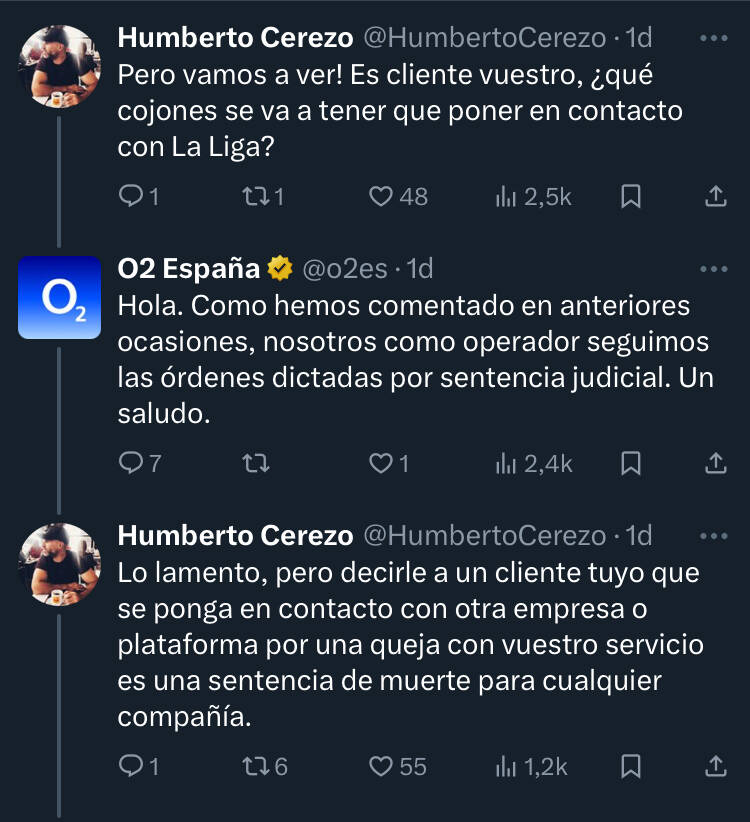
Norbert Wiener, Cybernetics: Or Control and Communication in the Animal and the Machine In something as prosaic as what has been happening these weeks around LALIGA, its blocking of IPs in the Cloudflare environment that are interpreted as hosting illegal content, and the numerous and ramifying effects on different third parties, a topic that those of us who dedicate ourselves to creating and developing digital products live with daily becomes relevant: with so many layers and pieces involved in them, how do we mark the line between what is "own" to the product and what is "foreign"?
When your product "crashes" and it's due to one of those pieces (a caching system, a DRM server, a simple storage manager, or payments managed by systems managed by systems, etc.), organizations often react by looking for those boundaries, and even communicating them to their customers: "It's not us, it's the network provider that's having problems." This interdependent and dynamic (tangled?) nature is a challenge for our brains, and that's why we tend to respond in such a clumsy way: it's our way of denying that things are as complex as they really are.
So we have this wonderful conundrum at hand: your customers only have ONE experience from your product, so anything that happens there is YOUR business.
The best thing any organization whose business depends on this can do is start to better understand how many layers are involved, and how, in order to produce that experience with more control, judgment, and responsibility.