Rhythm generates emotions
A drummer's claim that we are rhythm machines, and why delivery cadence in product teams is an emotional fact long before it is a delivery metric.
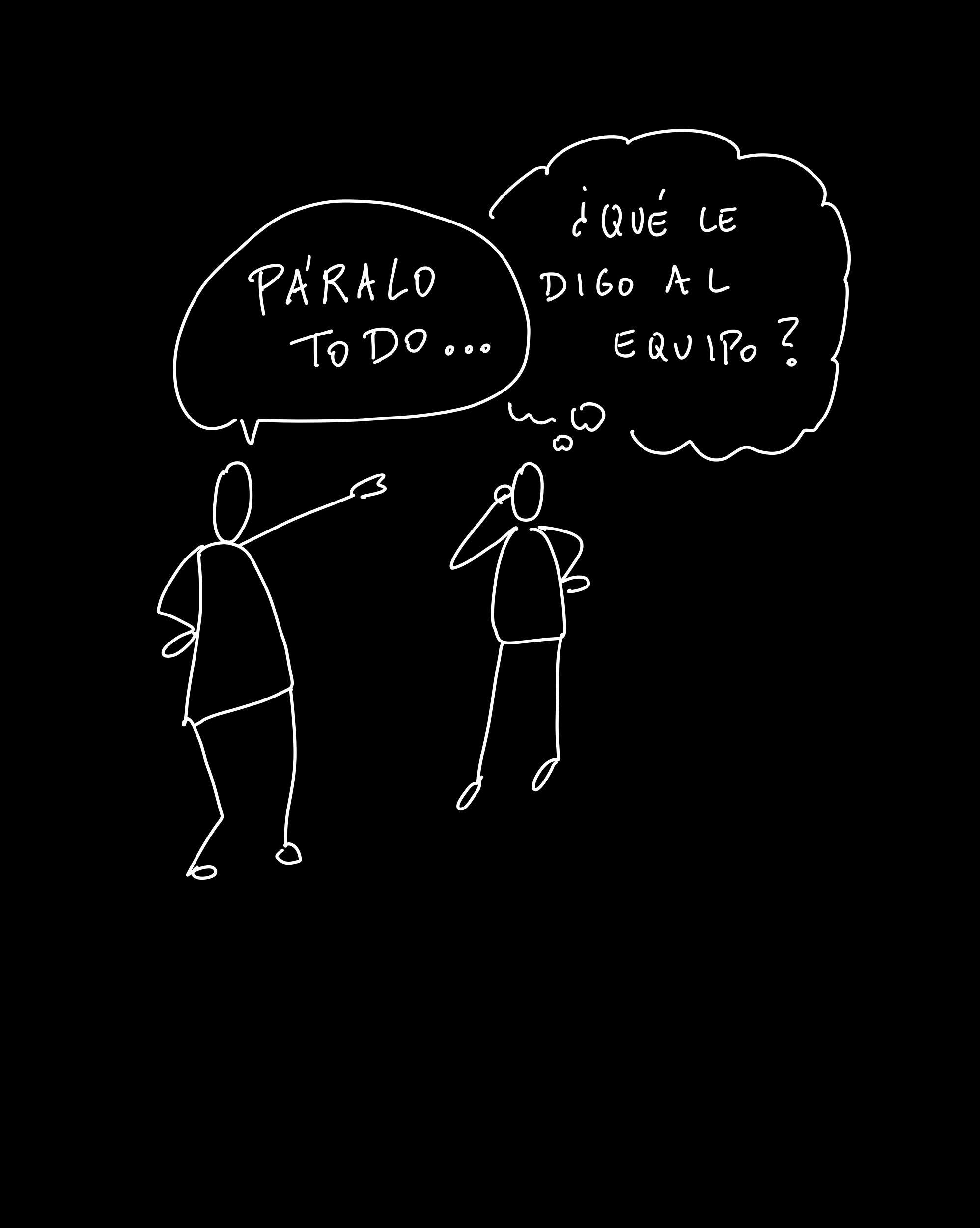
Life is about rhythm. We vibrate, our hearts are pumping blood, we are a rhythm machine, that's what we are.
— Mickey Hart
Hart drummed for the Grateful Dead for three decades and then spent years studying percussion across cultures, which gives him a claim on the subject that a management author does not have. The observation is biological before it is musical: rhythm is not something we produce, it is something we are made of.
Cadence as an emotional fact
The reason this belongs in a conversation about product teams is that we discuss cadence almost exclusively as a throughput question, and it is not primarily one.
A rhythm produces expectation. Expectation is what makes effort feel finite. A team that ships every two weeks knows when the current uncertainty ends — not what the outcome will be, but when it will be known. A team with no cadence experiences every piece of work as open-ended, and open-ended work is exhausting in a way that has almost no relationship to how much of it there is.
Which means the emotional effect comes from the predictability rather than the speed. A slow, reliable rhythm is better for a team than a fast, erratic one, and this is close to the opposite of what most organisations optimise for. Velocity charts measure the notes. Nobody measures the beat.
The practice is older than the branding
Larman and Basili's history is worth reading for its deflationary effect. Iterative and incremental development did not arrive with the manifestos. They trace it back through decades of projects, including NASA work in the 1960s, where the practice existed because it worked and nobody had thought to name it.
This matters when a cadence gets defended as a methodology. It is easier to argue with a methodology than with something people have been doing since before anyone was selling certifications for it, and the argument is usually about the ceremonies rather than the underlying property.
Ohno's takt time is the same idea in a factory, and it carries the crucial extra insight: the rhythm is set by demand, not by capacity. You do not go as fast as you can. You go at the rate the next step can absorb, which sounds like a constraint and functions as a form of respect.
What breaks a rhythm
Three things, mostly.
The first is variability in the size of the work. Reinertsen's queueing arguments explain why a single large item destroys the cadence for everything behind it: batch size and delay are directly related, and one oversized commitment converts a rhythm into a wait. Ryan Singer's fixed appetites are the most practical countermeasure I have found — deciding how much time a problem deserves before deciding what to do about it, which inverts the usual order and is uncomfortable for exactly that reason.
The second is full utilisation. A system loaded to capacity has no ability to absorb a surprise, so every surprise breaks the beat. This is the same point that makes silences in a roadmap so hard to schedule and so valuable.
The third is that nothing ever finishes. The Poppendiecks' framing of waste covers this: partially done work is inventory, and inventory in software is invisible, so it accumulates without anyone noticing until the team is carrying eleven half-finished things and feels slow for no locatable reason.
Rhythm and trust
McChrystal's account of adapting a large organisation is largely a story about replacing coordination with shared rhythm. What held his teams together was not a plan but a recurring beat — a daily briefing that everyone attended, so that context was continuously refreshed rather than periodically distributed.
That is the part I keep coming back to. A cadence is a communication mechanism disguised as a delivery mechanism. It synchronises what people believe about the situation, and it does so without anyone having to write a document about it.
Hart's claim is that we are rhythm machines. The organisational version is less poetic and equally true: a team without a beat is not a slow team. It is a team where everyone is keeping private time.