The Daily Miracle
Dallas Liddle's history of Victorian newspapers shows how infrastructure colonises agency, the way accumulated dependencies quietly decide a roadmap.
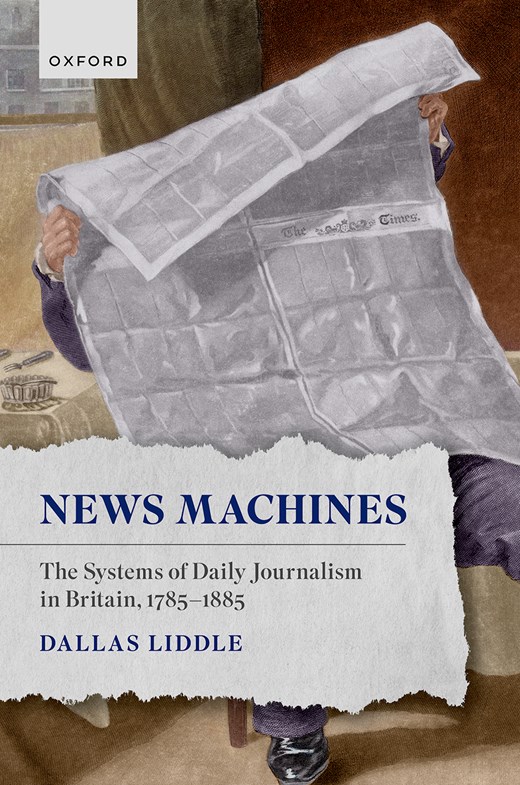
News Machines: The Systems of Daily Journalism in Britain, 1785–1885. Dallas Liddle. Oxford University Press, 2026.
I recently read News Machines: The Systems of Daily Journalism in Britain, 1785–1885, by Dallas Liddle. It is a history of Victorian newspapers — how they grew from folded single sheets into the massive multi-page broadsheets that contemporaries called "the daily miracle." The book is academic, carefully researched, and methodologically interesting: Liddle combines archival work in the British Library and the St Bride Printing Library with data mining on the Times Digital Archive. But what makes it worth writing about here is not the methodology alone. It is what the history reveals about a question that anyone directing digital products faces every day: who is actually making the decisions?
The system that decides
Liddle's central argument is structural. As demand for daily newspapers outpaced what the original production systems could handle, newspaper organisations built increasingly complex technical and production mechanisms to keep growing and competing. Printing machines, distribution networks, typesetting workflows, wire services. Each mechanism solved a bottleneck. Each solution created new dependencies. And at some point — Liddle traces this carefully across a hundred years — the decisions about what daily journalism should look like stopped being editorial choices and became systemic necessities. The infrastructure was not serving the editors. The editors were serving the infrastructure.
This is not a conspiracy theory. No one planned it. The system acquired agency through accumulated constraint, not through design. The editors still believed they were making choices. But the range of choices available to them had been quietly narrowed by the technical systems they depended on.
Liddle calls Victorian newspapers "high-pressure systems" — systems where demand permanently exceeds capacity, forcing continuous adaptation. Each adaptation solves the immediate bottleneck and quietly becomes part of the structure. The temporary fix calcifies. The workaround becomes the workflow. The mechanism you built to cope becomes the mechanism you are trapped inside. If you have ever worked on a digital product in a growth phase, you know the feeling: the thing that was supposed to serve the product is now the thing the product serves.
If you direct a digital product, you have felt the broader pattern too. The roadmap discussion that feels strategic but is actually determined by accumulated technical debt. The feature that ships not because anyone decided it mattered, but because the architecture made it the path of least resistance. The organisation chart that was meant to reflect the product but now the product reflects the organisation chart — which is Conway's law, of course, but lived from the inside it does not feel like a law. It feels like a mystery.
Steam and speed
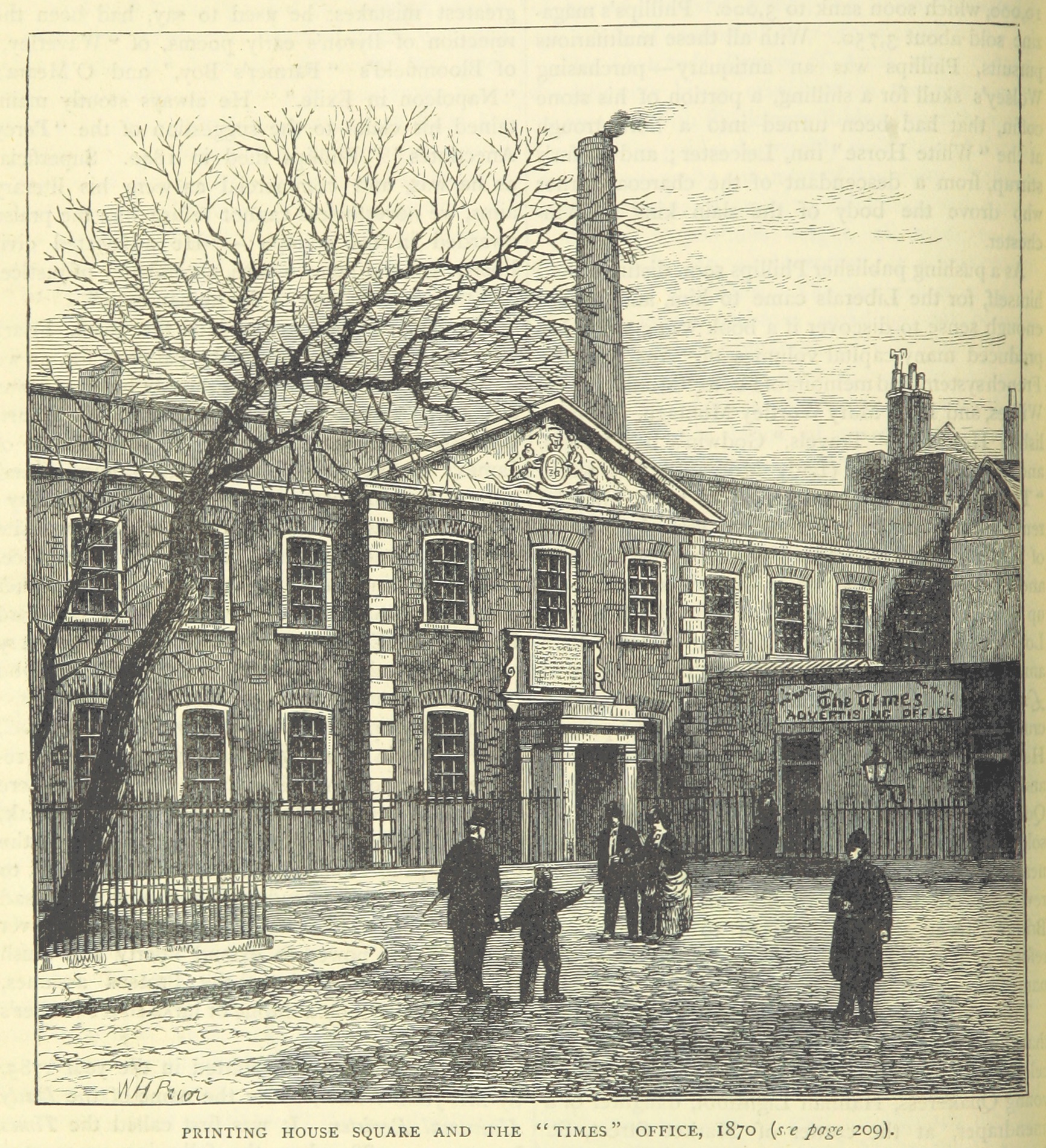
The history of how this happened is itself illuminating. On 29 November 1814, the Times published an extraordinary announcement:
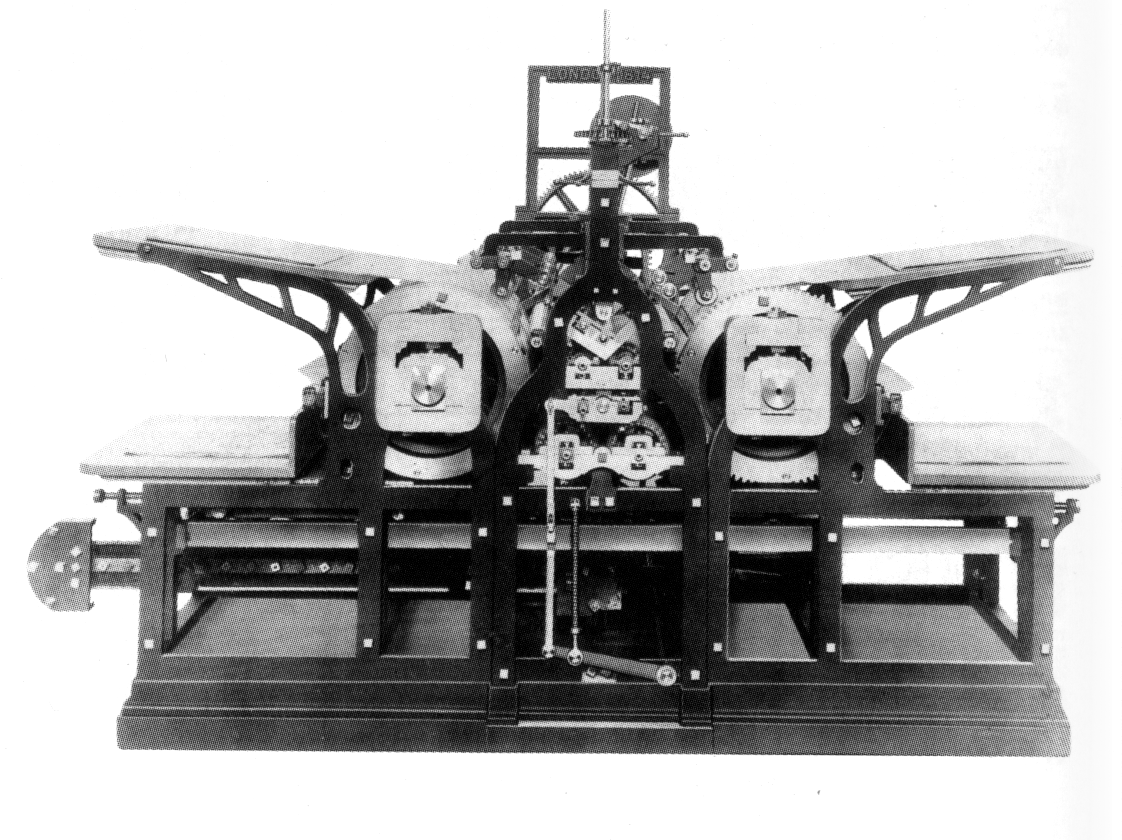
Our Journal of this day presents to the public the practical result of the greatest improvement connected with printing, since the discovery of the art itself. The reader of this paragraph now holds in his hand one of the many thousand impressions of The Times newspaper which were taken off last night by a mechanical apparatus. A system of machinery almost organic has been devised and arranged, which, while it relieves the human frame of its most laborious efforts in printing, far exceeds all human powers in rapidity and dispatch.
— The Times, 29 November 1814
"A system of machinery almost organic." Already in 1814, the newspaper describes the machine not as a tool but as something with its own life.
The owner of the Times, John Walter II, had installed Friedrich Koenig's steam-powered cylinder press in secret — he feared the printers would destroy it. The innovation was not just technical. It was organisational. A faster press meant more copies, which meant more readers, which meant more advertisers, which meant more pages, which meant more content to fill, which meant more reporters and more wire copy and more systems to manage all of it. The steam press did not just speed up the old process. It created a new one. And the new process had its own logic, its own requirements, its own momentum.
Liddle shows that this pattern — a technical solution to a bottleneck that creates a new system with its own demands — repeated across the entire century. Each innovation solved an immediate problem and quietly reshaped what the newspaper was. Not what it printed, but what it could print. The medium did not just carry the message. It configured it.
The innovation nobody planned
What strikes me most about Liddle's account is how it dismantles the heroic narrative of industrial innovation. We tend to tell these stories with protagonists: Koenig invented the steam press, Walter had the vision, the great editors shaped the voice of the nation. Liddle does not deny that these people mattered. But he shows that the systemic dynamics mattered more. The Times did not become the dominant newspaper of the nineteenth century because its editors were geniuses. It became dominant because it was the first to ride the logic of the high-pressure system — and once you ride that logic, many of the decisions that look like editorial judgement are actually the system expressing its constraints.
The same announcement said it plainly:
After the letters are placed by the compositors… little more remains for man to do, than to attend upon, and watch this unconscious agent.
— The Times, 29 November 1814
The humans no longer do. They watch. This resonates with something I keep seeing in digital product work. The most consequential decisions in a product's history are often the ones nobody remembers making. The database schema chosen in the first month. The authentication provider picked because someone had used it before. The deployment pipeline that was "temporary." These decisions accumulate into a system, and the system develops preferences. It makes some things easy and other things nearly impossible. And the people working inside the system gradually adjust their ambitions to what the system allows, without noticing that the adjustment has happened.
Liddle quotes no product management literature. He does not need to. The mechanism he describes — infrastructure colonising agency — is the same one that Chandler traced in the rise of managerial capitalism, that Lessig formalised as "code is law," and that every product director has experienced when a sprint planning meeting reveals that the backlog has been quietly curating itself.
Notes are not the news
There is a second thread in the book that I find equally valuable. Liddle traces how specialised news discourses evolved — how the very categories of what counted as "news" were shaped by the production system rather than by events in the world. The wire services standardised a format. The printing schedule determined deadlines. The page layout constrained story length. The distribution network defined the geography of relevance. None of these are editorial decisions in the traditional sense. They are technical constraints that became invisible conventions.
McLuhan said it in four words: the medium is the message. But Liddle gives the claim empirical weight. He shows, with data, how textual forms and information structures in the Times followed patterns characteristic of technological information systems, not of human editorial judgement. The news was not gathered and then printed. The printing system determined what could be gathered.
For anyone building digital products, this is a direct challenge. We talk about "user needs" as if they exist independently of the products that surface them. But the search bar configures what counts as a question. The feed algorithm configures what counts as interesting. The notification system configures what counts as urgent. The product does not just deliver value. It defines what value looks like. And the people inside the organisation gradually lose sight of the distinction — just as the Victorian editors gradually lost sight of the difference between editorial judgement and systemic constraint.
The machine that reads the machine
There is something else about this book that deserves attention, and it is not the argument but the method. Liddle is a pioneer of what literary scholars call "distant reading" — using computational tools to analyse patterns across thousands of texts that no human could read sequentially. His 2012 study processed 20,000 issues of the Times. The article that became the seed of this book used data mining on the Times Digital Archive to show that the newspaper's growth followed patterns characteristic of technological information systems, not editorial decisions.
Victorianists and print culture historians go to newspaper databases looking for information in the form of text, but these databases also give us information in the form of numbers.
— Dallas Liddle, "Reflections on 20,000 Victorian Newspapers" (2012)
The recursion is worth pausing on. Liddle uses a machine to demonstrate that machines configured the news. The method mirrors the subject. And the reason it works is precisely the point he is making: there are patterns that are invisible from inside the system — patterns that only become visible when you change the tool of observation.
Close reading — studying editorials, editor biographies, parliamentary debates — sees human intentions. It tells a story of decisions, personalities, and ideas. Distant reading sees something different: systemic patterns that the humans inside the system could not perceive, because the patterns operated at a scale and a timescale that exceeded individual awareness. Tufte has spent a career showing that the form of a display determines what truths it can reveal. Liddle's data mining is Tufte's argument applied to historical method: change the representation and you change what you can know.
This is the difference between looking at your backlog ticket by ticket and looking at six months of aggregate data to discover that the system has been deciding for you. Both are valid forms of reading. But they reveal different things. And if you only ever read closely — if you only ever look at the next sprint, the current quarter, the feature in front of you — you will miss the structural forces that are shaping your product in ways no individual decision can explain.
Why historical research matters for product thinking
I am increasingly convinced that the most useful reading for product directors is not product management literature. It is history, economics, and the social sciences — works that analyse how systems acquire agency over the people who built them. Liddle's book is not about digital products. It is about Victorian newspapers. But the dynamics he describes are not Victorian. They are structural. And recognising them requires the kind of distance that only historical research provides.
When you read about a nineteenth-century editor who believed he was shaping public opinion while his production system was shaping him, you see something that is very hard to see from inside your own system. That is what good history does. It makes the familiar strange. And for anyone whose job is to make decisions inside systems that quietly make decisions for them, that estrangement is not a luxury. It is a professional necessity.