Mary Parker Follett: power with, not power over
Mary Parker Follett described coordination, constructive conflict and authority arising from the situation decades before management rediscovered them.
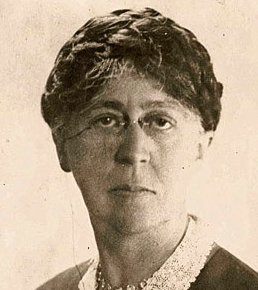
Mary Parker Follett (1868–1933). She spoke of coordination and "power with" when management still meant the stopwatch and the foreman; she was heard with respect and filed away without consequence.
Not long ago, in a conversation about how to reorganise some teams, I heard a phrase that gets repeated in a lot of rooms: "the problem is that if you don't have someone on top of them, people don't move". It was said matter-of-factly, the way one states a law of physics. And on that supposed law an entire structure was being designed: who reported to whom, where the controls went, how authority was divided up. The underlying premise was an old one: to manage is to have power over someone.
There is a woman who had been waiting a century to answer that phrase. She wrote when the word management evoked stopwatches, foremen and assembly lines; when the intellectual vanguard of work was Frederick Taylor measuring with a clock how many seconds a labourer took to load a ton of pig iron. In that climate, Mary Parker Follett said something that sounded almost eccentric: that the work of managing is not about imposing authority from above, but about coordinating relationships between people who pursue a common purpose. Not power over. Power with.
A thinker against the current
Follett (1868–1933) did not come from the world of business. She came from political philosophy and social work. Before she wrote about organisations she had founded community centres in Boston, studied the political science of her day and thought hard about democracy, groups and representation. When she finally turned that gaze onto industry, she did so with the tools of someone who had spent years observing how people coordinate—or fail to—when they have to decide together.
That background explains almost everything. Where Taylorism treated the organisation as a machine to be calibrated, Follett saw it as a living process, something that happens between people and that changes as it happens. And where mainstream management looked for efficiency in control, she looked for it in the quality of relationships.
She was, predictably, ignored. Her lectures were heard with respect and filed away without consequence. The mainstream ran in the opposite direction, towards measurement, standardisation and hierarchy. Her ideas lay dormant until the 1990s, when thinking about management—systemic, relational, attentive to emergence—rediscovered, almost with embarrassment, that much of what it was proposing as new had been formulated more clearly by a woman dead half a century earlier. Her papers were collected posthumously in Dynamic Administration, still the best way into her thought.
Power with, not power over
The distinction that sums her up, and with which she still unsettles, is the one she drew between power over and power with. Power over is the kind we take for granted: coercive, vertical, a zero-sum game where what one gains another loses. It is the power of the org chart, exercised because one box sits above another.
Follett did not deny that this power exists. What she denied was that it is the only kind, or the most productive. Against it she described a power that is not exercised against anyone but built jointly: power with. It is not a friendly sharing of the pie, nor a soft version of command. It is a more demanding idea: that the capacity to get things done lies not in position but in relationship. A team that coordinates its work well has more power—more real capacity to act on the world—than a boss giving orders to people who don't talk to each other.
Follett called that power coactive, and set it against coercive power without hedging:
"Coercive power is the curse of the universe; coactive power, the enrichment and advancement of every human soul."
— Creative Experience (1924)
A century later, this has stopped being eccentric and become almost obvious in the product teams that work. Nobody who has watched a good team up close believes that the authority of the person running it explains what it produces. What it produces comes out of coordination: out of engineering, design and business negotiating, correcting one another, sharing what they know. The director's "power over" is worth very little when the problem is genuinely complex, because nobody at the top of the org chart has enough information to dictate the solution. Follett saw this before anyone.
The organisation as process, not structure
Beneath that distinction lies a deeper and harder idea to absorb: for Follett an organisation is not a structure, it is a process. It is not an org chart, a set of boxes and lines representing a stable state of affairs. It is something that happens continuously, that remakes itself in every interaction, that only exists in the present tense and in motion.
The difference seems abstract until you look at what it does. If the organisation is a structure, improving it means redesigning the org chart: moving boxes, redrawing lines, changing who reports to whom. If the organisation is a process, improving it means tending to the interactions: how information circulates, how decisions get made, how the people doing the work coordinate. The first is what we do by default because it is visible and controllable. The second is what actually determines how a company works, and it is almost invisible.
Follett spoke of coordination as the heart of managerial work, and she set conditions for it that sound surprisingly modern today: coordination through direct contact between the people involved, coordination from the early stages and not as a final patch, continuous rather than one-off coordination. It is hard to read this without thinking of how we describe the work of autonomous teams today: those close to the material, deciding early, talking directly and constantly. It is not that she anticipated Agile. It is that Agile, at its best, rediscovered Follett.
Conflict as a resource
If there is one idea of hers worth rescuing whole, it is her treatment of conflict. Follett refused to see it as a pathology. For her, conflict is simply difference, and difference is a fact of life that can be put to work. The question is not how to eliminate conflict, but what to do with it.
And she described three possible answers. The first is domination: one side wins, the other loses. It is the easiest and the most expensive, because the loser does not disappear—they stay inside, resentful. The second is compromise: each side gives something up. It seems reasonable, but Follett distrusted it, because nobody gets what they actually wanted and the problem tends to return. The third, the one that interested her, is integration: finding a solution in which the real interests of both sides are satisfied—not halfway, but in some other way.
Her favourite example was domestic and perfect. Two people in a library: one wants the window open, the other closed. Compromise would mean leaving it half open, and both are uncomfortable. Integration begins by asking why: one wants air, the other wants to avoid a direct draught. The solution is to open a window in the next room, letting air in without the draught. Nobody has given anything up. The conflict has produced a solution better than either starting position.
What is valuable is not the anecdote but what it teaches you to do with friction. In product, the tension between the platform team and the product team, between what business wants and what engineering sees, is almost always informational: each side is seeing something real that the other doesn't. Treating that friction as a people problem to be solved by reorganising is usually a mistake. You eliminate the friction and, with it, the signal. Follett would ask us to do the opposite: to ask what each side is seeing, and integrate it.
The authority of the situation
From all of this follows her most radical conclusion about power. If the organisation is a process and managerial work is coordination, then authority should come not from hierarchical position but from the situation itself. Follett spoke of the law of the situation: at any given moment, the one who should set the direction is not the one highest up, but whatever the work requires at that instant. Orders are not given by one person to another; they are given by the situation, and the manager's role is to help everyone read it well.
"One person should not give orders to another person, but both should agree to take their orders from the situation."
— "The Giving of Orders" (1925)
This completely inverts the usual idea of command. You do not obey someone because they hold rank, but because in that moment they possess the relevant knowledge. Authority becomes mobile: it changes hands according to what is needed. It is, again, an astonishingly exact description of how the teams that run product well actually work, where the engineer who knows the system, the designer who has talked to users and the one who understands the business take turns leading, according to what the problem asks for.
What integration does not integrate
Her own method asks for this: read a position both for what it sees and for what it cannot. Applied to her, the exercise turns up real tensions—and she is better served by naming them than by canonisation.
The most serious is that her theory presupposes good faith and shared purpose. Integration works when the parties genuinely want to solve something together. But many organisations do not operate in that register: they operate under competitive pressure, with conflicting incentives, with scarcity that turns almost everything into a zero-sum game. In those contexts, the invitation to "integrate" can sound naive, or something worse: it can serve to paper over the fact that one party is exercising control or force over the other, presenting as a difference-to-be-integrated what is at bottom a conflict of interests sustained by that asymmetry. And a distinction very much her own is worth making here: what is imbalanced in such cases is not power. Genuine power — "power with" — is not shared out or balanced: it can only be grown through integration. What accumulates on one side is control or coercion, which is a different thing, and of far more limited reach. Not every disagreement is a misunderstanding that a good conversation will resolve.
Nor does Follett fully specify when integration is possible and when it is not. She leaves the practitioner without a clear criterion for the hard case: the one in which interests are not merely misaligned but incompatible. And there is a tendency in her work to treat all friction as productive, which can go blind to the situations where friction is, quite simply, a symptom of coercion.
This is not a refutation but a boundary. Follett describes beautifully how people who share an end ought to coordinate, and why the control model is worse than it looks. What she does not resolve is what to do when the end is not shared. That remains, a century later, an open tension.
Back to the source
What is interesting about reading Follett today is the discomfort of discovering that so precise a description of working with people was available a hundred years ago and we let it pass, busy building organisations on the opposite premise.
And perhaps her rediscovery is not entirely coincidental. Follett gets read again precisely when the digital begins to bring a new material to management. The work she had in front of her was still largely physical and measurable, decomposable into timeable tasks: the terrain where Taylorist control seemed to be proven right. Software is not that material. It is complex, opaque and hard to bound, and whoever manages it soon discovers they cannot govern it from above, because nobody above grasps the whole of it. That material forces the organisations that make it to coordinate more than to command and to trust more than to police: to do, at bottom, what Follett had been describing for a century. It was not nostalgia that rescued her, but necessity. The trust that hierarchies fear stops being an optional virtue when the material is so complex that control simply does not reach as far as the decisions get made.
Perhaps that is the most useful lesson of beginning a series of thinkers with her. We do not seek her out for being old, nor for being prophetic, but because she went deep into something—how people really work when they work together—to a point we still have not surpassed. Back to the phrase we began with: "if you don't have someone on top of them, people don't move". Follett was right that this phrase does not describe a law of nature. It describes an organisation that has given up on coordinating and only knows how to control. And, like every self-fulfilling prophecy, it ends up producing exactly the world it claims to fear.
Note: this piece was refined after publication thanks to an observation by Matthew Shapiro, of the Mary Parker Follett Foundation. He pointed out that speaking of a "power imbalance" betrays Follett: genuine power isn't balanced, it's grown through integration; what gets imbalanced is control or force. The distinction sharpened the section on the limits of her thought. With thanks.