You invent for other people
Drucker said a well-understood product sells itself. The sentence is usually read as a promise about selling; it is really a demand about understanding.
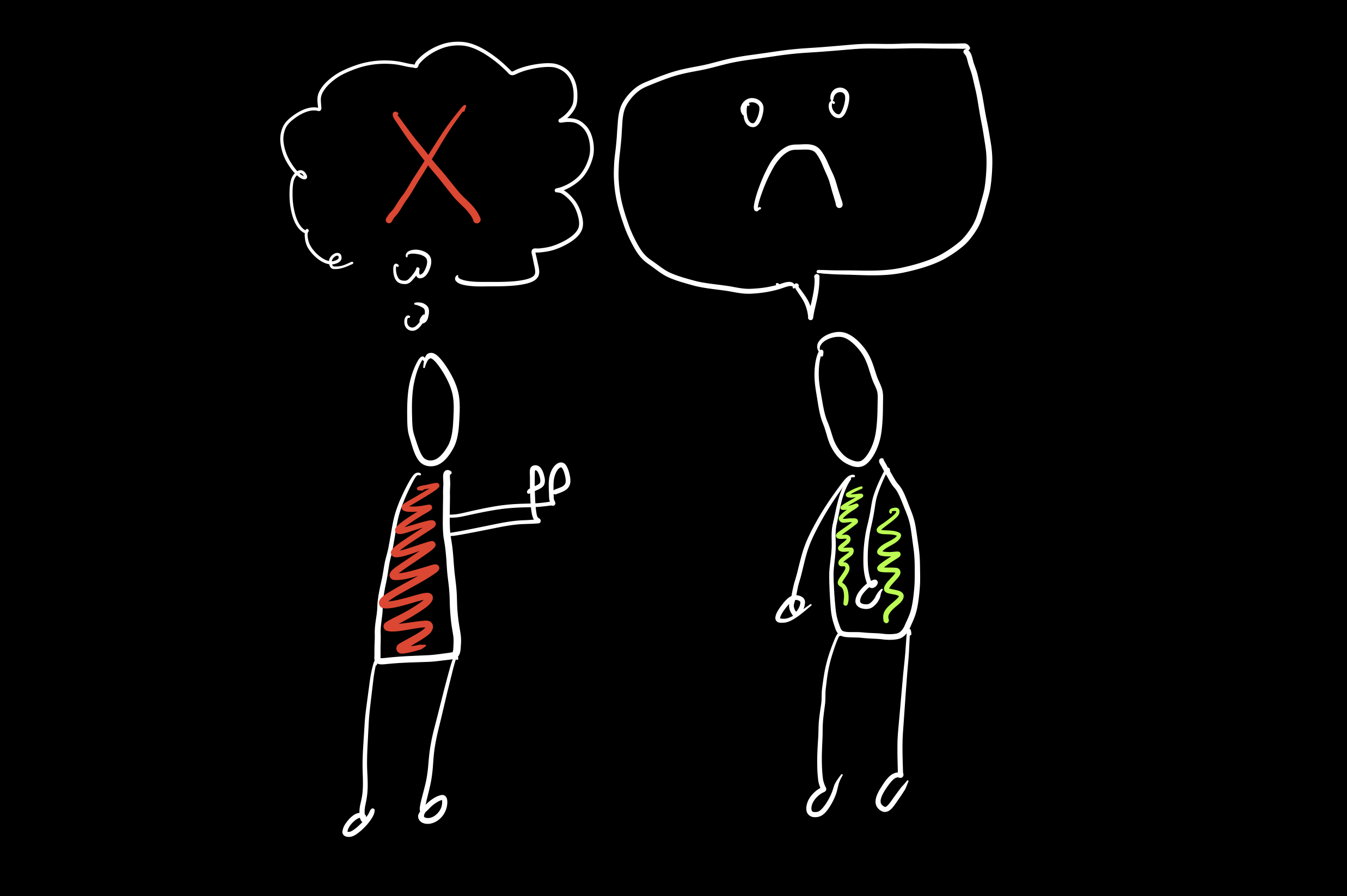
The aim of marketing is to know and understand the customer so well that the product or service fits them and sells itself.
— Peter Drucker
The sentence is quoted constantly, almost always for the wrong half. What gets remembered is sells itself. What matters is know and understand.
Read as a promise about selling, it is naive — plenty of well-understood products have died for want of distribution. Read as a demand about understanding, it is one of the more severe things anyone has said about product work, because it locates the effort before the build rather than after it.
Persuasion as a diagnostic
There is a useful inversion hiding here. If a product fits closely enough, most of the persuading has already been done by the fit. Which means the amount of persuasion a product requires is information about how well it was understood.
Organisations rarely read it that way. When adoption is slow, the reflex is to add persuasion: onboarding tours, in-app nudges, an email sequence, a webinar. Each of these can be justified individually and each also quietly answers the wrong question. They treat the gap as a communication problem when it is frequently a comprehension problem, and comprehension problems do not respond to volume.
Drucker's own framing in Managing for Results is blunter than the quote suggests: the customer defines the business, and the business is usually the last to find out. The definition happens outside the building, in a life the company has no access to, and gets revealed to the company slowly and expensively through behaviour.
The problem is proximity, not arrogance
The failure mode is not that teams disregard their users. It is that teams are the most available users they have.
You know the domain. You navigate your own product without friction because you built the paths. Your intuitions arrive with the texture of evidence, because they are evidence — about one person, in an unrepresentative situation, with unrepresentative context. That is a hard bias to feel from the inside, and reading more about empathy does not touch it.
What touches it is structure. Teresa Torres makes the argument for continuous contact rather than periodic research projects, and the mechanism matters more than the cadence: a weekly conversation you cannot skip produces different behaviour from a quarterly study you can commission and then ignore. Steve Portigal's contribution is the craft of the conversation itself, which is mostly the discipline of not asking questions that reward the answer you want.
Christensen and Ulwick attack it from the other side. Stop asking what people want and ask what job they are trying to get done, or what outcome they are trying to achieve. The reframe works because it moves the object of study away from the product — where the customer knows nothing useful — and towards their situation, where they are the only available expert.
Inventing for someone else
The phrase I keep coming back to is that you invent for other people. It sounds obvious to the point of banality, and I have watched a great many decisions that would not survive it being said out loud in the room.
Because the corollary is uncomfortable. If you invent for other people, then your taste is not the arbiter, your convenience is not a requirement, and the elegance of the internal model counts for nothing if it does not correspond to a life outside. A product is not a self-portrait, however much the roadmap resembles one.
Neil McElroy's 1931 memo — three pages that invented brand management — assigned one person full responsibility for a brand precisely so someone would be accountable for the outside view. Almost a century later the structure survives, and the reason for it does not always come with it.
Indi Young's version of empathy is the least sentimental and the most useful: it is not feeling what someone feels, it is building an accurate model of how they think, including the parts that would irritate you if you met them. Accuracy, not sympathy. You can build a good product for someone you would not have dinner with. You cannot build one for someone you have not bothered to understand.