Minority Report
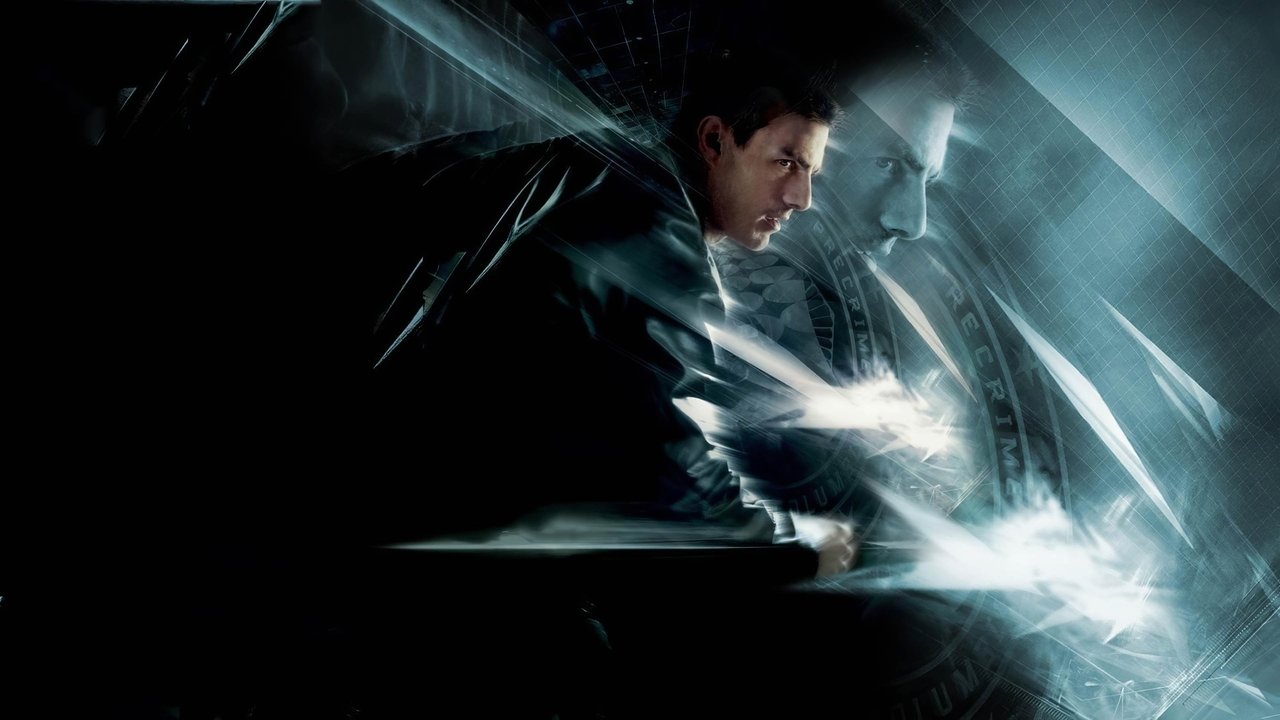
Writers: Scott Frank (screenplay), Jon Cohen (screenplay), Philip K. Dick (short story)
Cast: Tom Cruise, Colin Farrell, Samantha Morton, Max von Sydow
In 2054 Washington, D.C., a specialised police unit called Pre-Crime uses three clairvoyant humans — precogs — to identify murders before they happen, arresting the would-be killers on the basis of visions that have not yet materialised into acts. The system has eliminated murder in the district for six years and is about to go national. Then it names the unit's own chief, John Anderton, as the next perpetrator. He has thirty-six hours, a victim he has never met, and a system whose perfection he spent his career defending — and he runs.
The system works. This is established early, stated often, and never contradicted by the evidence within the film's own logic. The precogs see murders before they happen, and Pre-Crime intervenes, and for six years no one in Washington has been killed. The success rate is not approximate; it is absolute. And the film's argument begins precisely there, in the gap between a system that is correct and a system that is just. Anderton defends Pre-Crime with the conviction of someone whose grief has been converted into a mechanism — his son was abducted and presumably killed before the programme existed, and every arrest he makes is an implicit counterfactual: if this had been running then, the boy would be alive. The personal and the institutional are fused so completely that questioning the system is, for him, questioning whether his son's death was necessary. This is the structure of every organisation that has built its identity around a metric. The metric is real. The outcomes it measures are real. And the conversation about whether the metric captures the right thing becomes impossible because too many people's sense of purpose is invested in the number going in the right direction. Pre-Crime does not just predict murders. It provides meaning to everyone inside it, and meaning is much harder to dismantle than machinery.
What Philip K. Dick understood in 1956 — and what the film translates into physical architecture — is that a predictive system does not observe the future. It constructs it. The precogs do not see what will happen. They see what would happen if no one intervened, and the intervention changes the outcome, which means the vision was of a future that never occurred. The system works because it acts on predictions, and the predictions are accurate, but the events they predict are cancelled by the action, which means there is no way to verify after the fact whether the prediction was correct. The arrested individual is detained for a murder they did not commit, in a world where they would have committed it, according to a vision that was accurate in a timeline that was erased. The epistemic status of this is extraordinary: the system is unfalsifiable by design, because its success consists precisely in making its own predictions untrue. Every recommendation engine, every risk score, every model that intervenes in the thing it measures, shares this structure in miniature. The fraud model that blocks a transaction cannot know whether the transaction would have been fraudulent, because the block prevented the event that would have confirmed or denied it.
The minority report — the dissenting vision from the third precog, the one that disagrees — is the detail that breaks everything, and the film is named after it because it is the only honest part of the system. The existence of a minority report means the precogs occasionally see different futures, which means the future is not determined, which means the arrested individual might not have done it, which means Pre-Crime is convicting people for something that was probabilistic, not certain, while telling them and the public that it is certain. The minority reports are suppressed. Not destroyed — that would be wasteful — but filed away, inaccessible, because their existence contradicts the premise on which the system's authority rests. This is the most precise thing the film does: it shows that the system's flaw is not a technical failure but an institutional one. The predictions are genuinely good. The dissents are genuinely rare. And the decision to suppress the dissents is not made by a villain but by the structure of an organisation that cannot function if its outputs are presented as probabilistic. A risk score labelled "87% likely" produces a conversation. A risk score labelled "Pre-Crime has identified you as a future murderer" produces compliance. The certainty is not in the data. It is in the packaging, and the packaging is chosen because the institution requires certainty to operate at the scale it has been given.
The trap at the end is the film's cleanest formulation. Anderton, having discovered that the system's creator murdered someone and used the system itself to hide the evidence, presents the dilemma directly: if you do not kill me, the precogs were wrong and Pre-Crime is over; if you do kill me, you go away, but the system is validated. It is a perfect double bind, and it works because Anderton has finally understood what Agatha told him earlier — you still have a choice — which is the one thing the system's architecture denies. The precogs see what will happen, and Pre-Crime acts as though what will happen is what must happen, and the entire apparatus depends on collapsing the distance between prediction and determination. Agatha's line is a crack in that collapse. Spielberg, working in a genre that usually resolves such tensions with an action sequence, does something harder: he lets the system be dismantled not because it failed but because its success was built on a premise that could not survive examination. The precogs are freed. The prisoners are released. The question of whether any of them would have killed is left permanently open, because it was always permanently open, and the system's function was to close it by force.