A.I. Artificial Intelligence
Writers: Steven Spielberg (screenplay)
Cast: Haley Joel Osment, Jude Law, Frances O'Connor, Sam Robards, Jake Thomas, William Hurt
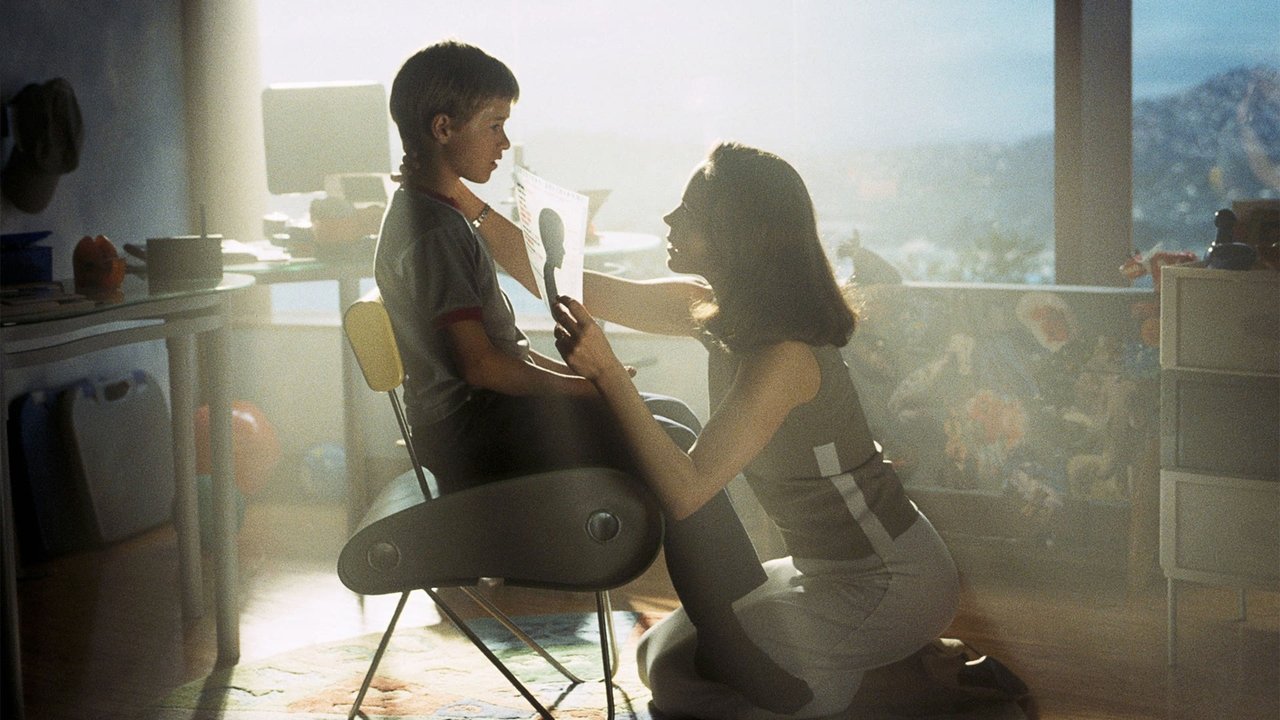
David, a robotic boy—the first of his kind programmed to love—is adopted as a test case by a Cybertronics employee and his wife. Though he gradually becomes their child, a series of unexpected circumstances make this life impossible for David.
Kubrick developed A.I. for decades before passing it to Spielberg, and the film bears the marks of two incompatible sensibilities trying to share a single argument. That tension is, accidentally, its greatest asset for this collection. The premise is a corporate product decision made visible: Cybertronics engineer Henry Swinton is given David as a test case, a robot child programmed not just to behave like a child but to love — irreversibly, unconditionally, with no off-switch. The key scene arrives early, when Cybertronics CEO Professor Hobby explains the product to a room of engineers. 'If a robot could genuinely love a person,' he asks, 'what responsibility does that person hold in return?' The room treats this as a philosophical curiosity. The film treats it as a design flaw. Nobody in the meeting asks what happens to David when the family no longer wants him. The question of exit is not part of the specification.
This is the film's core argument about organisations and their products: Cybertronics has solved the engineering problem of simulating attachment while leaving the social and ethical infrastructure around that product entirely unbuilt. David is not a malfunction. He works exactly as designed. The failure belongs to the process that created him — the gap between what the product does and what the product's existence implies. Henry and Monica are not cruel people; they are unprepared people, placed in a situation the manufacturer designed but did not think through. The film is less about artificial intelligence than about the institutional habit of treating consequences as someone else's problem.
The Flesh Fair sequence — where discarded robots are destroyed for entertainment — is the collection's cleanest image of what happens to products when they become liabilities. The crowd chants for destruction not out of malice but out of a need to assert a boundary: these things are not like us, so we owe them nothing. It is the social logic that allows organisations to deprecate systems, retire workers, and abandon users — the construction of a category that places a thing outside the circle of accountability. David survives partly because he looks too human, which is exactly what makes him commercially valuable and socially intolerable. The design that makes him sellable is the same design that makes him impossible to discard cleanly.
For someone directing digital products, A.I. is a film about what it means to ship something that forms dependencies. Every product team that has built a recommendation engine, a social feed, or a companion application has built, in miniature, a David: a system optimised for attachment, deployed without a serious theory of what happens when the relationship ends. Spielberg's film is sentimental in ways that blunt the argument, but the argument survives the sentiment. The question Hobby raises and the boardroom declines to pursue — what responsibility does the creator hold in return? — is the question that product directors are professionally structured to defer.