One Flew Over the Cuckoo's Nest
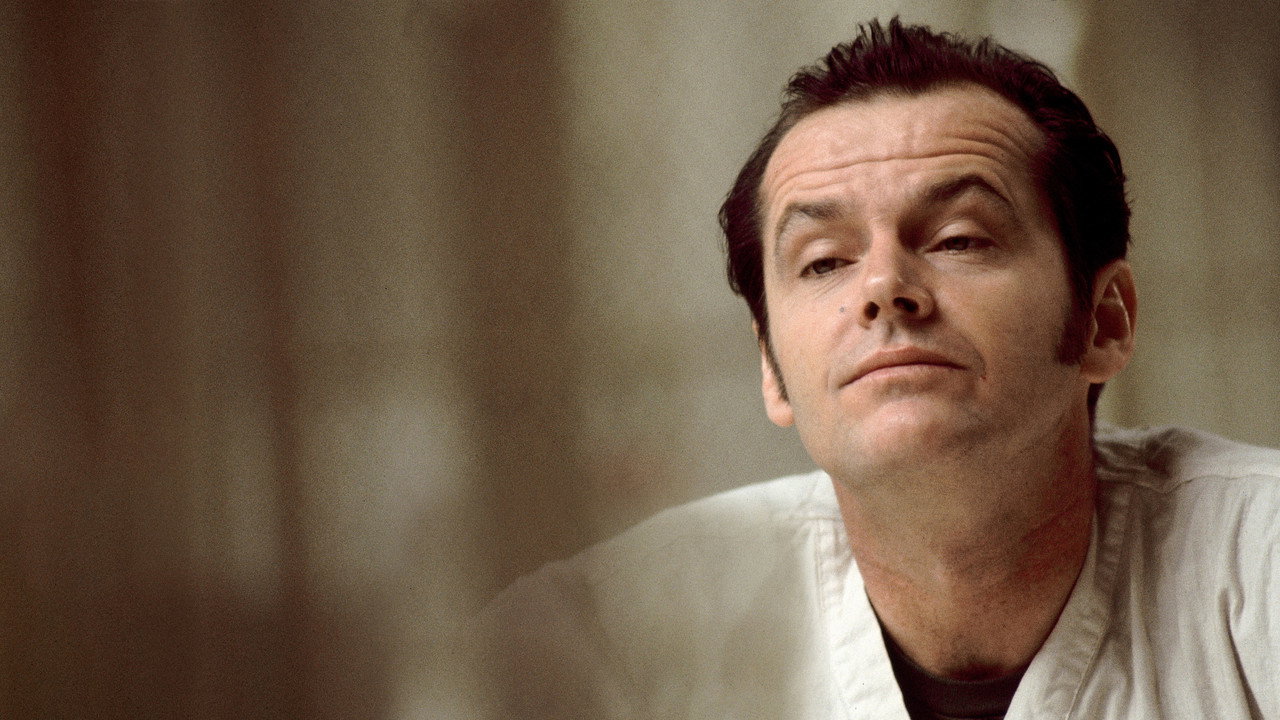
Writers: Lawrence Hauben (screenplay), Bo Goldman (screenplay), Ken Kesey (novel)
Cast: Jack Nicholson, Louise Fletcher, Will Sampson, Danny DeVito, Brad Dourif, Christopher Lloyd, Scatman Crothers
Randle Patrick McMurphy, a convict serving a short sentence for assault, gets himself transferred to a psychiatric institution on the assumption that it will be easier than a prison work farm. He discovers a ward run by Nurse Ratched through group therapy sessions, medication schedules and an unbroken routine. He also discovers that most of the patients are voluntary — they committed themselves and could leave — but they do not. McMurphy's attempts to introduce disorder into the ward bring him into escalating conflict with Ratched, who responds not with rage but with procedure: reports filed, privileges revoked, treatments prescribed. The institution's answer to McMurphy is not punishment but diagnosis, and the diagnosis is its own justification.
McMurphy arrives at the institution expecting a system he can game. He is a convict, not a patient — he got himself transferred from a prison farm on the theory that a mental hospital would be softer — and he reads the ward the way a competent operator reads any new environment: who has authority, where are the seams, what can be negotiated. He organises a card game, proposes a schedule change to watch the World Series, needles the orderlies, and acts, in general, like a man whose principal skill is finding the informal power structure inside any formal one and working it. He has done this before, in prisons and work camps, and it has always worked, because the institutions he has been in operated on visible authority — guards with keys, wardens with rules, power that announced itself and could therefore be challenged or circumvented. What he does not understand, and what the film takes its full running time to teach him, is that this institution does not operate on visible authority. Nurse Ratched does not give orders. She asks questions. She does not impose consequences. She facilitates group discussions in which the patients impose consequences on each other. She does not lock the door. She administers a space in which the patients have forgotten that the door opens from inside. McMurphy's skill set is calibrated for a system that says no; he has walked into a system that says of course, and then waits.
The group therapy sessions are the mechanism, and Forman films them like board meetings — the circle of chairs, the measured facilitation, the careful distribution of speaking time. Ratched opens a topic, usually drawn from a patient's personal life, and guides the discussion until the patient is exposed, not by her but by his peers, in a process that looks like support and functions as surveillance. Billy Bibbit's stammer, Harding's marriage, Cheswick's anxieties — each is surfaced, examined, and left open in a way that ensures the patient returns to the next session carrying the knowledge that his interior life is the group's property. This is not cruelty. It is management. Ratched does not need the patients to obey her; she needs them to obey the therapeutic frame, and the therapeutic frame is self-reinforcing because the patients believe it is helping them. The genius of the arrangement is that it converts the institution's control function into the patient's self-understanding: I am here because I need to be here, I participate in therapy because participation is treatment, the routine is not a constraint but a structure that keeps me safe. Any organisation that has built a culture where the employees police each other's behaviour through the language of team values, where dissent is processed through feedback frameworks that pathologise the dissenter, and where the freedom to leave is technically present but structurally invisible, has built a version of Ratched's ward.
The revelation that breaks the film open is McMurphy's discovery that most of the patients are voluntary. They committed themselves. They can sign out. They stay. McMurphy's outrage — you're no crazier than the average asshole out walking around on the streets — is genuine and it is useless, because the problem is not that the patients believe they are crazy. The problem is that they have been inside the institution long enough that the institution's categories have become their own. The voluntary patients are the film's deepest argument about organisational power: the most durable form of control is not the one that prevents you from leaving but the one that makes leaving unthinkable, not by threatening consequences but by defining the space so completely that outside ceases to be a concept. The locked ward is for the involuntary patients. The voluntary patients do not need locks. They have something more effective: a routine that has replaced their capacity to imagine a different one.
McMurphy's escalation — the fishing trip, the party, the fight — represents his increasingly desperate attempt to demonstrate that the institution's frame is not the only one available, and each attempt produces the same response: not anger, not punishment, but reclassification. His behaviour is documented, evaluated, and absorbed into the diagnostic framework. The fishing trip is evidence of poor impulse control. The party is evidence of antisocial tendencies. The fight is evidence of violent pathology. Each act of rebellion confirms the diagnosis. Ratched does not need to defeat McMurphy in argument; she only needs to wait until his behaviour has generated enough documentation to justify electroshock, and then, after the final incident, a lobotomy. The ending — Chief Bromden smothering the lobotomised McMurphy and then breaking through the window, lifting the hydrotherapy console McMurphy could not, running into the dark — is the only exit the film permits, and it is not reform. It is escape. The institution is not changed. It is left behind, by the one person who understood that he could not fix it from inside and that staying would cost him what McMurphy had already lost: the ability to act on his own recognition. But I tried, McMurphy says, before the end. Goddamnit, at least I did that. It is the epitaph of everyone who has tried to change an institution and been changed by it instead, and the film's honesty is that it does not pretend the trying was enough.