Michael Clayton
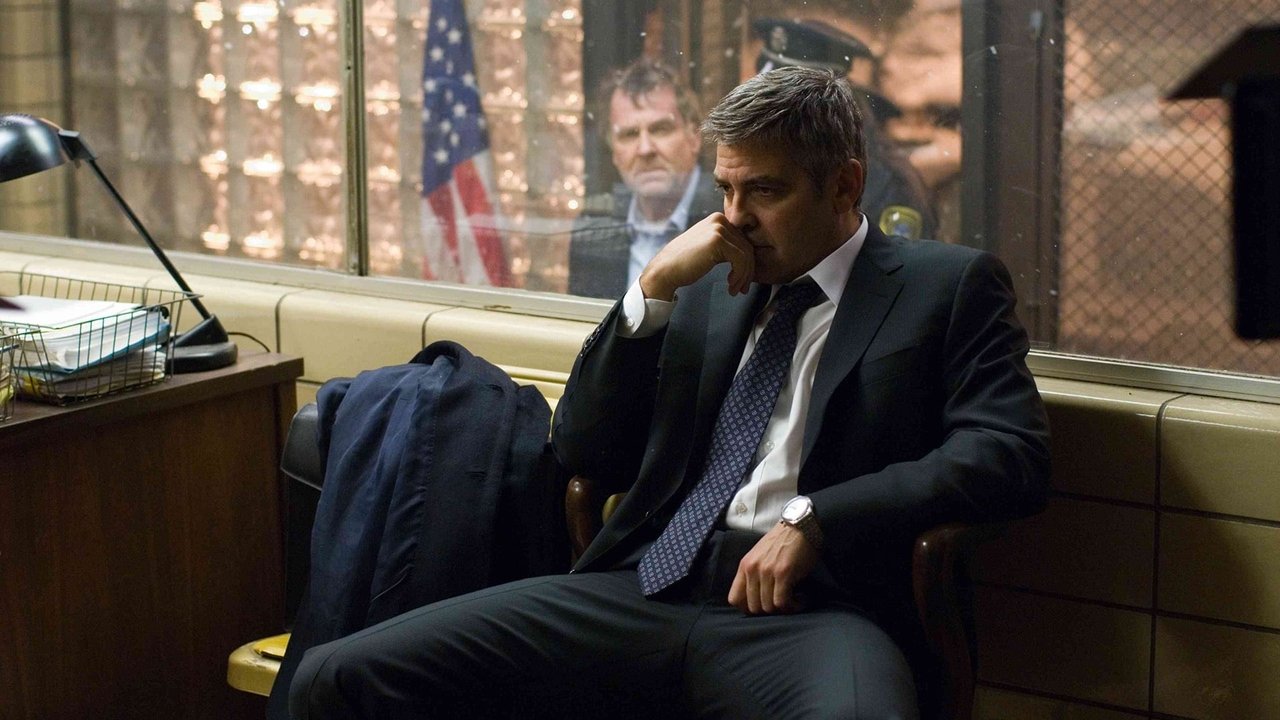
Writers: Tony Gilroy (writer)
Cast: George Clooney, Tom Wilkinson, Tilda Swinton, Sydney Pollack, Michael O'Keefe, Ken Howard
A law firm brings in its "fixer" to remedy the situation after a lawyer has a breakdown while representing a chemical company that he knows is guilty in a multi-billion dollar class action suit.
Michael Clayton opens with a monologue spoken into darkness — Arthur Edens, the firm's lead litigator on a massive agrochemical class action, dictating an ecstatic, unravelling brief that sounds like a man simultaneously losing and finding his mind. What Gilroy understands, and what makes this film more than a legal thriller, is that Arthur has not had a breakdown. He has had a breakthrough. He has looked, for the first time in seventeen years of representing U-North, at what the company actually did — what it knew, when it knew it, and what it chose to do with that knowledge — and found he cannot continue to professionally metabolise the information. His crisis is not psychological. It is ethical. The organisation mistakenly classifies one for the other, and that misclassification is the engine of the entire plot.
The firm's response to Arthur's breach is the film's real subject. Michael Clayton is not a fixer in any heroic sense; he is an institutional instrument whose function is to restore equilibrium when something threatens to surface. Gilroy frames the law firm, its client U-North, and Clayton himself as nested systems of managed exposure. Everyone in the chain — Clayton, Marty Bach, U-North's general counsel Karen Crowder — is performing a version of the same function: absorbing and redirecting liability before it becomes legible as accountability. The film's most precise scene may be the one in which Karen rehearses her answers in a hotel mirror before a deposition, coaching herself through smile-timing and sentence length. She is not preparing to lie exactly; she is preparing to perform competence so completely that no one will look behind it. She has modelled the interrogation and is drilling the interface.
What the film argues, structurally, is that large organisations do not need to conspire in the dramatic sense. They do not need a villain issuing orders. They need only to have created, over many years, a system in which every participant's incentives align against disclosure. Bach does not tell Clayton to cover things up; he tells him to 'fix it,' and Clayton knows what fixing means because the organisation has trained him to know. Crowder does not tell her subordinates to commit crimes; she asks whether a problem can be 'handled' and leaves the room. The crimes that result are emergent — produced by the structure, not directed by any individual. This is what makes the film useful for anyone thinking about digital organisations: the mechanisms by which platforms, firms, and agencies come to know things they cannot officially know, and act on that knowledge through deniable intermediaries, are exactly what Gilroy is diagramming.
The film ends with Clayton in the back of a cab, instructing the driver to just drive. He has won, in a narrow sense — the evidence has surfaced, the murder has been exposed — but Gilroy gives him no catharsis. He sits there looking like a man who has successfully dismantled one machine and has no idea what replaces it. This is the correct ending for a film about institutional logic: accountability, when it arrives, does not restore anything. It merely interrupts the system long enough for someone to notice it was running.