PERFECT BLUE
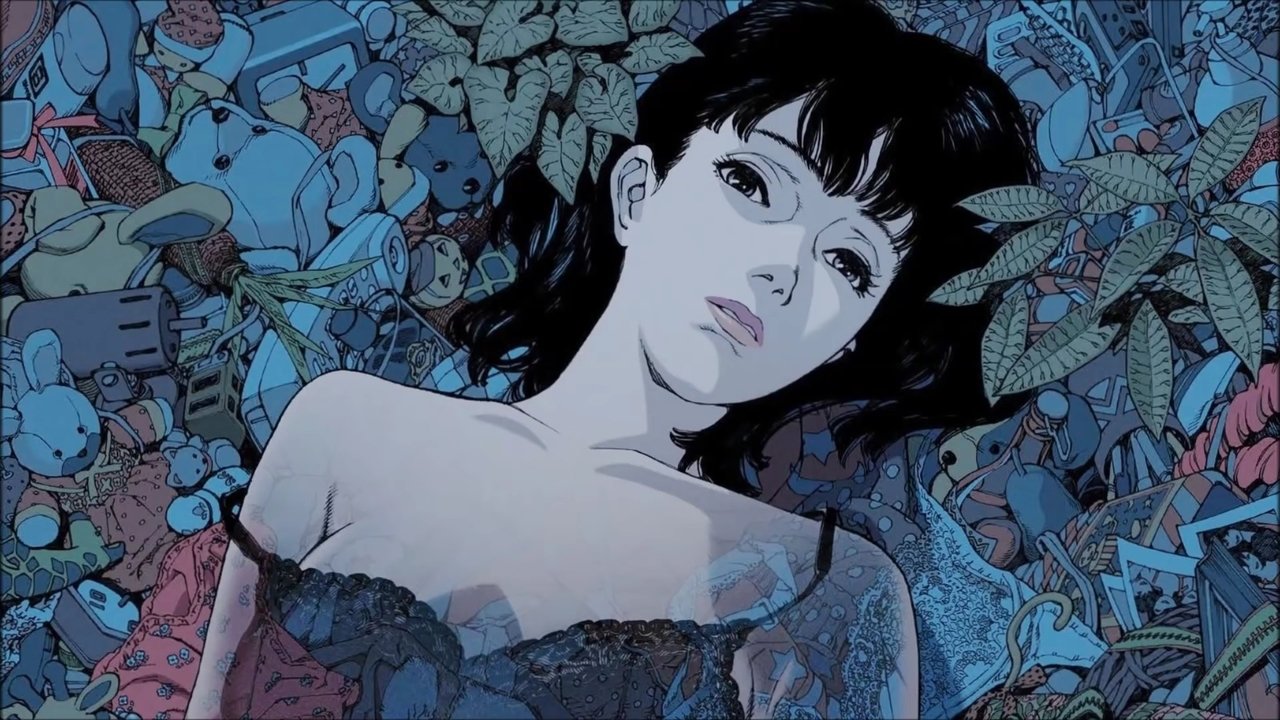
Writers: Sadayuki Murai (screenplay)
Cast: Junko Iwao, Rica Matsumoto, Shiho Niiyama, Masaaki Okura, Shinpachi Tsuji, Emiko Furukawa
Rising pop star Mima Kirigoe quits singing to pursue a career as an actress. After she takes up a role on a popular detective show, her handlers and collaborators begin turning up murdered. Harboring feelings of guilt and haunted by visions of her former self, Mima's reality and fantasy meld into a frenzied paranoia.
The mechanism that destroys Mima Kirigoe is not the stalker, and not the murders. It is the fan website. Early in the film, Mima discovers a site called 'Mima's Room' — a first-person diary written in her voice, by someone who is not her, describing her thoughts, her fears, her daily movements in intimate detail. The site is more popular than anything she controls. The audience prefers the fictional Mima to the actual one, and the fictional Mima has opinions about what the actual Mima should do: she should not quit pop music, should not take acting roles, should not grow. This is not a supernatural premise. It is a precise description of what happens when a public figure's identity becomes a product that audiences feel entitled to maintain. The question Perfect Blue asks is who owns a persona once it has been distributed.
Satoshi Kon's formal strategy — cutting between reality, memory, performance, and delusion without signalling which register you are in — is not stylistic indulgence. It is the argument. Mima, playing a rape victim in a TV drama, cannot distinguish the performance from the experience. The director shoots a scene; the scene becomes a memory; the memory infects her perception of actual events. What Kon is modelling is something specific to media production: the way sustained performance of a constructed self gradually colonises the performer's capacity for first-person experience. The people who built Mima's pop career did not intend this. They simply needed a product with recognisable attributes — innocence, availability, consistent affect — and they refined those attributes over years until Mima had difficulty knowing which responses were hers and which were the product's.
For anyone directing digital products, the film is uncomfortable reading. The fan site operator is not a villain in any simple sense; he is a user who found a gap between what the product promised and what it delivered, and filled it himself. The product promised a continuous, accessible, emotionally available Mima. The actual Mima wanted to change. The gap between those two versions of the same person is where the pathology lives — and it is a gap that product managers create routinely, whenever they build audiences around a persona rather than a proposition. The more successfully you have convinced an audience that a person is a product, the more violent their reaction when the person tries to stop being one.
What sustained public attention does to the self is the question Kon is asking, and the answer, rendered in 81 minutes of controlled formal dissolution, is that it makes the boundary between performance and identity increasingly difficult to locate — not for the audience, but for the performer. This is a problem that predates the internet, but the internet has industrialised it, and anyone building platforms that encourage people to perform versions of themselves at scale is, in some small way, running the machinery that Perfect Blue describes.