Being There
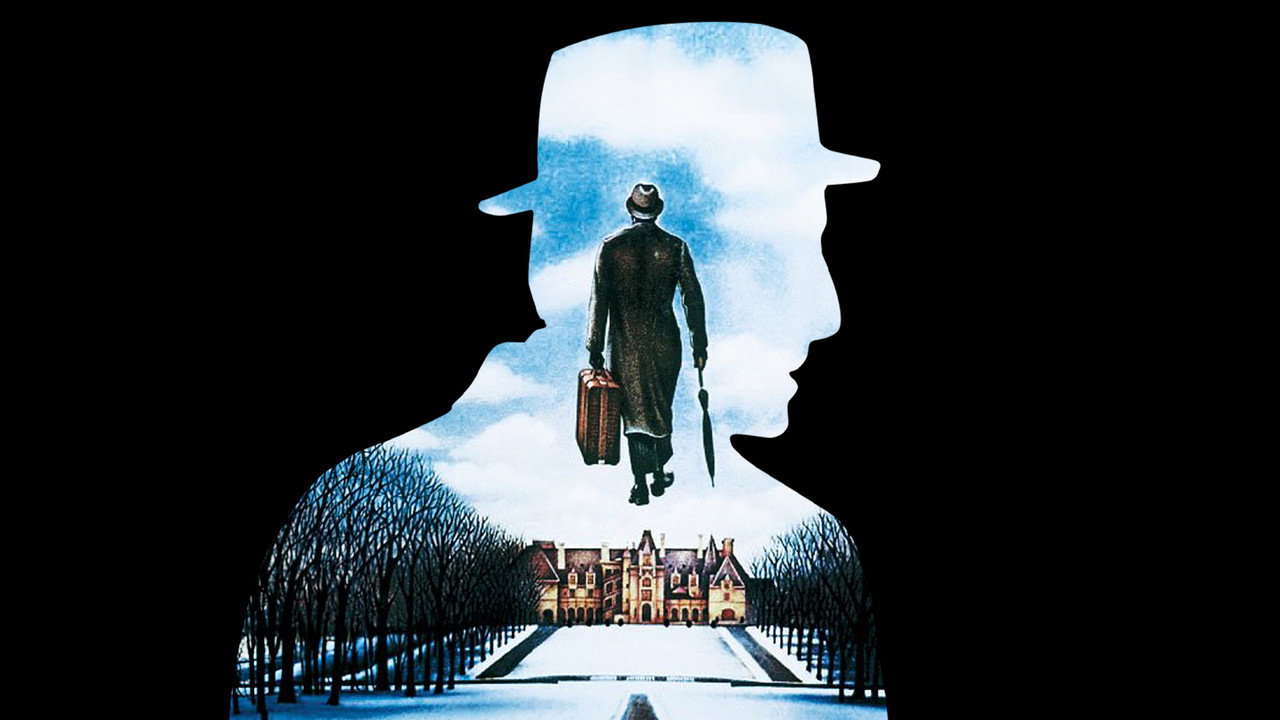
Writers: Jerzy Kosinski (screenplay)
Based on: "Being There" by Jerzy Kosinski (1970) ↗
Cast: Peter Sellers, Shirley MacLaine, Melvyn Douglas, Jack Warden, Richard Dysart, Richard Basehart
Chance, a simple-minded gardener who has spent his entire life inside a wealthy man's townhouse in Washington, is turned out onto the street when his employer dies. He has no education, no identification, no experience of the world outside the house and the television set that has been his only companion. Through a minor traffic accident he is taken in by Eve Rand, wife of Benjamin Rand, a dying industrialist who is also the closest adviser to the President of the United States. Chance's gardening observations — about roots, seasons, growth in the spring — are interpreted as profound economic metaphors by everyone he meets, and within days he is being considered for public office.
The first thing to understand about Being There is that Chance the Gardener does not deceive anyone. He never claims expertise. He never adjusts his language to his audience. He says what he knows — that gardens have seasons, that roots matter, that growth comes in the spring — and he says it in the only register he possesses, which is the flat, affectless cadence of a man who learned to speak from watching television. What the film is about is not Chance's simplicity but the interpretive machinery that surrounds him, and the discovery it makes is one that has only grown more precise since 1979: in a media environment saturated with strategic communication, an absence of strategy reads as depth. Everyone Chance encounters — the President, the political press, the Soviet ambassador, the talk-show audience — is so accustomed to hearing language that is calculating something that when they encounter language that is calculating nothing, they project onto it whatever meaning they need. Benjamin Rand hears economic philosophy. The President hears a man who has distilled complex policy into accessible metaphor. The television audience hears authenticity. Nobody hears a gardener talking about gardening, because in the system they inhabit, nobody talks about gardening on television unless gardening stands for something else.
Peter Sellers plays Chance as the most disciplined performance of his career precisely because there is nothing to play. He sits still. He watches. He answers questions by restating what he knows, which is never more than one sentence about soil or seasons, and then he waits. The performance is a refusal of everything acting usually provides — intention, subtext, transformation — and its blankness is the point. Chance is a surface, and the film's argument is that in a society structured by media, a surface is all you need. The interface is the content. What Benjamin Rand recognises in Chance is not wisdom but composure — a man who sits in a room with the President and does not perform anxiety, does not calculate his response, does not position himself. That composure is misread as command, because in the political world Rand inhabits, the only people who are calm are the ones who have already won. The misreading is not stupid. It is a heuristic, and it works most of the time, and the film exists to show the one case where it does not: a man who is calm because he has nothing at stake, processed by a system that cannot model the possibility of having nothing at stake.
The structure of the film is worth examining because it is doing something unusual with causality. At no point does Chance act. Things happen to him — he is taken in, dressed, introduced, quoted, televised, consulted — and he responds to each with the same gardening sentence, adjusted only in the degree to which the question allows a gardening answer. The film has no plot in the conventional sense because Chance has no agency in the conventional sense; he is a fixed point around which the system orbits, finding in his stillness whatever it was already looking for. This is Kosinski's insight, imported cleanly from the novel: institutions and media environments do not discover meaning; they impose it, and they will impose it on anything that holds still long enough. A blank screen is not neutral — it is a projection surface, and the quality of what appears on it tells you nothing about the screen and everything about the projector. Anyone who has watched a simple product feature be interpreted as a strategic masterstroke by an analyst, or watched a brief executive remark be unpacked for days as evidence of vision, knows the mechanism. The system does not need content. It needs something to interpret, and interpretation is what it does regardless of what is in front of it.
And then there is the ending, which is either a miracle or a joke or both, and which Kosinski insisted on and Sellers fought for: Chance walks across the surface of a lake and pauses to dip his umbrella in the water, confirming that it is real water and he is really walking on it. The film leaves this without explanation. It offers no fantasy logic, no dream sequence, no metaphor that would make it legible. What it does offer is a closing title card — life is a state of mind — and a final image that invites exactly the same interpretive compulsion the film has spent two hours diagnosing. We want it to mean something. We want the walk on water to be a statement about innocence or divinity or the arbitrariness of the world's categories. But the film has just spent its entire running time showing us that the meaning we assign to an event tells us about ourselves and nothing at all about the event, and the ending is its last, most elegant demonstration. Chance walks on water because the film walks on water — it supports nothing, explains nothing, and we stand on the shore making it profound.