Shattered Glass
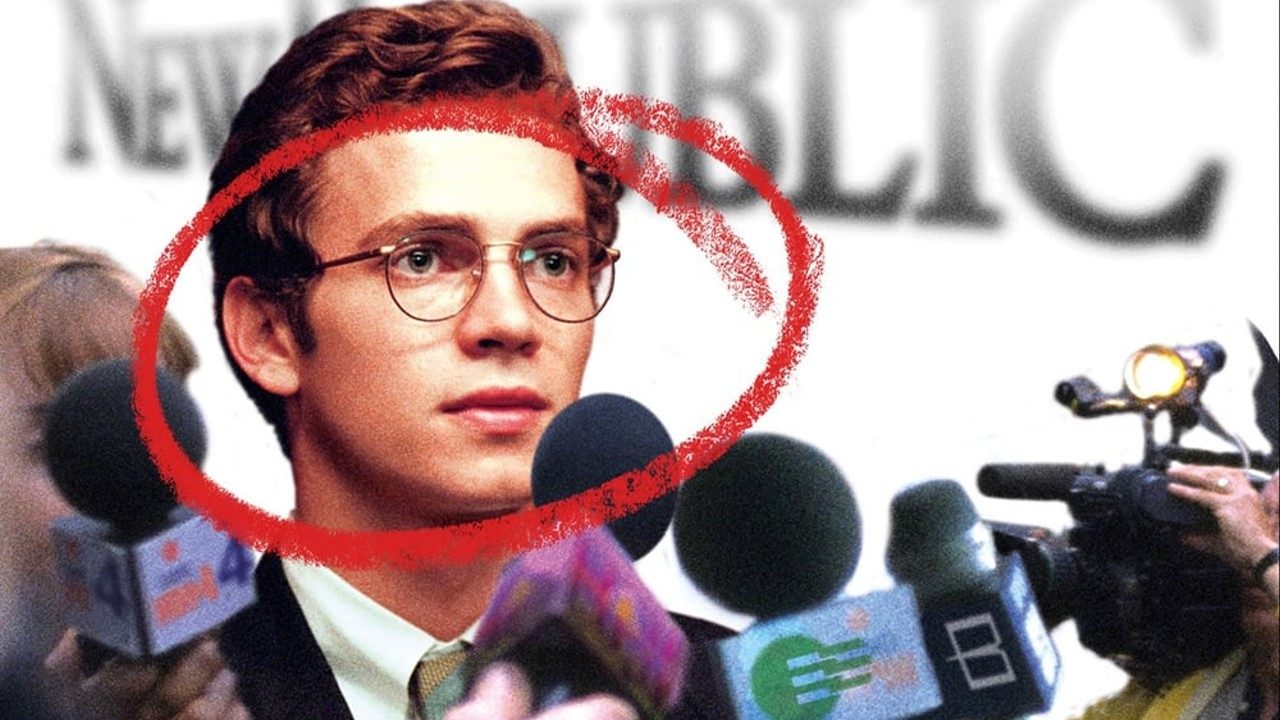
Writers: Billy Ray (writer)
Cast: Hayden Christensen, Peter Sarsgaard, Chloë Sevigny, Rosario Dawson, Melanie Lynskey, Hank Azaria
Stephen Glass is a staff writer for the respected current events and policy magazine The New Republic and a freelance feature writer for publications such as Rolling Stone, Harper's and George. By the mid-90s, Glass' articles had turned him into one of the most sought-after young journalists in Washington, but a bizarre chain of events - chronicled in Buzz Bissinger's September 1998 Vanity Fair article - suddenly stopped his career in its tracks.
Shattered Glass is not really about Stephen Glass. It is about the editorial system that made him possible. The New Republic in the mid-1990s had developed a culture in which the admiration of colleagues functioned as a substitute for verification. Glass was extraordinarily skilled at one specific thing: reading the room. He understood that editors liked being needed, liked being made to feel protective, liked the warmth of a writer who pre-emptively worried about whether his piece was good enough. He manufactured dependency the way a confidence trickster manufactures obligation. The film's real subject is how a high-status institution with strong professional norms can be gamed precisely because those norms create predictable blind spots. The New Republic did not lack standards; it had too much confidence in them.
The organisational dynamics become sharpest when Chuck Lane takes over as editor. Lane is not smarter than his predecessor Michael Kelly, but he is newer — unattached to the social compact that Glass had spent years building. When a fact-checker at Forbes Digital calls about Glass's piece on a teenage hacker, Lane does the thing the institution had stopped doing: he follows the evidence rather than the relationship. The film stages this as a thriller, but the real tension is institutional. Every person around Lane is telling him, implicitly and explicitly, that pursuing the story will damage the magazine, damage morale, damage Glass himself. The pressure to preserve the social fabric of the organisation is nearly indistinguishable from the pressure to suppress the truth. This is the film's most instructive structural argument: accountability fails not because people are corrupt but because the costs of enforcement fall on the enforcer.
For anyone thinking about how organisations process information, the film is a precise case study in what happens when social proof replaces epistemic verification. Glass's fabrications survived for years because his stories were evaluated by the response they produced — the buzz, the reprints, the reader mail — rather than by the facts they claimed to contain. The New Republic had outsourced its reality-testing to audience reaction. This is not an exotic failure mode. It describes how product decisions get made when engagement metrics replace user research, how strategy documents survive because they sound right in the room, how post-mortems conclude before anyone checks the original assumptions. The verification step that Glass's editors skipped is the same step that gets skipped whenever confidence in the source substitutes for confidence in the claim.
What distinguishes Shattered Glass from a straightforward media ethics film is the granularity of its attention to craft — specifically, the craft of deception as a mirror of the craft of journalism. Glass's fabrication notes, his fake voicemails, his constructed website: each is a parody of the verification process, built to pass inspection by people who already believed. The film argues, quietly but persistently, that the skills required to fabricate convincingly are close cousins to the skills required to report well. Both require imagining what an editor will need to check. The difference is purely in what you do with that imagination. This makes it an unexpectedly useful film for anyone in a role that depends on institutional trust — which is to say, anyone who directs anything.