The Front
Writers: Walter Bernstein (writer)
Cast: Woody Allen, Zero Mostel, Herschel Bernardi, Michael Murphy, Andrea Marcovicci, Remak Ramsay
A cashier poses as a writer for blacklisted talents to submit their work through, but the injustice around him pushes him to take a stand.
The mechanism the blacklist constructed is worth examining precisely because it was not a conspiracy in the conventional sense. Nobody in The Front is issuing direct orders to destroy careers. What Walter Bernstein's screenplay documents — with the authority of a writer who was himself blacklisted — is something more structurally interesting: a compliance system that operated through omission, through lists, through the quiet withdrawal of work, through broadcasters and studios whose institutional incentive was never to know too much. The network executives who appear in the film are not ideologues. They are risk managers. The blacklist persisted not because true believers enforced it but because no single organisation had sufficient reason to be the first to stop complying with it.
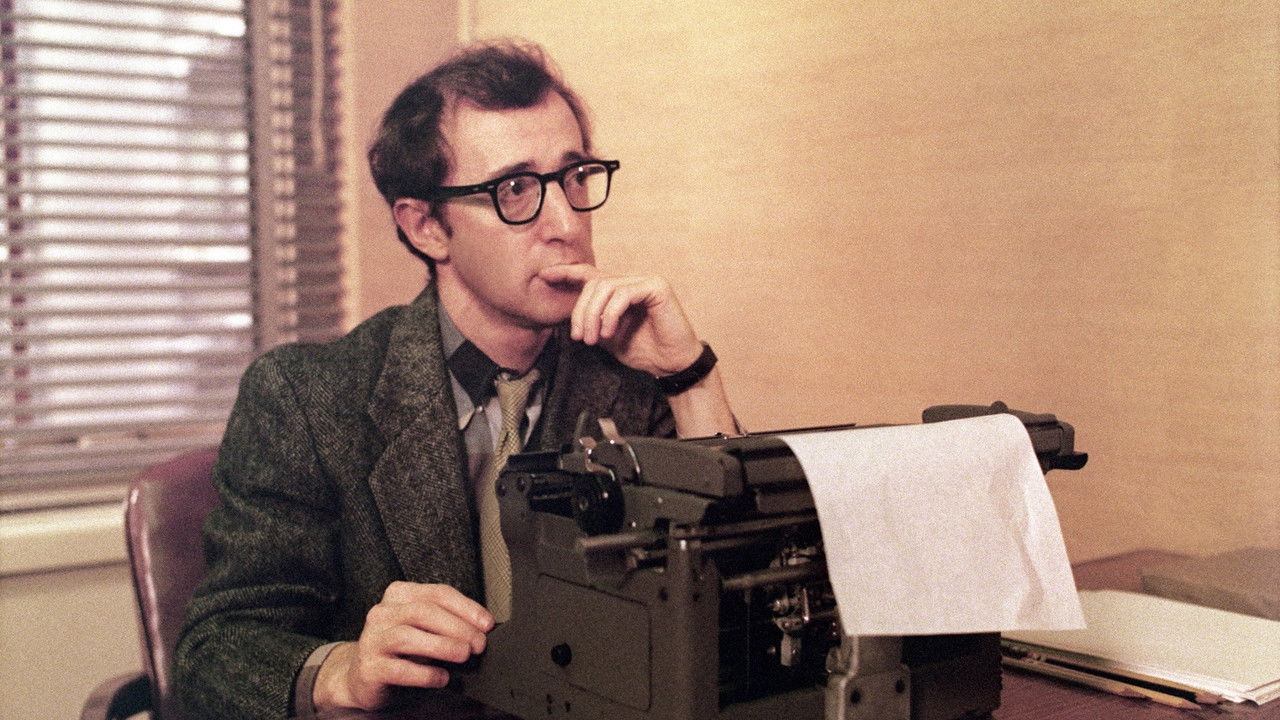
The front arrangement itself — Howard Prince (Woody Allen), a cashier, submitting the work of blacklisted writers under his own name — is a precise model of how institutions generate shadow structures when official channels become unusable. The talent hasn't disappeared; the work is still being made; the audience is still being served. What changes is attribution, accountability, and compensation. The shadow economy created by the blacklist mirrors dynamics visible in any organisation where official process diverges far enough from operational reality that workarounds become load-bearing. The front is not a fraud so much as an adaptation to a broken system, and the film is unsentimental about what that adaptation costs: Hecky Brown (Zero Mostel), who cannot find a front and cannot stop being watched, pays the highest possible price.
Zero Mostel's performance as Hecky is where the film earns its place in a collection about institutional pressure. His arc — from the manic energy of a performer still trying to work around the system to the scene in which he is interviewed by the investigator and asked to name names, and recognises he has nothing left to trade — is a portrait of what happens when an organisation turns accountability into a weapon. The investigator doesn't want information. He wants compliance rituals. Naming names is not useful intelligence; it is a loyalty demonstration, a mechanism for making the named person complicit. The system isn't extracting data. It's producing subjects.
For anyone directing digital products, the blacklist era offers a parable about what happens when the formal accountability structure of an organisation decouples from the actual flow of work and information. The front arrangement worked, until it didn't, because the organisation needed the output but couldn't officially acknowledge the process. That condition — where what the institution needs and what it can publicly sanction diverge — is not historically confined to 1950s television. It describes every bureaucracy that has ever outsourced a decision it didn't want to own, every platform that has ever algorithmically amplified content it would never have commissioned, every organisation that has built a process designed to produce deniability rather than accountability. The Front is not a historical curiosity. It is a structural diagnosis.