Quiz Show
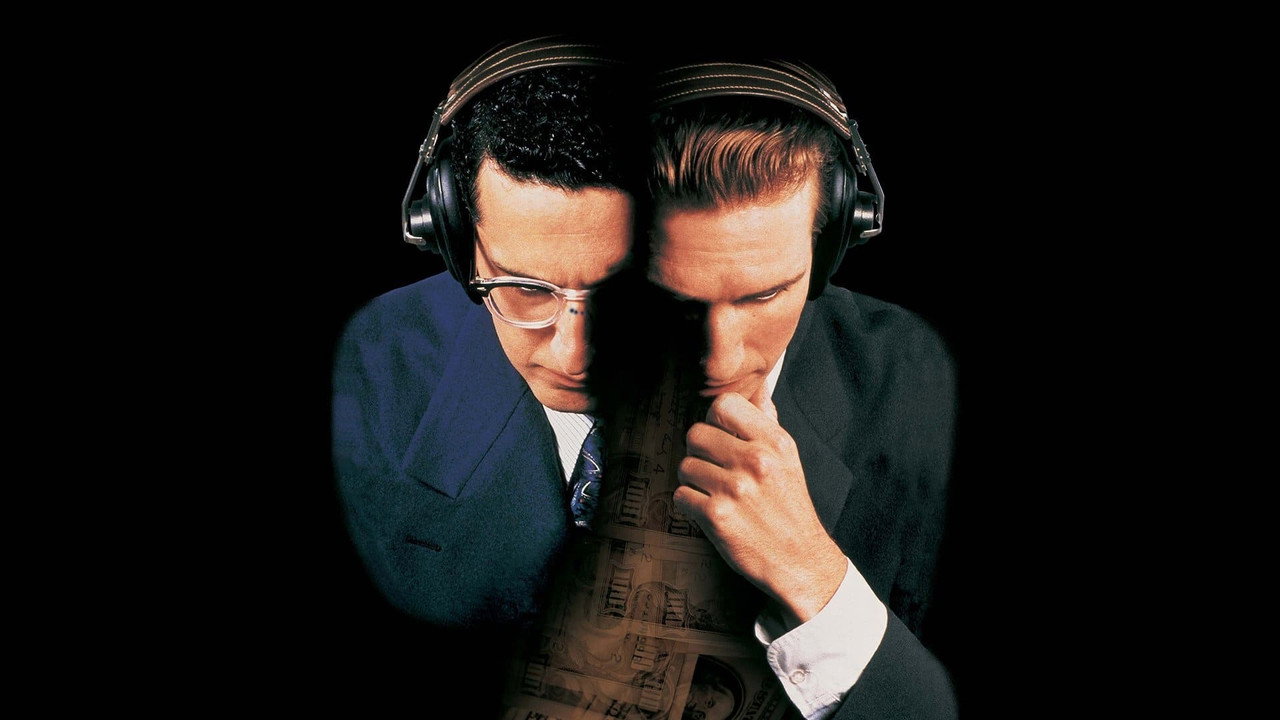
Writers: Paul Attanasio (screenplay)
Based on: "Remembering America: A Voice from the Sixties" by Richard N. Goodwin (1988) ↗
Cast: John Turturro, Rob Morrow, Ralph Fiennes, Paul Scofield, David Paymer, Hank Azaria, Christopher McDonald
In 1958, congressional investigator Dick Goodwin discovers that the top-rated television quiz show Twenty-One has been rigged — contestants are given the answers in advance. The reigning champion, the brilliant and patrician Charles Van Doren, is not a scholar performing under pressure but a performer reciting a script. As Goodwin pursues the case, he finds that everyone involved — the network, the sponsor, the producers, and Van Doren himself — understood exactly what was happening, and that the audience, given the choice between the truth and the show, may prefer the show.
The quiz show scandal of 1958 is usually told as a story about fraud, and it was fraud, but Robert Redford's film is interested in a more structural question: how does an institution arrive at a lie that everyone inside it understands to be a lie, that nobody outside it suspects, and that works? The producer Dan Enright does not frame what he is doing as deception. He frames it as production. It's entertainment, he says, and the sentence is not a justification but a category claim — he is asserting that the quiz show is a show first and a quiz second, and that giving a contestant the answers is not different in kind from giving an actor a script. The distinction between a competition and a performance, which the audience assumes is absolute, does not exist inside the production office, and the film's interest is in the moment that distinction dissolved and in the fact that nobody had to decide to dissolve it. The show started real. The ratings were modest. The sponsor wanted higher numbers. The producer discovered that the numbers went up when the outcomes were managed — when the right person won at the right time, when tension was constructed rather than found — and from that discovery to the full-scale rigging there was no single decision, only a series of small adjustments, each of which made the product marginally better by the only metric anyone was measuring.
Charles Van Doren is the product. Ralph Fiennes plays him as a man who knows exactly what he is doing and cannot quite believe he is doing it, and the film gives him enough interiority that his complicity reads not as corruption but as a particular kind of weakness that anyone who has ever been offered a version of themselves they liked better than the original will recognise. He is brilliant — this is not in dispute, his family is academic aristocracy, his father is Mark Van Doren, his uncle is Carl Van Doren — and the show does not ask him to pretend to be intelligent. It asks him to pretend to struggle. The answers he gives on air are real answers to real questions; the performance is the sweat, the hesitation, the apparent agony of retrieval. What is being faked is not knowledge but the experience of producing knowledge under pressure, and the audience loves it because the experience is what they came for. Enright is right: they do not tune in to watch an amazing display of intellectual ability; they tune in to watch the money, and the money is only dramatic if it looks like it might be lost. Van Doren provides the drama. He performs the risk that has already been removed.
And Herb Stempel, the previous champion — sweating, graceless, ethnic in a way the network does not want — was told to lose because he was the wrong product, not because he was the wrong scholar. You want to be worshipped? Go to India and moo. Stempel's bitterness is not that he lost. It is that he was replaced by a better-looking version of himself, and that the replacement was not even pretending to be a different thing.
Dick Goodwin, the congressional investigator, enters the story believing he is going to expose a crime and discovers instead that he is going to expose a preference. The network knew. The sponsor knew. The production team knew. Van Doren knew. The only people who did not know were the audience, and the film's most troubling proposition is that the audience's ignorance was not an accident but a feature: not something the institution needed to maintain by force, but something the audience itself maintained by declining to ask. The show worked. Van Doren was handsome and articulate and visibly suffering for his answers, and the alternative, Stempel, charmless and real, had already been tested and found wanting. The audience was not deceived in the sense of being overpowered. It was deceived in the sense of being offered a transaction — an entertaining lie in exchange for not inquiring too closely — and accepting the terms. Goodwin's investigation does produce a congressional hearing, and Van Doren does testify, and the testimony is devastating — I was involved, deeply involved, in a deception — but the film ends with a shot that undercuts the entire redemptive arc: a television in the background, still on, still broadcasting, still producing. The institution did not learn. The medium absorbed the scandal as content, processed it, and continued. What changed was not the practice but the sophistication of the practice, and the audience's willingness to be entertained remained exactly where it was.
The film is a period piece about the 1950s that becomes less of a period piece every year. Redford, who directed it in 1994, could not have known how precisely its logic would map onto the attention economy of the next three decades, but the mapping is exact. A platform discovers that managed outcomes produce better engagement than unmanaged ones. The management is invisible to the user. The product — the content, the feed, the recommendation — appears to be the result of organic activity, and the appearance is the product. The creator is given answers in advance, not literally but structurally: the algorithm tells them what to say, how long to say it, what emotion to perform, and the creator performs it, and the audience watches, and the metrics go up. Nobody is lying in the way Enright was lying, because the deception has been distributed across a system rather than concentrated in a production office, but the question the film asks — what happens when the audience's desire for a good story overrides the institution's obligation to the truth — has not been answered. It has been scaled.