The Candidate
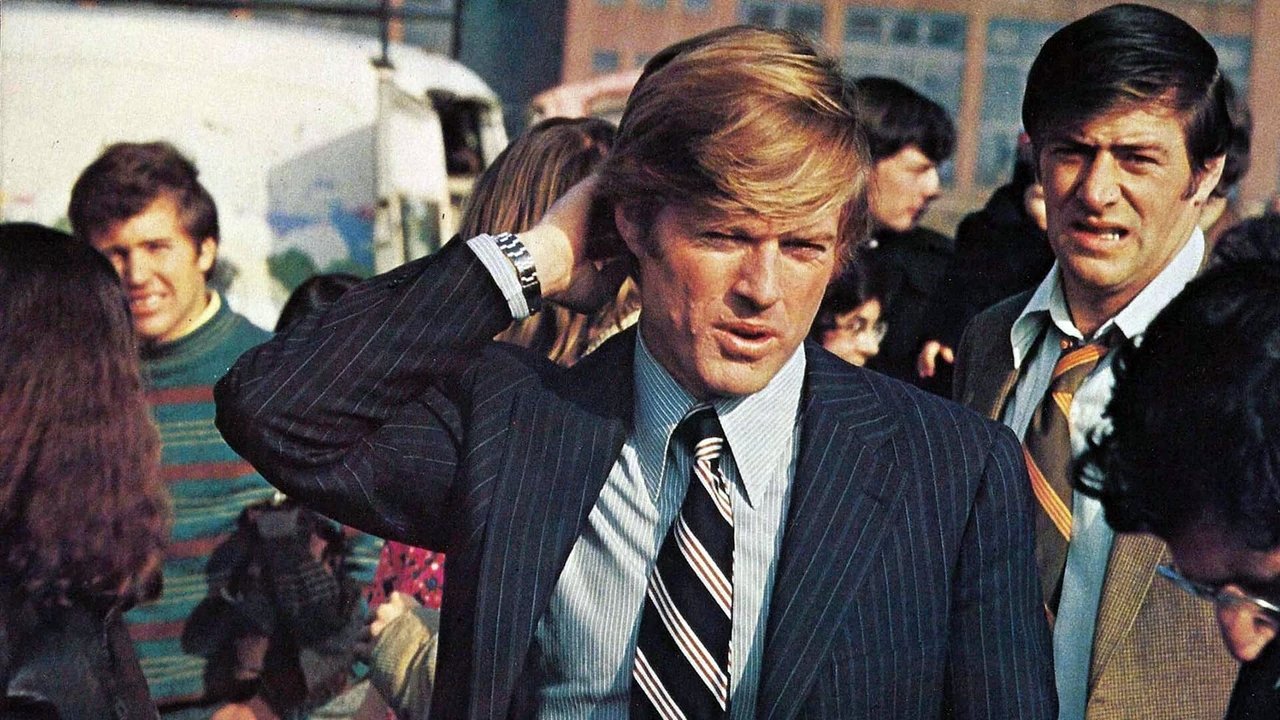
Writers: Jeremy Larner (screenplay)
Cast: Robert Redford, Peter Boyle, Melvyn Douglas, Don Porter, Allen Garfield, Karen Carlson
Bill McKay, son of a former governor, is a Legal Aid lawyer in California with no political ambitions. Campaign manager Marvin Lucas recruits him to run for the U.S. Senate against an unbeatable incumbent with a simple proposition: since he cannot win, he can say whatever he believes. McKay agrees. The campaign begins as an act of principle and ends as an act of optimisation, and the distance between the two is the entire film.
The proposition is clean. Marvin Lucas, a campaign manager who has run enough races to know exactly what losing looks like, approaches Bill McKay with an offer that sounds like freedom: run for the Senate against an incumbent you cannot beat, and because you cannot beat him, say whatever you want. The logic is appealing and McKay takes it at face value, which is what Lucas is counting on. McKay is young, photogenic, articulate, and the son of a former governor — a resume that in California politics functions as gravitational pull regardless of the candidate's intentions. Lucas does not need McKay to want to win. He needs McKay to run, because a candidate who says what he believes on camera generates attention, and attention generates momentum, and momentum generates polls, and once the polls move, the candidate has to decide whether to keep saying what he believes or to start saying what keeps the polls moving. The film's entire architecture rests on the observation that these two things are different and that the difference becomes visible only after the candidate has been inside the machine long enough to have forgotten what he sounded like before he entered it.
Ritchie films the campaign as process, not drama. The camera does not linger on speeches for their content; it watches the speech being prepared, interrupted, shortened, tested on focus groups, reduced to a phrase that fits a bumper sticker. McKay's positions on poverty, housing, and the environment are not refuted or attacked — they are edited. The thirty-second spot does not have room for a housing policy, so the housing policy becomes a sentence about caring, and the sentence about caring is indistinguishable from the sentence the incumbent would use, and at that point the distinction between the two candidates has migrated from what they think to how they look, and McKay looks better. His media consultant tells him to stop talking about substance and start repeating a phrase that polls well. His father, a former governor played by Melvyn Douglas with the quiet contempt of a man watching his son discover what he already knew, visits the campaign and says what the film has been building toward: son, you are a politician. It is not a compliment. It is a diagnosis. McKay entered the race believing he was using the campaign as a platform. The campaign has been using him as a surface — a face on which to project electability — and the transition happened so incrementally that no single moment can be identified as the point where it flipped.
That absence of a discrete moment is the film's most important structural claim. There is no betrayal, no deal with the devil, no dramatic compromise. There is only optimisation, applied continuously, each adjustment small enough to be reasonable, each one moving the candidate fractionally closer to a position indistinguishable from the one he entered the race to oppose. The machine does not corrupt. It converges.
The final scene is the most honest ninety seconds in political cinema, and its power comes from what it does not contain. McKay has won. He has beaten the unbeatable incumbent. He is standing in a hotel suite surrounded by advisers and supporters and press and noise, and he pulls Lucas into a side room and asks the question: Marvin, what do we do now? The room goes silent and the film cuts to black, and what makes the scene devastating is not McKay's confusion but its precision. He is not asking a rhetorical question. He does not know what to do. The campaign was built to win. Every decision, every edit, every pivot, every adjustment was in service of a single optimisation target — electoral victory — and the target has been achieved, and there is nothing behind it. No plan for governance, no list of priorities, no staff briefing on what the Senator will do on his first Monday.
The campaign did not fail to build a governing agenda because it was sloppy. It did not build one because building one would have introduced constraints that conflicted with the optimisation target. A governing plan commits you to positions; positions alienate demographics; alienated demographics reduce the poll number; and the poll number is the only metric the machine can see. The machine that produced the victory systematically eliminated everything that would have given the victory meaning, because meaning was a cost centre and the budget was allocated to winning.
What Larner's screenplay sees, and what gives the film its lasting architecture, is that McKay's hollowness at the end is not a failure of character. It is a system outcome, and the outcome has a name: a senator with no programme, a victory with no purpose, a mandate with no content. This is the pattern that anyone who has worked inside a product organisation will recognise: the roadmap that optimises for shipping velocity until it ships nothing worth using; the strategy that optimises for measurability until it measures nothing worth knowing; the career that optimises for promotion until the person promoted no longer remembers what they wanted the authority for. The machine converges on winning because winning is the metric, and the metric consumes everything that is not the metric, including the reason the metric was chosen. McKay's question — what do we do now? — is not the question of a man who forgot to plan. It is the question of a man who just discovered that the system he was inside does not have a function called "what to do after winning," because the system was never designed to get past the number.