The Hudsucker Proxy
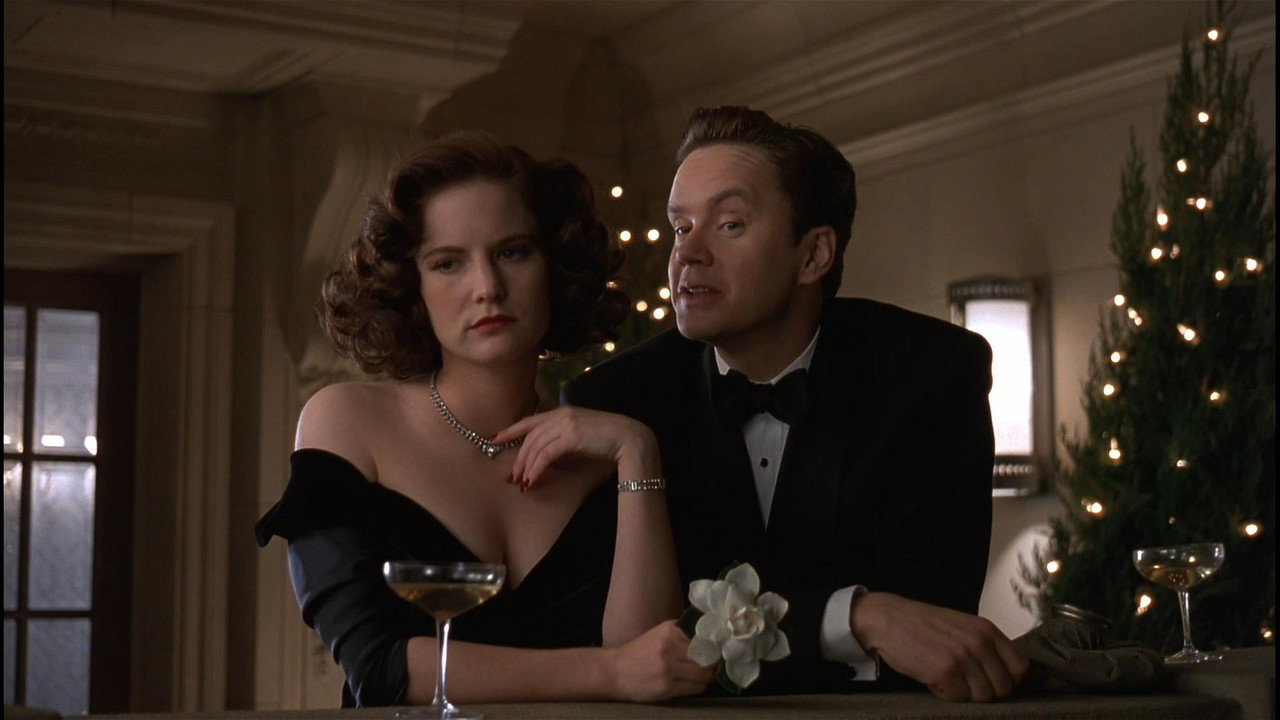
Writers: Ethan Coen (screenplay), Joel Coen (screenplay), Sam Raimi (screenplay)
Cast: Tim Robbins, Jennifer Jason Leigh, Paul Newman, Charles Durning, John Mahoney, Jim True-Frost
When Waring Hudsucker, founder of Hudsucker Industries, throws himself from the boardroom window, scheming board president Sidney Mussburger installs an idiotic mailroom clerk as CEO to tank the company's stock price so the board can buy it cheap. The clerk, Norville Barnes, has an invention — a circle drawn on a crumpled piece of paper — and the invention becomes the hula hoop, an enormous commercial success that ruins the entire plan.
The premise of The Hudsucker Proxy is a board of directors deliberately installing an incompetent man as CEO in order to crash the company's stock price, and the comedy depends on the viewer recognising that this is not actually absurd. Mussburger's plan is rational, specific, and well-precedented in the history of corporate governance: founder dies, stock becomes available for the first time, the board needs the price to drop before the public offering so they can buy control cheaply, and the fastest way to drop a stock price is to put someone at the top who will terrify the market. The mailroom is not a random choice. It is the organisational basement — the place where nobody is anybody, where aspiration has not yet congealed into credential — and Mussburger needs a face that communicates institutional collapse. He finds Norville Barnes, a recent graduate from the Muncie College of Business Administration who arrived in New York that morning with a letter of introduction and a drawing of a circle on a crumpled sheet of paper. Mussburger's selection criteria are precise and his reasoning is sound. What he has not accounted for is the possibility that his proxy, chosen for his total unsuitability, might actually have something.
And what Barnes has is a circle. He shows it to everyone — board members, secretaries, the elevator operator — and every time, his explanation is the same: you know, for kids! The circle becomes the hula hoop, and the hula hoop becomes an enormous commercial success, and the stock price goes up instead of down, and Mussburger's plan is ruined by the one variable he never modelled: the product. There is a reading of this that is pure screwball fantasy, and the Coens shoot it that way — the art direction is a fever dream of 1950s corporate modernism, all clocks and pneumatic tubes and mahogany — but the structural joke is sharper than the style suggests. Barnes is not a genius. He is a man with one idea that he cannot articulate to anyone who speaks the language of business. Sure, sure, it's a circle, it's round — the board dismisses it in exactly the terms a board would use, because the idea has no business case, no competitive analysis, no positioning statement. It has a circle on a piece of paper and a sentence about children. The market does not agree with the board. The market is a playground full of kids who want to spin a plastic ring around their waists. The Coens are making a joke about the gap between what an organisation values in an idea and what actually makes an idea work, and the joke is that the gap is total.
The journalist Amy Archer (Jennifer Jason Leigh doing a screwball Katharine Hepburn impression at a speed that suggests the dialogue was written for someone who breathes less often) is deployed to expose Barnes as a fraud, and the film's second layer opens here. She goes in looking for an idiot and finds someone she cannot quite classify. He is naive, certainly, and inarticulate about anything except his circle, but he is not the empty suit Mussburger intended. The difficulty she has is the same difficulty any institution has when it tries to evaluate someone who does not fit the available categories: she has a template — corporate puppet, rube, fraud — and Barnes does not match any of them, so she keeps defaulting to the one that requires the least revision of her priors. The hula hoop does not succeed because Barnes is a visionary. It succeeds because it is a good product and nobody in the building was equipped to notice.
The Coens' corporate tower is the real character. Hudsucker Industries is a fully vertical organisation — the mailroom at the bottom, the boardroom at the top, and between them an elevator and a clock that dominates the skyline. The clock stops when Hudsucker dies and starts again when the story demands it, and this is not merely a fairy-tale device. The corporation runs on time, measures time, sells time, and the only moments when anything genuinely new happens are the moments when the clock is not running — when the institution's own rhythm has been interrupted and the interval between one tick and the next opens up enough for something unplanned to enter. Barnes's hula hoop is born in that interval. It comes from outside the organisation's understanding of itself, is promoted by accident, succeeds by contact with a market the organisation never studied, and is understood by the board only after the revenue has already arrived. This is, in compressed and exaggerated form, the story of every innovation that succeeded inside a large company despite that company rather than because of it — the product that nobody approved, that survived the process by being too small to attract the process's attention, and that was retrospectively claimed by the institution that would have killed it if it had known what it was looking at.