Glengarry Glen Ross
Writers: David Mamet (screenplay), David Mamet (theatre play)
Based on: "Glengarry Glen Ross" by David Mamet (1983) ↗
Cast: Al Pacino, Jack Lemmon, Alec Baldwin, Alan Arkin, Ed Harris, Kevin Spacey
An examination of the machinations behind the scenes at a real estate office. Unscrupulous salesmen try to hawk dubious real estate to suckers.
Glengarry Glen Ross opens with a scene that was not in David Mamet's original stage play. Alec Baldwin arrives at the sales office as an unnamed closer from downtown — the organisation made flesh — and delivers a speech that has since become a kind of dark scripture for anyone who has worked inside a target-driven institution. The speech is structured as motivation but functions as a threat: first prize is a Cadillac, second prize is a set of steak knives, third prize is you're fired. What Baldwin's Blake articulates in eight minutes is the complete logic of a system in which human beings are ranked, sorted, and discarded by the numbers they produce. The measure is the thing. Everything else — conscience, dignity, need — is noise. The scene was added for the film precisely because a purely theatrical rendering of the office would have left the system implicit. Baldwin makes it explicit: someone designed this, and they know what they designed.
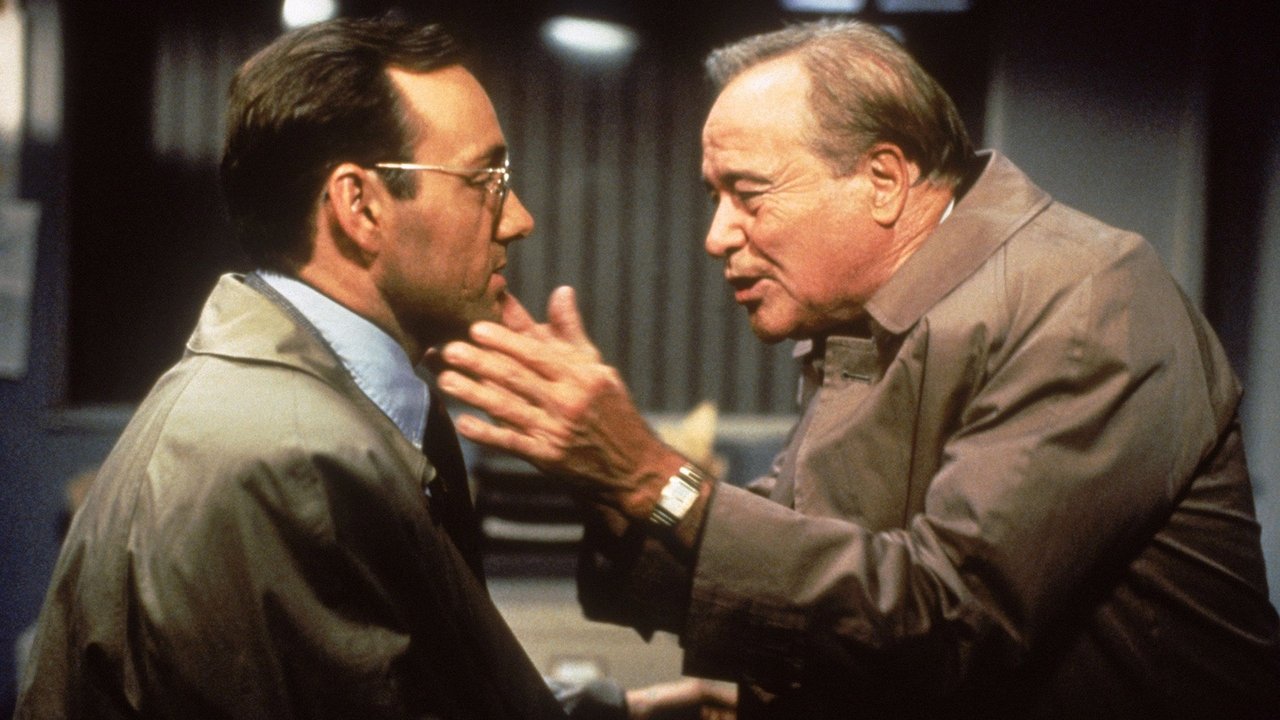
The remainder of the film is an anatomy of what that system produces at the level of the individual worker. Jack Lemmon's Shelley Levene, once the top salesman, now aging and desperate, is the collection's most complete portrait of a man who has fully internalised a logic that is destroying him. He does not reject the system's values — he cannot, because he has no others. When he finally closes a sale, his monologue back in the office is a performance of a performance: he is narrating his own competence to an audience that has stopped listening, replaying the script of a self that no longer exists in the market. Ed Harris's Dave Moss and Alan Arkin's George Aaronow represent the other available response — conspiracy, a plan to steal the leads and sell them to a competitor — which is not a rebellion against the system's logic but an extension of it. Nobody in this film escapes the frame. The question Mamet is asking is whether escape was ever possible once you accepted the first premise.
For anyone directing digital products, the film is a precise warning about what happens when measurement becomes the only language an organisation speaks. The leads — the Glengarry leads, the good leads that are locked in Kevin Spacey's office — are the system's central McGuffin, but their real function is to make visible the information asymmetry that structures every working relationship in the office. The managers have the data; the salesmen need the data; the organisation monetises the gap between them. This is not a pathology specific to 1980s real estate. It is the operating principle of any incentive system that ranks people against each other on a single metric while withholding the inputs they need to compete. Product teams that live and die by conversion rates, engagement scores, or quarterly targets will recognise the topology exactly. The Glengarry leads are always locked in someone else's office.
What elevates the film above a critique of sales culture is its insistence that the organisation's violence is impersonal. Nobody in management appears on screen — except as Blake, the emissary, who leaves immediately after delivering his message. The system does not need a villain because it is self-sustaining: the salesmen surveil each other, report each other, undercut each other, because the structure makes cooperation irrational. Mamet's achievement, and Foley's, is to render this as tragedy rather than cynicism. These are not bad men. They are men who made a reasonable bet — that competence inside the system would be rewarded — and discovered too late that the system's definition of competence changes without notice. The closing scene, in which Levene's theft is exposed not by a detective but by his own need to narrate his success, is one of cinema's finest illustrations of how institutional logic colonises individual psychology until there is nothing left underneath.