Blue Collar
Writers: Paul Schrader (screenplay), Leonard Schrader (screenplay)
Cast: Richard Pryor, Harvey Keitel, Yaphet Kotto, Ed Begley Jr., Harry Bellaver, George Memmoli
Fed up with mistreatment at the hands of both management and union brass, and coupled with financial hardships on each man's end, three auto assembly line workers hatch a plan to rob a safe at union headquarters.
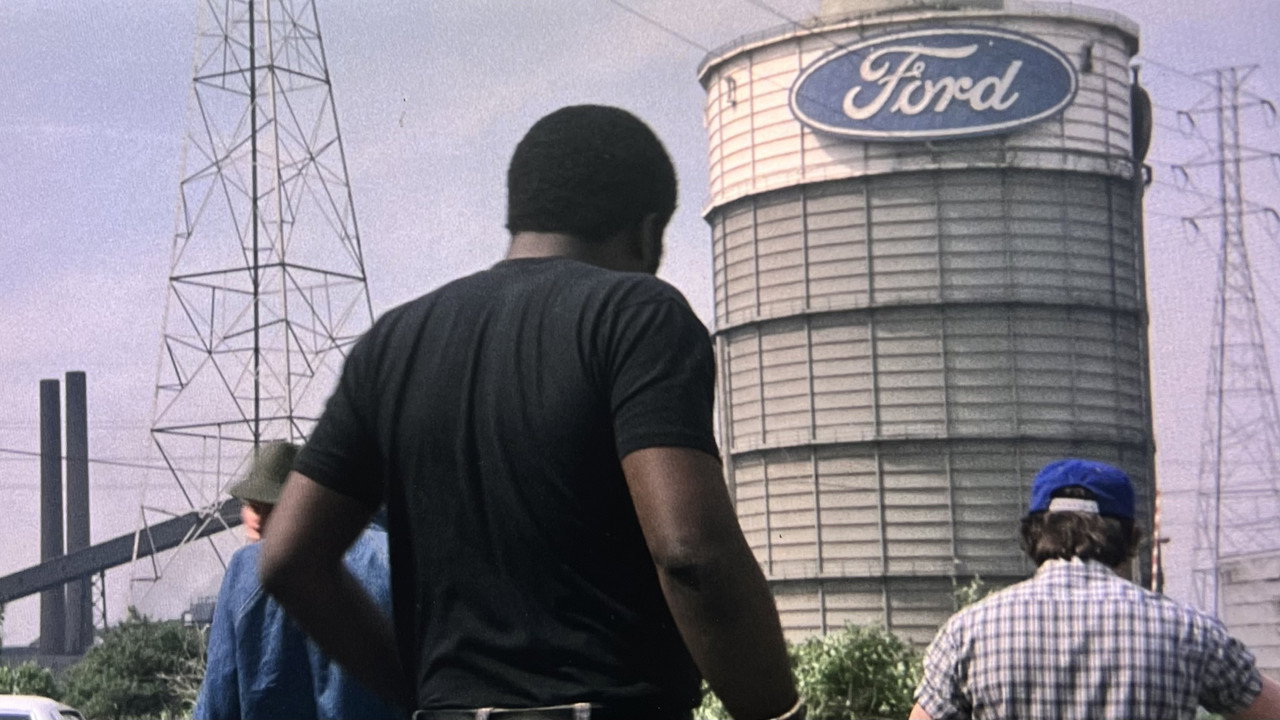
Paul Schrader made Blue Collar directly after writing Taxi Driver, and the structural preoccupation is identical: what happens when the institutions designed to protect people become the instruments of their containment. The film is set on a Checker Motors assembly line in Detroit, and Schrader photographs the factory floor with the same methodical attention that a systems analyst would bring — bodies attached to machinery, rhythm enforced by the line itself, not by any individual supervisor. The workers do not experience management as a villain. They experience it as a condition, the way a person experiences gravity. The union is equally atmospheric: present everywhere, explaining nothing, solving less.
The heist — breaking into the union safe — is the film's narrative engine, but Schrader uses it as a mechanism for revealing institutional architecture rather than as a crime story. What Zeke, Jerry, and Smokey find in the safe is not money but a ledger documenting union loans to organised crime, which is to say they discover that the institution built to represent them is structurally entangled with interests that require their silence. The film then tracks, with unusual precision, how that entanglement plays out: not through dramatic confrontation but through the grinding, bureaucratic application of pressure. One man is offered a union organiser position — co-opted upward. Another is handed to the FBI as an informant — weaponised laterally. The third is killed in an industrial accident — eliminated through the machinery already present. The institution does not need to be villainous; it only needs to be consistent.
This is where Blue Collar earns its place in a collection about organisations and decisions. Schrader is not making a film about corrupt individuals. He is making a film about a system in which corruption is the stable equilibrium — where the interests of management, union leadership, and organised crime have converged over decades into a structure that is, from any individual vantage point, simply the way things are. The three workers' mistake is not moral; it is epistemological. They believe that information — the contents of the ledger — is power. The film's argument is that information only becomes power when you have an institution capable of acting on it, and they are precisely the people the institutions have been organised to exclude.
For someone directing digital products, the film is a sustained lesson in what happens when governance structures are captured by interests they were designed to check. The union is not a bad union; it is a union that has optimised, over time, for its own institutional continuity rather than for its members' welfare — a drift that happens in product organisations, platform governance bodies, standards committees, and regulatory agencies with similar structural logic. The outcome Schrader depicts is not conspiracy but emergence: nobody planned the arrangement; it assembled itself from the incentive gradients of every preceding decision. The ledger in the safe is not evidence of a crime. It is a map of how the system actually works.