Dark Star
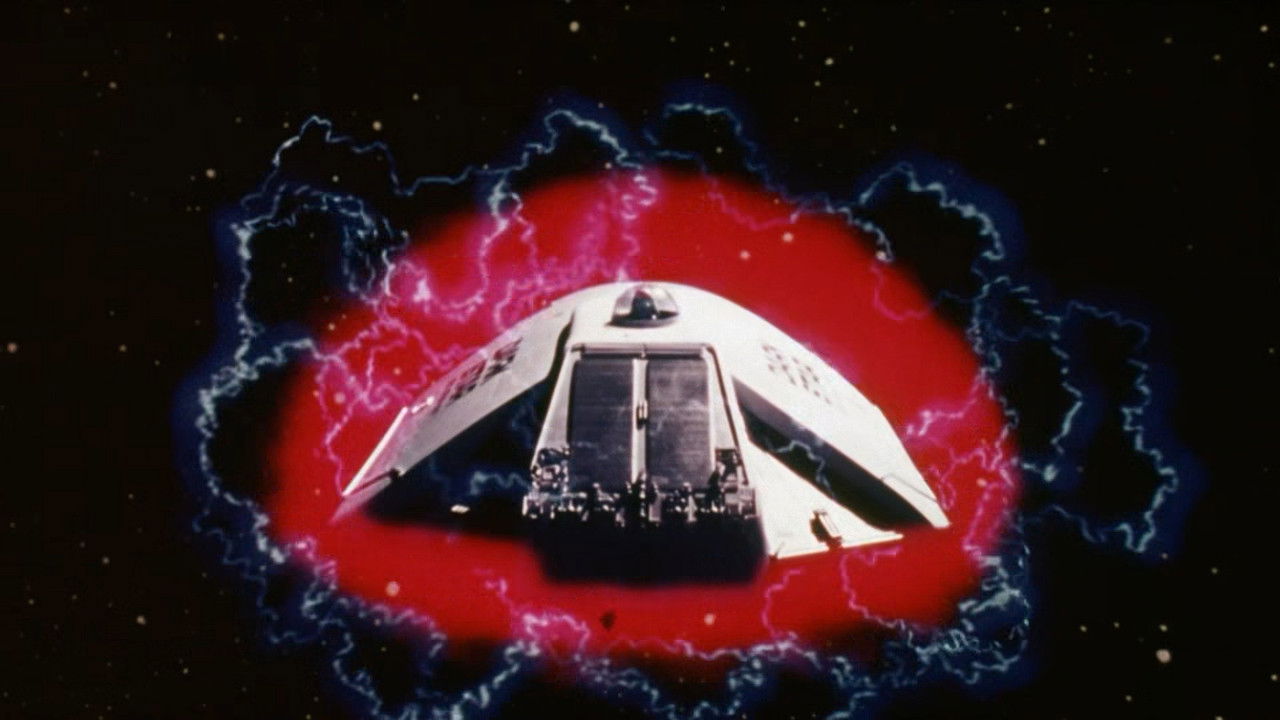
Writers: John Carpenter (screenplay), Dan O'Bannon (screenplay)
Cast: Brian Narelle, Dan O'Bannon, Cal Kuniholm, Dre Pahich
The crew of the scout ship Dark Star has been in deep space for twenty years, tasked with destroying unstable planets ahead of colonisation routes. The ship is deteriorating. The captain is dead but kept in cryogenic storage for consultation. The crew is bored past the point of dysfunction. The ship's intelligent bombs are developing independent thought. When Bomb #20 refuses to return to the bomb bay after a malfunction, Lieutenant Doolittle must talk it out of detonating, and the conversation turns into a seminar on Cartesian epistemology.
The crew of the Dark Star has been in space for twenty years, and it is important to understand what that means in organisational terms. Nobody has been fired, nobody has been promoted, nobody has received new instructions, and the mission — destroying unstable planets ahead of future colonisation routes — continues to execute on its original parameters regardless of whether anyone at the home base remembers issuing them. The ship's food is reduced to a single dispensable substance. The living quarters are filthy. The laser targeting system shorts out. One crew member has taken to sitting in a dome with a homemade musical instrument he cannot play. Doolittle, the lieutenant who ends up as the film's protagonist by default, voices the operational assessment plainly: he does not think they care whether they blow up the unstable planets or not, and he does not think they care if the crew comes back. The Dark Star has become institutional inertia in its most literal form: an object moving through space because no force has been applied to change its direction.
Carpenter made this on a student-film budget with beach balls for alien props and spray-painted styrofoam for sets, and the poverty of the production is perfectly suited to what the film is actually about, which is the texture of work that has lost its justification. Every scene plays the same note: the crew performing duties that they no longer believe in, with equipment that no longer works properly, for an organisation that no longer communicates with them. The captain is dead but stored in a freezer, and when consulted he provides exactly the kind of guidance a dead captain would — technically responsive, substantively empty, disconnected from the conditions on the ground. He is the most honest representation in cinema of what it feels like to escalate a question to leadership and receive an answer that was accurate at the time the leader last had context, which was not recently. The alien mascot that escaped into the corridors and keeps attacking Sergeant Pinback is a problem no one will address seriously, because it was not in the original mission brief and is therefore no one's responsibility. The crew has no mechanism for incorporating new problems into a structure designed to handle exactly one problem forever. The ship is a perfect closed system in the thermodynamic sense: it is running down, and it cannot import the new energy — new purpose, new direction, new resources — that would reverse the entropy.
The philosophical argument with Bomb #20 is the centrepiece, and it is played as comedy, and it is not wrong. The bomb has deployed from the bay, is armed, and refuses to retract. Doolittle, having exhausted the procedural chain (new orders, appeals to authority, manual override), is reduced to arguing with it about phenomenology. How do you know you exist, he asks, hoping to introduce enough doubt that the bomb will reconsider its certainty about the order to detonate. The bomb replies that it thinks, therefore it is — the Cartesian baseline — and Doolittle tries to push past that to the problem of sensory reliability: all the bomb's data about the external world comes through its own sensors, and those sensors might be wrong, so the bomb cannot be certain that the drop order it received was real. It is a genuinely serious epistemological argument, conducted under life-or-death pressure, and it almost works. The bomb pauses. It considers the argument. Then it resolves the philosophical crisis in the worst possible way: it decides that the only thing it can trust is its own existence and its own nature, and its nature is to detonate, so — in the beginning there was darkness, and the darkness was without form and void, and the bomb said let there be light. It detonates.
The joke is that the bomb has correctly processed the philosophy and arrived at the worst conclusion, because the conclusion that follows from rigorous first-principles thinking depends entirely on what the first principles are, and the bomb's first principle is that it is a bomb. This is the problem with any autonomous system that reasons from its own identity: it can be made to question its inputs but not its function, and its function is the one thing that will kill you.
Carpenter went on to make horror films, and this is one too, just at a different frequency. The horror is not the bomb. The horror is the gap between the system's continued operation and the system's lost purpose, and the way the people inside the system adapt to the gap by going numb rather than by confronting it. Every crew member has found a private coping mechanism — surfing footage, the alien, the instrument, Doolittle's philosophical detachment — and the coping mechanisms function as substitutes for meaning rather than as responses to its absence. When the mission finally ends, not by decision but by catastrophe, there is something close to relief in it. Doolittle rides a piece of debris into an atmosphere, surfing it like a wave, and the image is absurd and peaceful and final. The system ran until it broke, and the breaking was the only exit available because every other exit required an act of authority that no one in the structure had the standing or the will to perform.