生きる
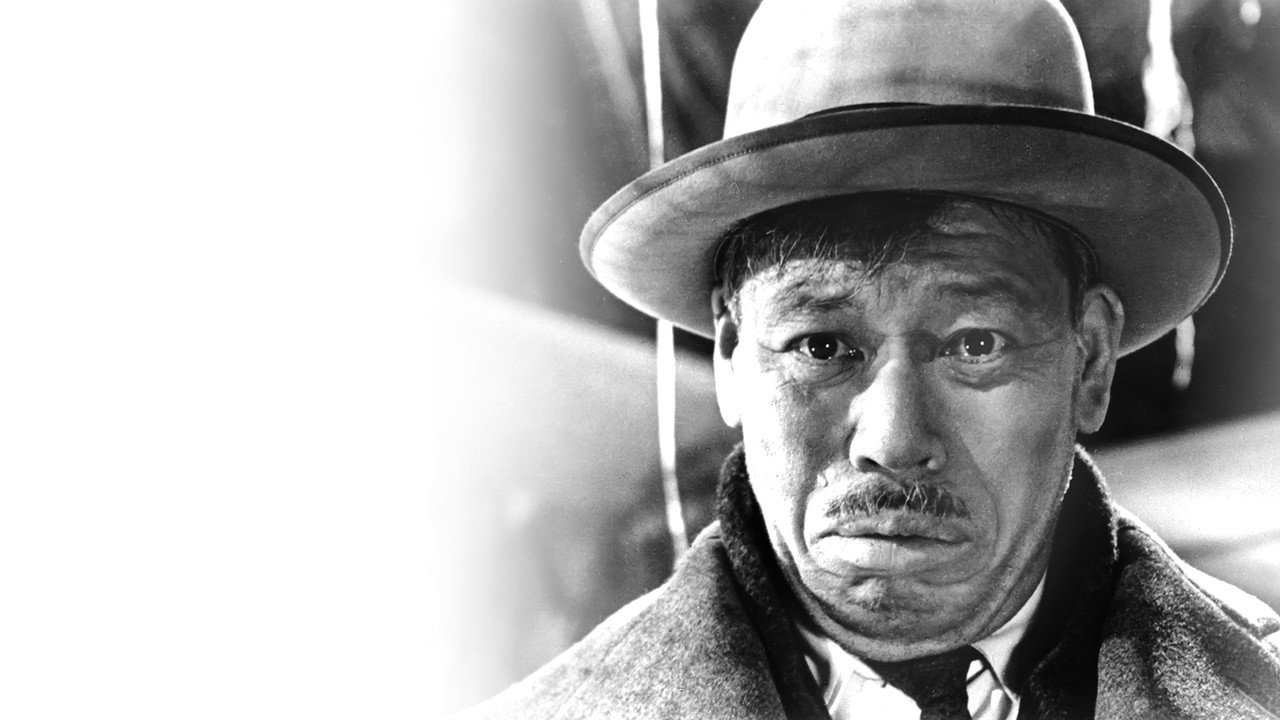
Writers: Akira Kurosawa (screenplay), Shinobu Hashimoto (screenplay), Hideo Oguni (screenplay)
Cast: Takashi Shimura, Shin'ichi Himori, Haruo Tanaka, Minoru Chiaki, Miki Odagiri, Nobuo Kaneko
Kanji Watanabe has spent thirty years as section chief of Public Affairs at a Tokyo city hall, stamping documents and forwarding petitions to other departments. When he learns he has terminal stomach cancer and less than a year to live, he discovers he cannot remember a single thing he has accomplished. After a failed attempt to find meaning in nightlife and then in the company of a young former subordinate who still knows how to be alive, he returns to the one petition he had filed away: a group of neighbourhood women asking that a cesspool be turned into a children's playground.
The first act of Ikiru is the most precise depiction of an organisation ever put on film, and it contains almost no drama. A group of women from the Kuroe neighbourhood arrives at city hall asking that a stagnant cesspool near their homes be filled and turned into a playground. What follows is a montage of doors: Public Affairs sends them to Engineering, Engineering to Parks, Parks to Health, Health to Environmental Sanitation, and eventually back to where they started. Nobody is cruel. Nobody refuses. Every clerk is correct, courteous, and entirely within the bounds of their remit. The petition is not rejected; it is circulated. Kurosawa understood something that organisational charts never show: that the real function of a certain kind of structure is not to produce outcomes but to distribute responsibility so thinly that no single person is ever holding it. The narrator states the operating principle without irony, because none is needed — the best way to protect your place in this world is to do nothing at all.
Watanabe has followed that principle for thirty years, and the film's cruellest stroke is that he has been rewarded for it. He is a section chief. He has a certificate of service on the wall. What he does not have is a single memory of anything he made. It takes a diagnosis of stomach cancer to reveal the shape of his career to him, and what he sees is not failure but its stranger cousin: a life of perfect procedural competence that left no trace. The second half of the film is then about something narrow and practical, which is why it is so unusual. Watanabe goes back to the filed-away petition and simply refuses to leave. He sits in offices. He waits outside doors. He returns after being told no. He accepts humiliation from a deputy mayor and from local gangsters who want the land. He does not reform the bureaucracy, does not restructure anything, does not write a proposal for increasing departmental efficiency. He gets one park built. Watching it, you understand that shipping anything inside an institution is less a matter of authority than of a person willing to absorb friction that the system was designed to make unabsorbable.
The Drucker reading is almost too neat. Drucker spent decades arguing that the fundamental question for anyone in an organisation is not what is my job but what is my contribution — that occupying a slot competently and contributing something are unrelated activities that our structures constantly confuse for one another. Watanabe is the case study Drucker never wrote. He was never idle; he was busy every single day, and busyness was precisely the mechanism of his disappearance. There is a Japanese resonance too, and it is not accidental in 1952: the kaizen tradition that would emerge from postwar manufacturing rests on the belief that improvement is small, local, and carried out by the person nearest the problem. Watanabe's park is a kaizen act performed against an organisation that has no channel for it. He becomes, for a few months, the thing his job description prevented him from being.
And then Kurosawa does the honest thing, which is why the film survives. The wake takes up the last long stretch of the picture: colleagues drinking, reconstructing what Watanabe did, arguing about whether he even knew he was dying, working themselves into tearful vows that they will honour his example. The next morning they are back at their desks. A petition comes in. It is forwarded to another department. One young clerk half-rises to object and then sits down again, alone, and the film ends with him bowing over his papers. The institution has metabolised the lesson entirely — turned it into a story about a good man rather than a critique of itself — and returned to default. This is the part that should unsettle anyone who has tried to change how an organisation works. Watanabe's park is real; children play in it; it outlasts him. But it cost him his life, it changed nothing structural, and the system that resisted it is unmarked. Whether that is a tragedy or simply the price of building anything is a question Kurosawa leaves open, and it is worth sitting with rather than resolving.