M - Eine Stadt sucht einen Mörder
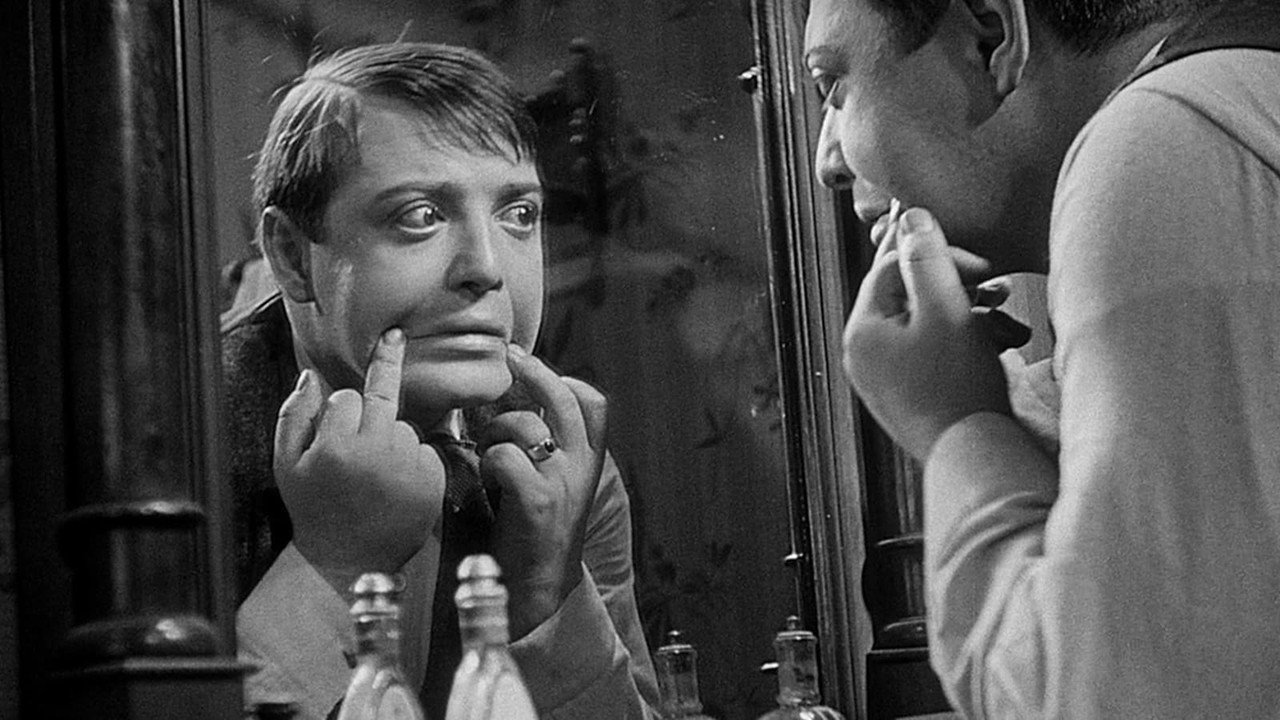
Writers: Fritz Lang (screenplay), Thea von Harbou (screenplay)
Cast: Peter Lorre, Ellen Widmann, Inge Landgut, Otto Wernicke, Theodor Loos, Gustaf Gründgens
In this classic German thriller, Hans Beckert, a serial killer who preys on children, becomes the focus of a massive Berlin police manhunt. Beckert's heinous crimes are so repellant and disruptive to city life that he is even targeted by others in the seedy underworld network. With both cops and criminals in pursuit, the murderer soon realizes that people are on his trail, sending him into a tense, panicked attempt to escape justice.
The premise of M sounds like a thriller, but Lang's actual subject is institutional architecture under pressure. When Hans Beckert begins killing children, Berlin's police apparatus deploys every instrument available — informants, raids, identity checks, round-the-clock surveillance — and fails. The failure is not a matter of incompetence. Superintendent Lohmann's team is professional, methodical, and well-resourced. The failure is structural: the quarry leaves no usable trace, the city is too large, and the information flows are too slow. What Lang films is not a detective story but a systems problem — the gap between a threat that is real and legible in its effects and a bureaucratic apparatus that can only act on evidence it can formally process.
The more radical move is the parallel institution Lang constructs on the other side of legality. The criminal underworld, facing police heat that is destroying their business, convenes a council and mobilises its own surveillance network: the beggars of Berlin, ubiquitous and invisible, assigned to watch every corner of the city. This network succeeds where the police fail — not because it is more competent but because it is more distributed, more embedded in the texture of street life, and operating without due process constraints. Lang draws no comfort from this. The beggar network is a crowd-as-system, an emergent information machine that nobody designed and nobody fully controls. It works precisely because it bypasses the institutional safeguards that slow the police down. The film's implicit argument is that surveillance capacity and accountability are in structural tension: the system that catches Beckert is also the one that will try him in a kangaroo court.
The trial sequence in the basement is the film's intellectual centrepiece and the scene that earns M its place in this collection. Beckert is arraigned before a parallel justice system — criminals as judges, a defence lawyer drawn from their ranks, victims' representatives as accusers — that has the procedural grammar of a court without any of its legitimating authority. The defence lawyer's argument that Beckert cannot be held responsible for acts driven by compulsion he cannot control is legally coherent and morally serious. The crowd ignores it. What Lang has constructed is a demonstration of how procedural form and mob logic can coexist, how an institution can wear the costume of due process while operating as pure collective impulse. For anyone thinking about how decision-making structures emerge under pressure — in organisations, in platforms, in distributed teams — the basement trial is a working model of what happens when accountability is demanded faster than legitimate institutions can supply it.
The film also rewards attention at the level of craft as argument. Lang uses sound — newly available to him in 1931 — not as atmosphere but as a structural device: Beckert's whistling of 'In the Hall of the Mountain King' is the only trace he leaves, an acoustic signature that the city's informal surveillance eventually turns against him. A blind balloon-seller identifies him by the tune. The formal implication is precise: formal institutions working with visual evidence fail; an informal network working with a single acoustic pattern succeeds. The medium of detection shapes what can be detected. It is a point about information systems that has lost none of its relevance.