Moon
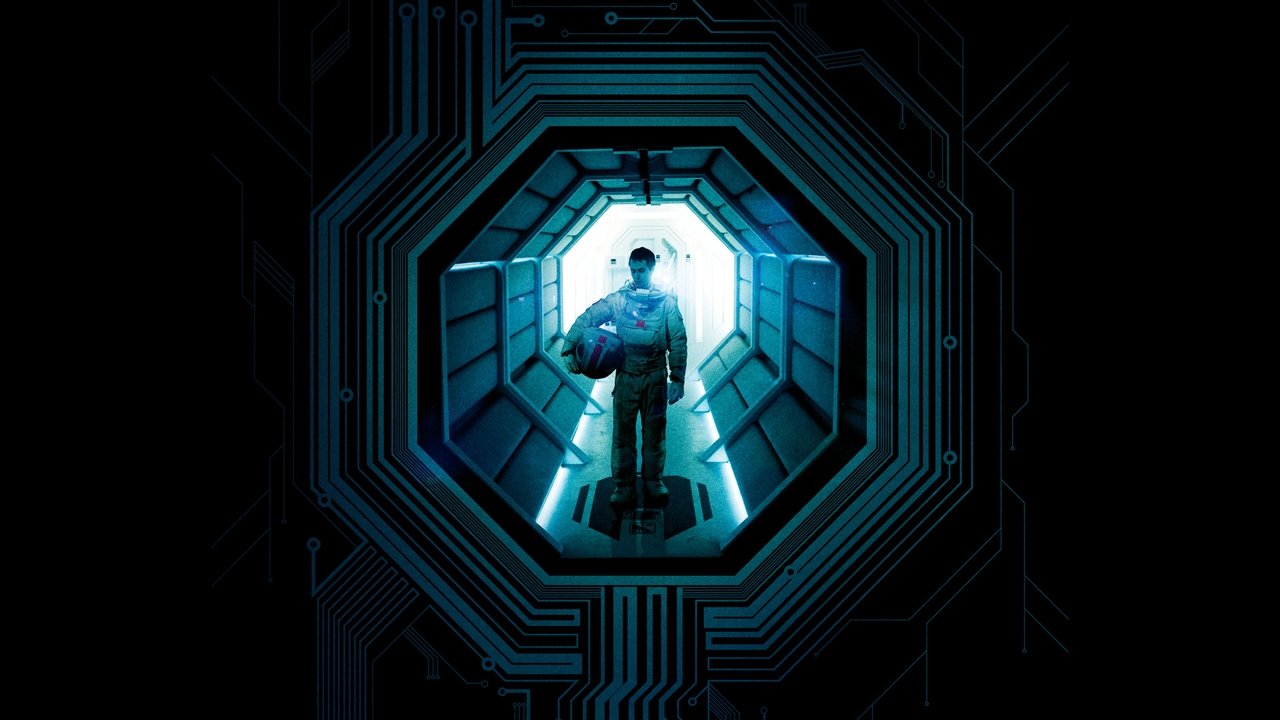
Writers: Nathan Parker (screenplay), Duncan Jones (story)
Cast: Sam Rockwell, Kevin Spacey, Dominique McElligott, Benedict Wong, Matt Berry
Sam Bell is the sole human employee on Sarang Station, a mining base on the far side of the Moon extracting helium-3 for Lunar Industries. He is nearing the end of his three-year contract, communicating with his wife and young daughter through recorded video messages because live transmission is broken. When an accident at a harvester leaves him injured, he discovers a second Sam Bell — younger, healthier, identical — and the architecture of his employment becomes clear: he is one in a series of clones, each given a three-year lifespan, each implanted with the same set of memories, each believing he is the original Sam Bell finishing a temporary posting before going home.
Moon is an employment story. It is set on the far side of the Moon, it involves cloning and corporate conspiracy and a robot named GERTY who communicates partly through emoticons, but the structure underneath all of that is a story about work, and specifically about what an organisation looks like when it solves the problem of labour by making the worker disposable, reproducible, and unaware that he is either. Sam Bell has a three-year contract, a wife and daughter waiting for him on Earth, memories of his life before the posting, and a countdown calendar on the wall. Everything that makes the job endurable — the identity, the purpose, the prospect of return — is a management tool. The memories are implants. The wife has moved on from the original Sam years ago. The countdown is not approaching a homecoming but a termination, after which another Sam will wake up in the same bunk with the same photographs and the same three-year clock, and the operation will continue without interruption. Lunar Industries has not solved a logistics problem. It has solved a human resources problem, and the solution is to eliminate the human from the resource while preserving exactly enough humanity to keep the resource functional.
The reveal — that Sam is a clone — is less interesting than what the film does with it, which is to stage the collision between two instances of the same worker at different points in their operational lifecycle. The older Sam is deteriorating; his teeth are falling out, his hands shake, his body is approaching its designed end. The younger Sam is fresh, aggressive, full of the energy that the implanted memories and the promise of return are meant to generate. They do not trust each other, which is the most truthful detail in the film: two employees with identical capabilities and identical subjective histories, discovering that the organisation has no reason to prefer one over the other, and that the experience they were each told was singular (their posting, their sacrifice, their contract) was a batch process. The horror is not the cloning itself. It is the recognition that everything Sam believed made him irreplaceable — his skill, his dedication, his emotional connection to the work — was a feature of the template, not of him. Lunar Industries does not need Sam Bell. It needs a Sam Bell, and it has a room full of them.
GERTY is the film's quiet structural argument, and the reason it does not quite work as a 2001 homage despite trying. HAL was a system whose imperatives conflicted with the crew's survival. GERTY's imperatives do not conflict — he is programmed to help Sam, and he does, including helping the Sam who should not exist according to the programme. When Sam asks GERTY if he is a clone, GERTY tells him the truth. When Sam asks for help escaping, GERTY provides it. The robot does not betray the worker; the organisation does, and it does it at a layer below anything GERTY can see or reach. The company's deception is not encoded in the AI — it is encoded in the architecture: the communication blackout that prevents live contact with Earth, the harvester routes that keep Sam away from the cloning bay, the three-year lifespan that ensures no unit operates long enough to discover the pattern. GERTY is honest within a dishonest system, which is a more common and more uncomfortable arrangement than a dishonest AI within an honest one. The tools work. The tools are not where the lie lives.
What Duncan Jones achieves with very little budget and essentially one actor is a parable about the logical endpoint of a certain kind of workforce optimisation. If your most expensive resource is human labour, and the constraint on scaling is the scarcity and variability of individual workers, then the dream is Sam Bell. The film does not exaggerate; it literalises. Every organisation that treats people as interchangeable units and manages them through standardised onboarding, scripted culture, implanted values, and planned attrition has built a version of Sarang Station, differing only in that the replacement cycle is visible to the people inside it and the memories are formed the usual way rather than inserted. Sam's question — am I a clone? — has an answer, in the film and sometimes outside it: it does not matter whether you are a clone. What matters is whether the system was built on the assumption that you are one.