Rollerball
Writers: William Harrison (screenplay, based on his short story)
Cast: James Caan, John Houseman, Maud Adams, John Beck, Moses Gunn, Ralph Richardson
In 2018, corporations have replaced nations and war has been eliminated. The only outlet for aggression is Rollerball, a violent sport combining elements of roller derby, motorcycle racing and handball. Jonathan E, the game's greatest player, is asked to retire by Bartholomew, the chairman of the Energy Corporation. Jonathan refuses and begins asking questions about how corporate decisions are made — questions nobody is supposed to ask. The corporation responds not with force but by changing the rules of the game, removing penalties and time limits, escalating the violence until the sport itself becomes a mechanism for eliminating one man.
The premise of Rollerball sounds like a parable, and Jewison treats it like a procedural. In 2018, corporations have replaced governments, eliminated war, assigned populations to energy, food, transport and luxury conglomerates, and the only spectacle permitted is a sport designed to hurt people. The game combines motorcycles, a steel ball, and a banked track, and its rules exist not to produce a winner but to demonstrate a thesis: that no individual can prevail against an organised team, that collective force always overwhelms personal skill, and that the proper response to watching it is gratitude toward the corporation that provides everything else. The sport is, explicitly, propaganda — not the crude kind that falsifies information, but the structural kind that shapes what a population considers possible. Bartholomew, the chairman of the Energy Corporation, explains the arrangement to Jonathan E without embarrassment: corporate society takes care of everything, and all it asks of anyone, all it has ever asked of anyone, is not to interfere with management decisions. The sentence is delivered as common sense, not as threat, and that register is the point. The organisation is not hiding its purpose. It has built a world in which its purpose sounds like hospitality.
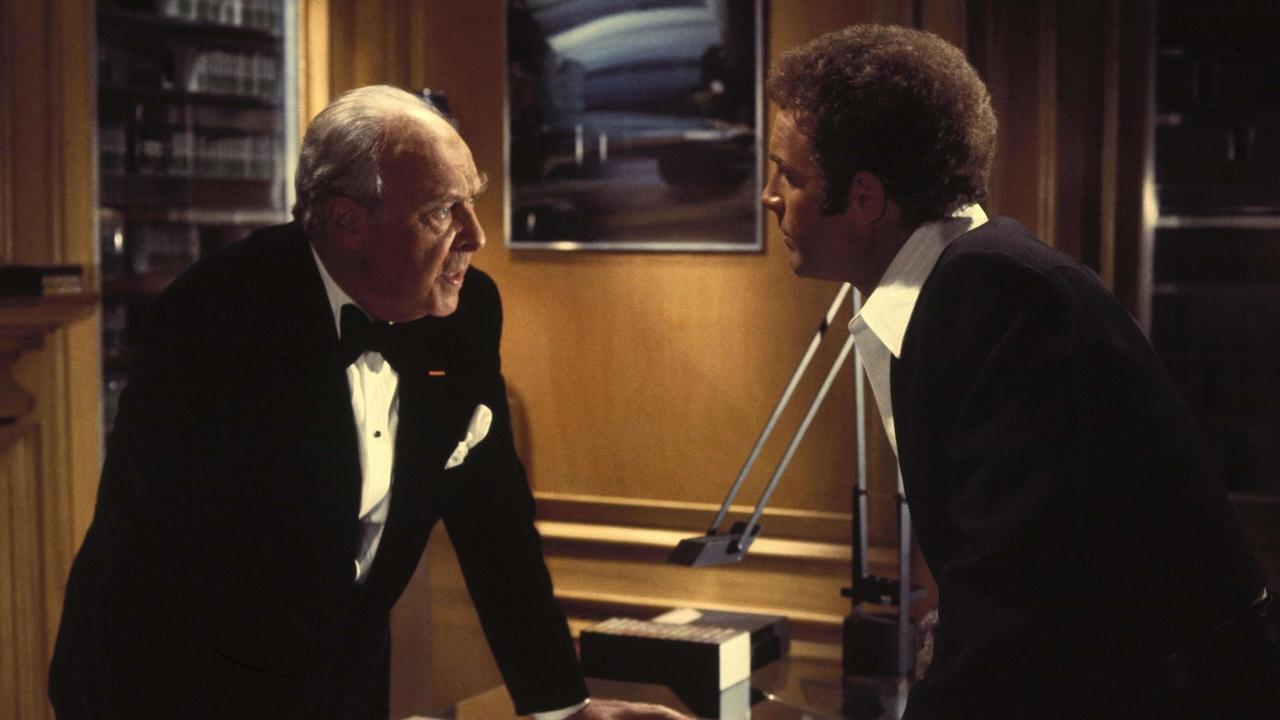
Jonathan E is the problem, and the nature of the problem is worth examining because it is not rebellion. Jonathan has not criticised the corporation, organised resistance, or articulated an alternative. He has simply been very good at the sport for too long. Over ten years he has become individually recognisable — fans know his name, his face, his record — and this individual visibility is precisely what the game was designed to prevent. Bartholomew tells him the game was created to demonstrate the futility of individual effort, and now Jonathan has given it a face. The corporation does not fear what Jonathan might do. It fears what Jonathan has already become: evidence that an individual can matter within a system whose legitimacy depends on individuals not mattering. His retirement is requested with the same administrative courtesy the corporation brings to everything else. When he refuses, no one threatens him. The rules of the game are simply changed — penalties are relaxed, then removed; time limits are extended, then eliminated; the next match is played with no substitutions and no rules at all. The corporation does not confront Jonathan. It modifies the environment until the environment eliminates him. This is the organisational response to any individual whose visibility contradicts the organisational narrative: not punishment, but restructuring. The performance review criteria change. The reporting line is redrawn. The role is redefined in a way that makes the inconvenient excellence no longer measurable.
The most unsettling subplot involves Jonathan's attempt to understand. Having been told his retirement is a corporate decision, he asks to see how corporate decisions are made. He is directed to a library in Geneva where all books have been transcribed into a central computer, and the computer — administered by a distracted custodian played by Ralph Richardson in the film's strangest and most deliberate performance — has lost the entire thirteenth century. Not suppressed it, not redacted it: lost it, the way a system loses data when nobody maintains the index. The scene is played as comedy, and its comedy is its argument. The corporation does not need to burn books. It only needs to transfer knowledge into a system whose steward does not care whether it is complete, and then wait. Access without curation is a form of erasure that produces no ash and requires no censor. Anyone who has searched a corporate knowledge base for the decision log behind a policy that shapes their daily work, found nothing, and been told the decision was made before the current system was implemented, has visited the Geneva library. The information is not forbidden. It is merely gone, and nobody in particular made it go.
Jewison's ending refuses catharsis and is stronger for the refusal. The final game is played without rules or time limits, and it is a massacre — players die, the crowd screams, and Jonathan survives. He picks up the ball, skates past the bodies, scores the final goal, and the arena goes silent. Then it erupts in a chant of his name. He has won, individually, exactly the kind of victory the game existed to prove was impossible. And the film stops there. It does not show what the corporation does next. It does not show the crowd going home, or Bartholomew's response, or the world the morning after. This is not an oversight; it is the film's final structural claim. The individual victory happened. It proved nothing the corporation cannot absorb. Bartholomew told Jonathan that no player is greater than the game itself, and the statement was not a prediction about this match but about the system that contains all the matches. The crowd chanted his name tonight. Tomorrow the corporation will still control energy, food, transport, and luxury, and it will still run a game. Whether Jonathan plays in it or not, the game will go on, because the game is not the sport. The game is the structure that makes a sport the only place where individual effort is permitted to appear, and that structure has not been touched. Jonathan won the match. He did not touch the bracket.