The Parallax View
Writers: David Giler (screenplay), Lorenzo Semple Jr. (screenplay), Loren Singer (novel)
Cast: Warren Beatty, Paula Prentiss, William Daniels, Hume Cronyn, Walter McGinn
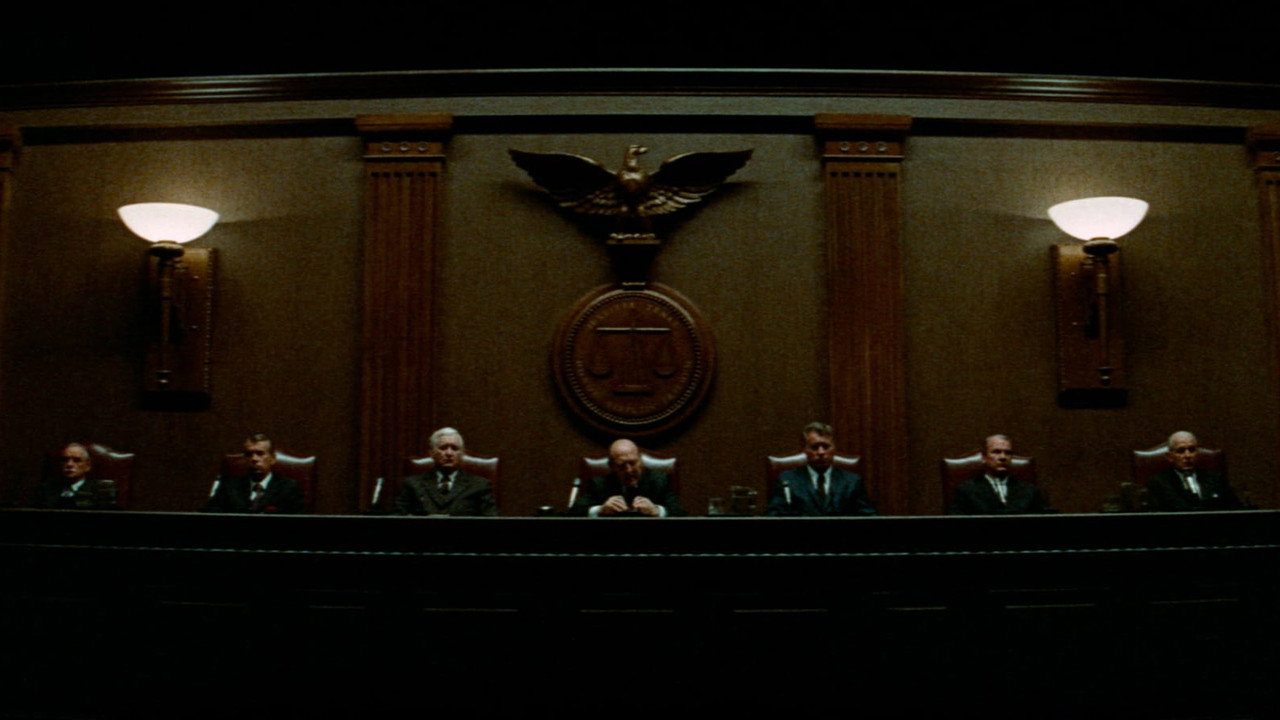
After a senator is assassinated at the top of the Space Needle, a commission concludes that the killer acted alone. Reporter Joe Frady is approached by a fellow witness who believes someone is killing the other witnesses. When she dies, Frady begins investigating and discovers the Parallax Corporation, a company that recruits assassins through psychological profiling. He takes the Parallax personality test, is accepted, and infiltrates the organisation — or believes he does. At a second political assassination, Frady is the one found with the rifle, and a second commission delivers a second finding: a lone, deranged individual.
Pakula's conspiracy trilogy — Klute, The Parallax View, All the President's Men — moves from a crime with a single victim to a crime against the republic, and the middle film is the one that looks at the mechanism. Where All the President's Men follows an investigation that succeeds — the reporters find the story, the system works, the president resigns — The Parallax View follows an investigation that fails, and the failure is not an accident but a property of the system being investigated. Joe Frady is a talented, relentless reporter who discovers real evidence of a real conspiracy, and every step he takes to expose it positions him more precisely inside the frame the conspiracy has built for him. The film opens with a judicial commission concluding that a senator was killed by a lone gunman, and it closes with a second commission concluding that a second senator was killed by a lone gunman — this time Frady himself, dead and holding a rifle he was not carrying, framed with the same efficiency the corporation applies to everything else. The symmetry is the argument. The investigative process and the elimination process are the same process, viewed from different angles, and the word in the title is doing its work: the parallax is the gap between what you see and what is there, produced by the position from which you are looking.
The centrepiece of the film is the Parallax test, and it is the most disturbing sequence Pakula ever directed, which is saying something from the man who shot the parking garage scenes in All the President's Men. Frady, posing as a recruit, sits in a dark room and watches a montage — images of love, mother, father, home, country, God, enemy, happiness, projected in sequence while music shifts underneath. The images are stock: a Norman Rockwell painting, the American flag, a family at dinner, a body on a gurney. They repeat, but in different combinations, and on each pass the associations shift — the flag appears next to love, then next to violence; the father appears next to authority, then next to threat. Nothing in the test is original content. Everything in the test is arrangement.
The Parallax Corporation does not create psychopaths. It identifies them, using a model that maps emotional response to a sequence of ordinary stimuli, and the terrifying implication is that the model works. Frady passes — he fakes the right responses, or believes he does — and the corporation accepts him, which means either the model was fooled or the model saw something Frady does not know about himself. Pakula never resolves which, and the ambiguity is structural rather than lazy. The selection process is the corporation's product. It does not need to train anyone. It needs to find the person whose existing dispositions align with the task, place them near the target, and let the commission do the rest. The system does not produce the outcome. It curates the inputs until the outcome produces itself.
What makes the film feel modern rather than dated is its treatment of the investigating institution. Frady's editor, Bill Rintels, is not corrupt. He is sceptical in the ordinary professional way — he needs evidence, sources, something printable — and his scepticism functions as a shield for the conspiracy not because he is wrong to demand evidence but because the evidence Frady produces always looks, from the institutional vantage point, like the work of a paranoid reporter who has gone too far. When Frady says every witness from the first assassination is dead, Rintels hears a man reaching. The gap is not between knowledge and ignorance. It is between what can be known by a person inside the events and what can be credited by a person evaluating those events from the chair where evidence is weighed. Every organisation has this gap. The person closest to the problem sees a pattern that the person reviewing the report cannot see, because the pattern exists in the sequence of lived experience and disappears when translated into the evidentiary format the institution requires. The field engineer who knows something is wrong with the deployment but cannot produce a reproducible test case. The analyst who sees the trend in the data but cannot survive the meeting where the trend is challenged on methodology. The institution is not suppressing the signal. It is applying its standard of proof, and the standard of proof, applied honestly, filters out the thing that is happening.
The twin commissions that bookend the film are the structure made explicit. Each sits behind a long table, each delivers findings in measured bureaucratic language, each concludes that a lone individual acted without conspiracy. The first finding is wrong and the second is wrong, but both are produced by the same process — investigation, evidence review, deliberation — that would have produced a correct finding if the evidence had not been arranged by the entity under investigation. The Parallax Corporation does not need to corrupt the commission. It only needs to ensure that the physical evidence at the scene points to one person, and the commission will do what commissions do. Pakula is not making an argument about institutional corruption. He is making a far more uncomfortable argument about institutional competence: that a process can be honest, thorough, and completely wrong, because the process was designed to evaluate evidence and the evidence was designed to be evaluated. The system's integrity is what makes it exploitable. A corrupt commission could be exposed; a competent one that reaches the wrong conclusion because the inputs were curated cannot, because it did its job. This is the parallax of the title in its deepest sense — not a flaw in vision but a property of position, and the position cannot be changed from inside the system that assigned it.