Андрей Рублёв
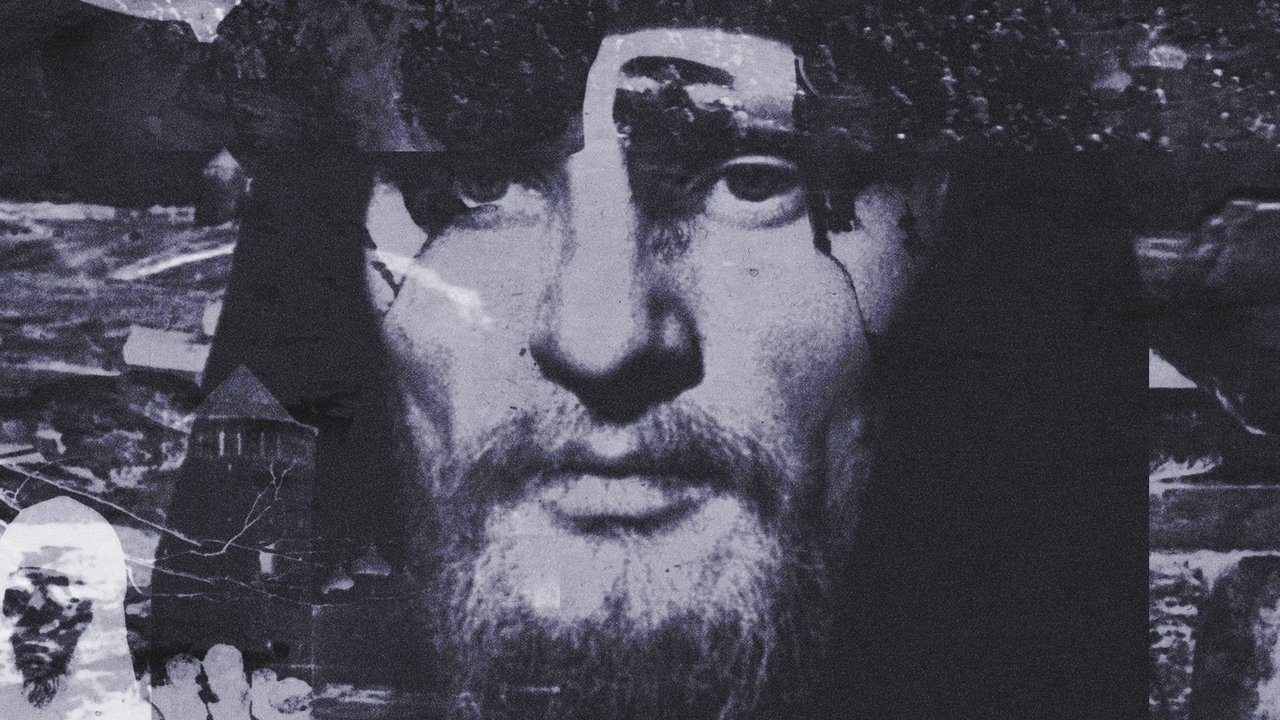
Writers: Andrei Tarkovsky (screenplay), Andrei Konchalovsky (screenplay)
Cast: Anatoli Solonitsyn, Ivan Lapikov, Nikolai Grinko, Nikolai Sergeyev, Nikolai Burlyayev, Irma Raush
Fifteenth-century Russia. Andrei Rublev, an icon painter of growing renown, wanders through a landscape of Tatar raids, famine, plague, and the internal politics of the Orthodox Church, trying to reconcile his faith in humanity with everything he witnesses. After an act of violence he takes a vow of silence and stops painting entirely. In the final episode, a boy named Boriska claims to know his dead father's secret for casting bells and leads an entire community through the process — a feat of craft undertaken on faith alone, with no guarantee the bell will ring.
The bell-casting sequence of Andrei Rublev runs nearly forty minutes, occupies the final episode of a three-hour film, and contains the most complete depiction of craft under radical uncertainty ever committed to any medium. A boy, Boriska, perhaps fourteen, walks into a commission that no one else will take. The Grand Prince needs a bell cast for a new cathedral. The experienced casters are dead of plague. Boriska announces that his father, a master caster, passed on the secret of the alloy before dying, and on the strength of this claim alone he is given command of the project — workers, materials, a site, and an implicit deadline enforced by the possibility of execution if he fails. What follows is not a montage of inspired artisanship. It is a logistics operation. Boriska searches for clay of the right consistency. He argues with labourers. He overrules an experienced assistant about the location of the pit. He makes decisions with absolute authority and no visible hesitation, and Tarkovsky films every one of them with the same unblinking patience, so that you are watching not genius but management: the daily accumulation of choices, each one dependent on the last, none of them reversible once the pour begins. The entire community is organised around a single deliverable, and the organising principle is the word of a boy who says he knows something no one can verify.
What makes the sequence devastating rather than merely impressive is the confession that comes after. The bell is cast. It is raised. The clapper swings. The bell rings — a deep, clean tone that fills the valley and confirms that whatever Boriska did, he did it right. And then he collapses, sobbing, into Rublev's arms, and tells him the truth: his father never told him the secret. He never passed it on. Boriska guessed, or intuited, or reconstructed from fragments of observation gathered while watching his father work, or simply committed to a process and let the material teach him as he went. The knowledge he claimed to possess may never have existed as a transmissible thing. His father may have worked from feel, from accumulated judgement that could not be extracted into rules, from what Michael Polanyi would later call tacit knowledge — the kind that lives in the hands and in the timing and in the practitioner's relationship with the material, and that dies with the practitioner unless someone else goes through the entire process from scratch, making their own mistakes, building their own feel. Boriska did not inherit a secret. He inherited the necessity of acting as if one existed, and that was enough to organise a community and produce a bell. The gap between what he claimed and what he had is the gap every project lives inside: the distance between the confident specification and the actual state of knowledge at the moment work begins.
Tarkovsky spent the first two and a half hours of the film preparing us for this, though it does not look like preparation. What it looks like is a series of loosely connected episodes in which Andrei Rublev walks through fifteenth-century Russia witnessing invasion, cruelty, betrayal, the burning of churches, and the systematic destruction of everything he has been taught to believe makes human life meaningful. He watches a jester beaten and dragged away by soldiers for mocking the authorities. He watches a pagan festival that his faith tells him is sin but that looks, from the ground, like joy. He watches his own church destroyed by a Tatar raid, the icons he painted defaced or burned, the congregation slaughtered.
And at some point he stops. He takes a vow of silence. He refuses to paint. The conventional reading is that he has lost faith — in God, in art, in humanity — but Tarkovsky is doing something more specific than a crisis of faith. What Rublev has lost is not belief but the conditions under which belief produces work. An icon painter in fifteenth-century Russia is not a freelance artist; he is an institutional actor. He works for the Church, within its iconographic tradition, and his authority to paint comes from a system that tells him what beauty is, what holiness looks like, and how the two relate. When the system is destroyed — burned, occupied, made to serve invaders and collaborators — the institutional permission to do the work disappears, and Rublev, who is honest, stops rather than continuing on the basis of a warrant that no longer exists. He does not lose the ability to paint. He loses the structure that made painting meaningful, and without it he has nothing to organise his craft around.
Boriska restores him, and the mechanism of restoration is precise. It is not inspiration. It is not beauty. It is the spectacle of someone committing everything to a process whose outcome is unknown, on the strength of knowledge that may not exist, inside a community that has organised itself around the commitment rather than the certainty. Nothing is resolved until the clapper swings, and by then it is too late to change anything. Rublev watches this and recognises something about the nature of making: that the knowledge is never complete before the work begins, that the act of committing is itself part of the knowledge, and that waiting for certainty before starting is a form of silence that eventually becomes permanent.
His vow of silence ends. He speaks. He tells Boriska they will go together — the boy will cast bells, the monk will paint icons — and the film cuts to colour for the first time: close-ups of Rublev's actual surviving icons, the real paintings, glowing in gold and blue after three hours of mud and smoke and grey Russian light. The shift from monochrome to colour is not a reward; it is evidence. The work was made. It survived five hundred years. Whatever knowledge Rublev recovered or constructed or guessed at in that moment was sufficient, and the only proof of its sufficiency is the work itself, standing in a museum, silent about its own origins. The film does not tell you what the secret is. It tells you that the secret may be that there is no secret, only the willingness to commit to the making and let the material answer the question that the mind could not settle in advance.