Mon oncle
Writers: Jacques Lagrange (screenplay), Jean L'Hôte (screenplay), Jacques Tati (writer)
Cast: Jacques Tati, Jean-Pierre Zola, Adrienne Servantie, Lucien Frégis, Betty Schneider, Jean-François Martial
Genial, bumbling Monsieur Hulot loves his top-floor apartment in a grimy corner of the city, and cannot fathom why his sister's family has moved to the suburbs. Their house is an ultra-modern nightmare, which Hulot only visits for the sake of stealing away his rambunctious young nephew. Hulot's sister, however, wants to win him over to her new way of life, and conspires to set him up with a wife and job.
The Villa Arpel is a machine for demonstrating status. Every element of it — the fish-shaped fountain activated only when guests arrive, the garage door that opens before the car has stopped, the kitchen that runs itself in sequences its owner cannot interrupt — has been designed to signal that its inhabitants have crossed into a different relationship with the material world. What Tati understands, and what makes Mon Oncle essential rather than merely charming, is that this relationship is not one of mastery but of compliance. The villa's owners do not control their house; they perform it for visitors, then live around it when no one is watching. The gadgets do not save labour. They create the obligation to justify them.
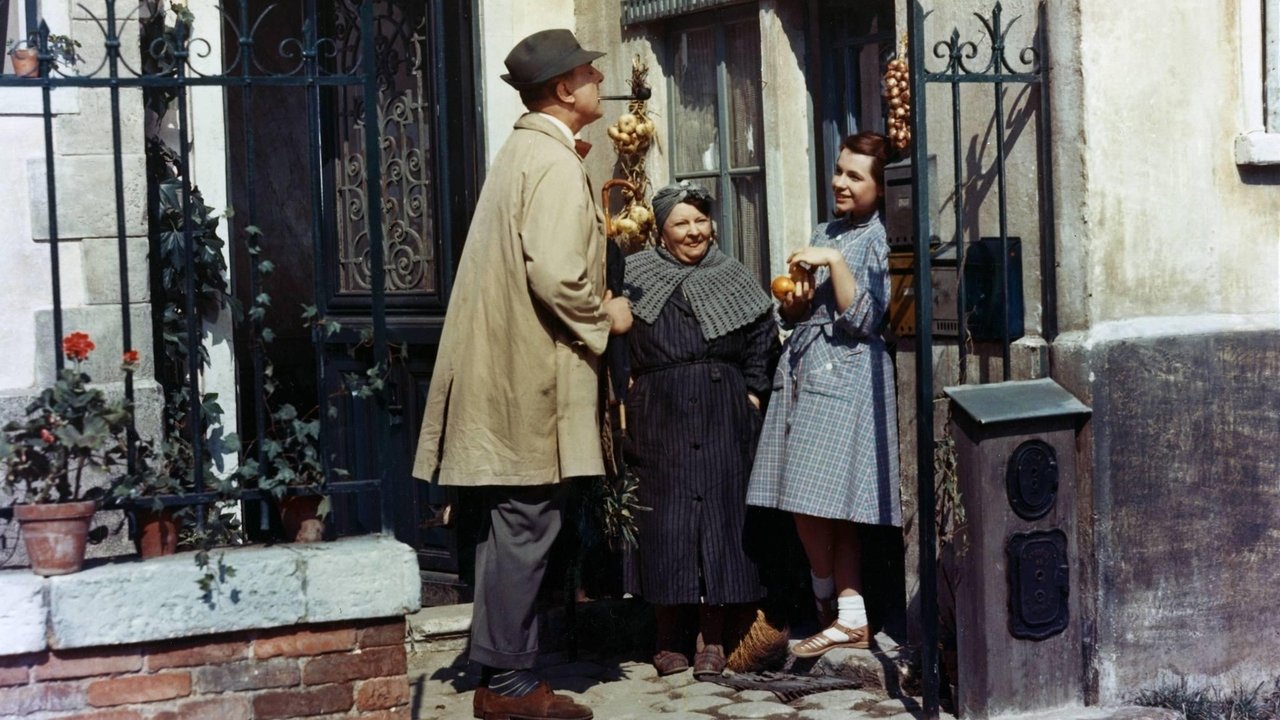
Hulot is not a Luddite. He does not campaign against the modern or long for a simpler world. He is simply not organised around the imperatives that the Villa Arpel encodes. He is late, permeable, distracted — he takes routes through the old quarter that serve no efficiency function except that they are interesting. The film's argument runs through the contrast between his neighbourhood and the villa: in the old streets, space generates encounter by accident, children play through gaps in walls, the grocer and the neighbour and the stranger collide and separate without design. The modern suburb produces isolation at scale. Its order eliminates the friction that, in the old quarter, was social life. What looks like chaos was actually a system; what looks like a system is actually isolation with good drainage.
The factory sequence in the second half makes the case most directly. Hulot is given a job — a concession to modernity — and assigned to operate a machine that extrudes plastic tubing. He manages it badly, producing tubing that looks wrong, and when he fixes his error the machine produces something worse. Nobody in the factory quite understands the relationship between what the machine does and what it is supposed to do; they know what correct output looks like and they know when it is absent. Tati is describing, with visual comedy, the experience of working inside a system whose logic is opaque to its operators — not because the operators are stupid but because the system was not designed to be understood, only to be run. This is not a 1958 problem. Every product team that has inherited a codebase, every operator running a dashboard they did not build, recognises the factory.
For anyone directing digital products, Mon Oncle offers a warning that has only sharpened with time. The Villa Arpel's designers optimised for legibility — the house reads immediately as modern, progressive, well-appointed. What they did not design for was use. The fish fountain is activated by a switch hidden from the fish-owner's daily movement; the kitchen's automation removes the inhabitant from the kitchen's decisions. These are not edge cases. They are what happens when a system is designed to impress rather than to serve, when the demonstration of capability becomes the product. Tati made this argument with a farce; the argument has not aged.