Primer
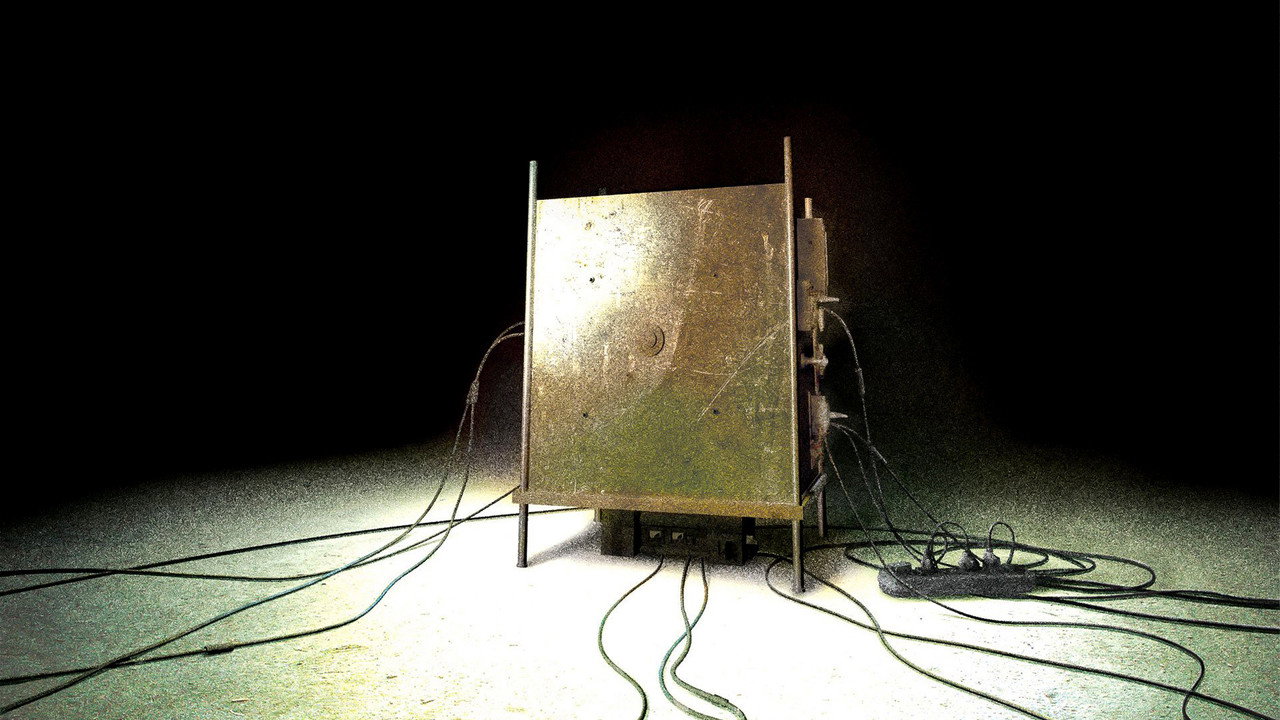
Writers: Shane Carruth (written by)
Cast: Shane Carruth, David Sullivan, Casey Gooden, Anand Upadhyaya
Screenplay: Read screenplay ↗
Four engineers moonlight in a suburban garage, building devices they hope to sell while keeping their day jobs. Two of them, Aaron and Abe, stumble onto a machine whose behaviour they cannot explain: it appears to fold time back on itself. They proceed with the discipline of engineers — protocols, redundancy, careful notes — and discover that method is no defence. As they use the device to revisit their own days, the timelines multiply beyond anyone's ability to trace, and the friendship built on shared competence becomes the first thing the machine breaks.
Two engineers build something in a garage and then lose track of what it does. That is the whole of Primer, and it is also the reason the film has a reputation for being impossible to follow. The unintelligibility is not a failure of craft — it is the argument. Aaron and Abe are competent men working carefully, and their competence is precisely what fails them: the state space of the thing they have made grows faster than their capacity to hold it in mind. The film refuses to narrate its way out of that problem on the audience's behalf, because doing so would concede the point. Complexity outrunning its own authors is the subject at every level, including the level of the film's own form.
The parallels to software work are almost embarrassingly direct. Aaron and Abe version their timelines and keep notes on what they changed. They open branches they will never be able to merge. They hit race conditions between copies of themselves and have no way to reproduce the fault, because the act of investigating it creates another branch. They begin recording their own days so that a later self can replay them — logging, essentially, against a system with no stable clock. By the second half they are pair programming against their own past selves, each trying to anticipate a commit the other has already made. Anyone who has debugged a distributed system will recognise the texture of their panic: not ignorance, but the specific vertigo of knowing the mechanism and still being unable to say what happened.
Carruth made the film for around seven thousand dollars while working as an engineer, and he wrote, directed, produced, scored, edited and starred in it. That biography shows in every frame. Primer looks and sounds like engineering work rather than like a film about engineering work: fluorescent-lit garages, whiteboards nobody explains, dialogue in which two people who already share a vocabulary talk over each other and never pause to define a term. It won the Grand Jury Prize at Sundance in 2004 on a budget smaller than most catering lines. And it treats its audience the way a complex system treats its operators — with indifference. There is documentation, of a sort, if you are willing to go back through it several times.
What survives the confusion is the harder lesson. The machine does not care that Aaron and Abe are clever. Their intelligence buys them entry and nothing more; it is sufficient to build the thing and wholly insufficient to govern it. This is the part that transfers cleanly out of science fiction and into any organisation that has shipped something it no longer fully understands. The failure mode is not stupidity. It is capable people, working in good faith, with a system whose behaviour has quietly exceeded the model they hold of it — and who find out only when the model and the system disagree about something that matters.