Apollo 13
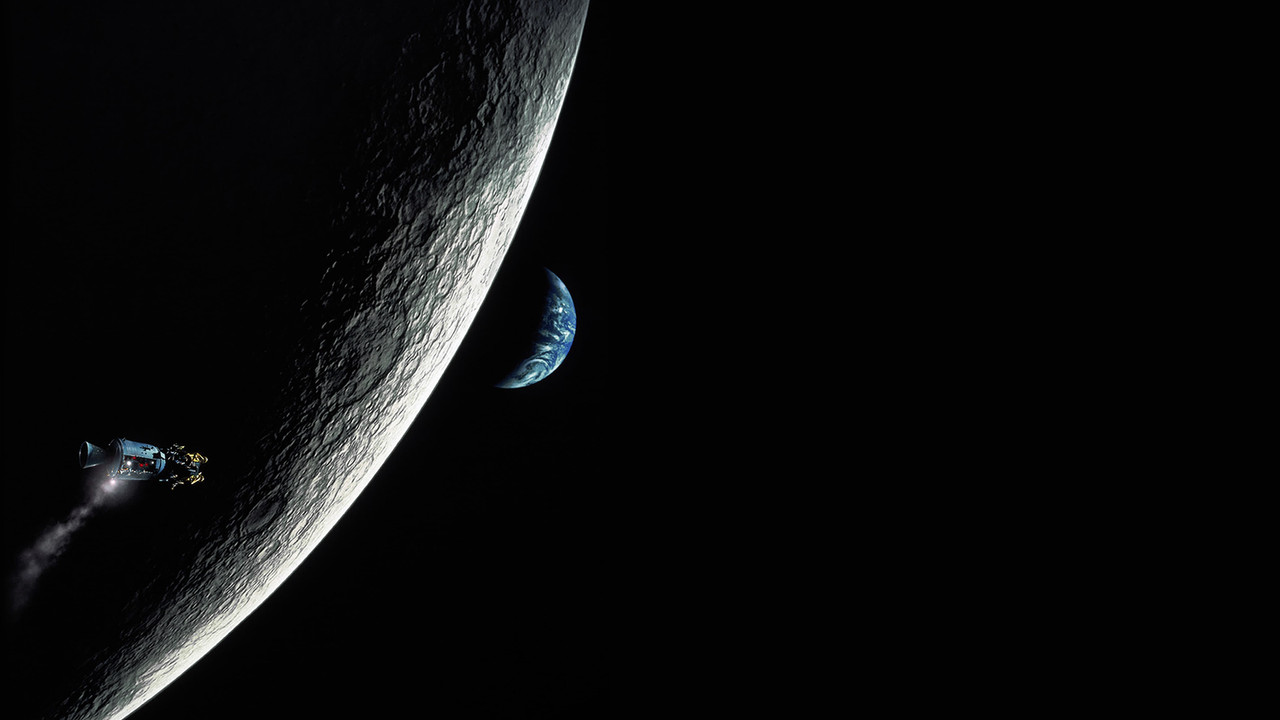
Writers: William Broyles Jr. (screenplay), Al Reinert (screenplay), Jim Lovell and Jeffrey Kluger (based on the book "Lost Moon")
Cast: Tom Hanks, Bill Paxton, Kevin Bacon, Gary Sinise, Ed Harris
Two days into the third crewed mission to the lunar surface, an oxygen tank ruptures aboard Apollo 13 and the spacecraft begins to lose power, air and heat. The Moon landing is abandoned within minutes and replaced by a single objective: return three men to Earth using a lunar module designed to sustain two people for two days, with no possibility of resupply and no procedure written for the situation. Ron Howard's account follows the crew and the flight controllers in Houston working the problem in parallel over four days.
The most instructive thing about the line everyone remembers is how little drama is in it. Houston, we have a problem, delivered in the cadence of a status report, immediately followed by a systems reading — main bus B undervolt. That is a professional describing an anomaly in the vocabulary that lets other professionals act on it, and the reason the film opens its second act there rather than with the explosion is that the report is the moment the response becomes possible. Nothing in the sequence is heroic. It is a crew reading instruments and a room in Houston watching telemetry go wrong, and the discipline being demonstrated is the discipline of not editorialising: the first job is to say accurately what is happening. Anyone who has run an incident channel knows how rare this is and how much of the eventual outcome is determined in the first ninety seconds by whether the initial message is a description or a theory. Lovell gives a description. The theories come later, and are wrong for a while, and that is fine because the description held.
Gene Kranz's contribution in the first hour is almost entirely about tempo. Let's work the problem, people, let's not make things worse by guessing — said to a room where several extremely capable engineers are already converging on plausible explanations, none of which they can yet distinguish. What Kranz is suppressing is not initiative but premature commitment, because in a system with irreversible actions and a shrinking consumables budget, a wrong intervention costs more than a slow one. The film is careful to show that this restraint is not caution in general; the same man will later approve genuinely radical departures from procedure. The rule is narrower and better: act decisively on what you know, refuse to act on what you have merely assumed. When the argument breaks out over powering down the command module — an action nobody has ever taken with a crew aboard, and which cannot be undone in flight — Kranz's line that he does not care what anything was designed to do, only what it can do, is the moment the room stops treating the spacecraft's specification as a boundary and starts treating it as documentation. Those are different things, and confusing them is how organisations talk themselves out of the only remaining option.
Lovell's reframing is the piece of the film worth teaching. Let's look at this thing from a standpoint of status: what do we have on the spacecraft that's good? It is a single sentence and it inverts the whole approach. The instinct under failure is to enumerate what has broken, which produces an accurate and paralysing list; his question produces an inventory of remaining capability, which is the only list you can build a plan out of. The lunar module has power, oxygen and an engine, and it is rated for two men for two days rather than three men for four, and from that constraint everything else follows — the free-return trajectory, the shutdown of every non-essential system, the cold, the water rationing, the navigation by earth terminator when the debris cloud makes star sightings impossible. None of this is invention from nothing. It is the systematic exploitation of properties the hardware already had and nobody had needed. Constraint-driven design is often discussed as a creative posture; here it is shown as an accounting exercise performed under time pressure, which is closer to the truth.
Then there is the table. An engineer walks into a room, empties a box of everything aboard the spacecraft onto the surface — hoses, a flight manual cover, duct tape, a sock — and states the problem: make this fit into the hole for this, using nothing but that. The square canister into the round receptacle. It is the purest statement of a design brief that exists on film, because the requirement is unambiguous, the acceptance test is binary, and the material set is closed and physically present. There is no scope negotiation available, no possibility of asking for a different component, and no credit for elegance. What makes the scene more than a set piece is what it implies about the four days around it: someone had to know precisely what was on that spacecraft, down to the sock, which means the inventory existed before it was needed. Kranz's declaration that failure is not an option is usually quoted as a management slogan and it works better read as what it actually is in context — a requirement handed to engineers, stated in the only terms that make it actionable. It is not encouragement. It is the removal of one branch from the decision tree, which is a real thing a leader can do, and it is worth nothing unless the room already has the inventory, the telemetry and the habit of describing what is true before deciding what to do.