Twelve Monkeys
Writers: David Peoples (screenplay), Janet Peoples (screenplay)
Based on: "La Jetée" by Chris Marker (1962) ↗
Cast: Bruce Willis, Madeleine Stowe, Brad Pitt, Christopher Plummer, Jon Seda, David Morse
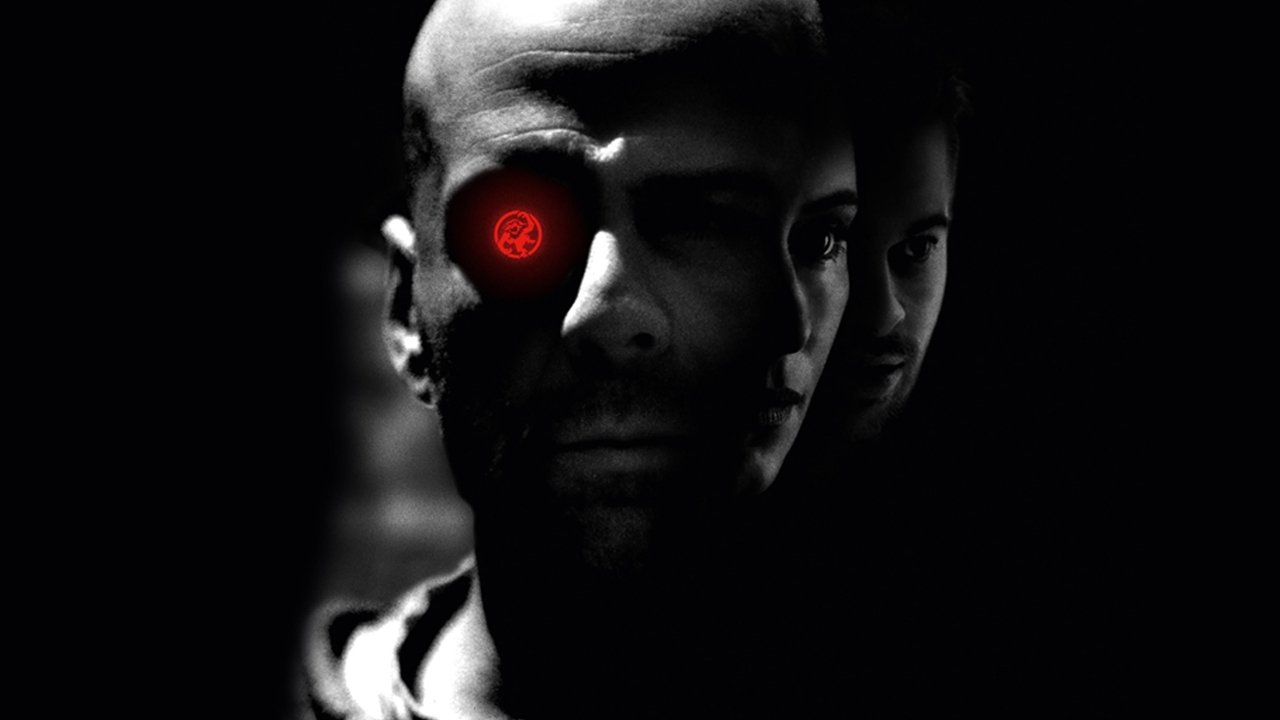
In 2035, the surface of the Earth is uninhabitable and humanity lives underground after a plague killed five billion people in 1996. James Cole, a convict, is sent back in time to gather information about the virus so that scientists in the future can develop a cure. He is sent to the wrong year, institutionalised as insane, sent back again, arrives in the right year, identifies the wrong culprit, and is killed in an airport while chasing the right one — in the exact scene he has been dreaming about since childhood, because he witnessed his own death as a boy without knowing it.
The scientists in 2035 send James Cole to 1996 and he arrives in 1990. They try again and he arrives in the trenches of the First World War. They pull him back, recalibrate, and send him to the correct year, where he identifies the wrong organisation as the source of the plague. Every piece of information he gathers is acted upon immediately by a system that lacks the capacity to verify it, and every action generates new information that is also acted upon, and the error compounds. Gilliam, adapting Chris Marker's La Jetee, has built the most precise film ever made about what happens when a feedback loop between observation and response is noisy — when the system's input is unreliable, its output becomes the next cycle's input, and nobody in the loop can distinguish signal from artefact.
The scientists are not stupid. Their technology works — they can send a man backward through time, which is a capacity so far beyond anything else in the film that it should make their other failures impossible to credit. But the technology works at the level of transport, not intelligence. They can move a body to a date. They cannot ensure that the body arrives at the right date, that the man inside it draws the right conclusions, or that the conclusions survive transmission back to a community that will interpret them through a model built on the last set of wrong conclusions. The time machine is infrastructure. The intelligence failure is organisational.
Cole's situation in the past is a study in what happens to accurate information inside an institution that has already decided what it is looking at. He tells the psychiatrists in 1990 exactly what he is: a man from the future, sent to collect information about a plague that will kill five billion people. This is true. It is also, within the diagnostic framework available to a psychiatric hospital in 1990, a textbook psychotic delusion — grandiose, internally consistent, unfalsifiable, and featuring a special mission that only the patient can perform. The institution is not wrong to classify him this way. Given its model of the world, which does not include time travel, his testimony is evidence of illness. The film's argument is not that the psychiatrists are incompetent but that classification systems produce confident assessments of data they are not equipped to evaluate, and the confidence is the problem, because confidence forecloses investigation. Nobody in the hospital tests Cole's claims, because within the hospital's framework the claims do not need testing — they need treatment.
Dr. Railly, the psychiatrist who eventually believes him, does so not because she finds evidence but because the accumulation of coincidences exceeds what her model can explain, and she makes the difficult decision to abandon a framework that is still generating plausible explanations in favour of one that accounts for more of the data. This is what it actually looks like when someone changes their mind under pressure: not a dramatic revelation but a slow, reluctant acknowledgment that the current model has stopped being the simplest explanation.
The film's structural claim is that the plague cannot be prevented. The scientists in 2035 say so explicitly — they are not trying to change the past, only to obtain a pure sample of the virus so they can develop a cure in the present. The past is fixed. Cole's recurring dream of the airport — a man running, a woman screaming, a gunshot — is the past, and it is fixed because it already happened: the boy who saw it is the man who will be in it. The circularity is total. Cole's mission does not fail because of incompetence or bad luck. It produces the event it was sent to investigate. This is Gilliam's version of a problem that every retrospective analysis faces: the observation is not independent of the system it observes, because the act of investigating feeds information back into the system, which incorporates the information into its behaviour, which changes the outcome, which changes what needs to be investigated. In Cole's case the loop is literal — he is the event — but the structural pattern is everywhere. Every post-mortem that changes the process it examined has performed a smaller version of the same operation: the investigation altered the thing it was investigating, and next time the failure will take a different shape, partly because the investigation existed.
Cole's most human line is also his saddest. Wouldn't it be great if I was crazy? Then the world would be okay. He is asking for the version of reality in which the institutional diagnosis is correct — in which he is a disturbed man in a hospital in 1990, the plague will not happen, the five billion will not die, and the only thing broken is him. It is a prayer for the conventional model. And the prayer is not answered, which means the information he carries is real and the world is ending and nobody he can reach has a framework that can accept what he is saying. The film's final image — the boy watching the man die in the airport, not knowing he is watching himself — is a closed loop with no exit and no error. Everything that happens is consistent. The system works as designed. The design includes the death of the person the system sent, and nobody who designed it considered that a defect, because the objective was information, and the information was obtained. The mission succeeded. The man did not survive it. These two statements are not in tension, and the fact that they are not in tension is the thing about the system that should disturb you most.