Synecdoche, New York
Writers: Charlie Kaufman (written by)
Cast: Philip Seymour Hoffman, Samantha Morton, Michelle Williams, Catherine Keener, Emily Watson, Dianne Wiest, Jennifer Jason Leigh, Hope Davis, Tom Noonan
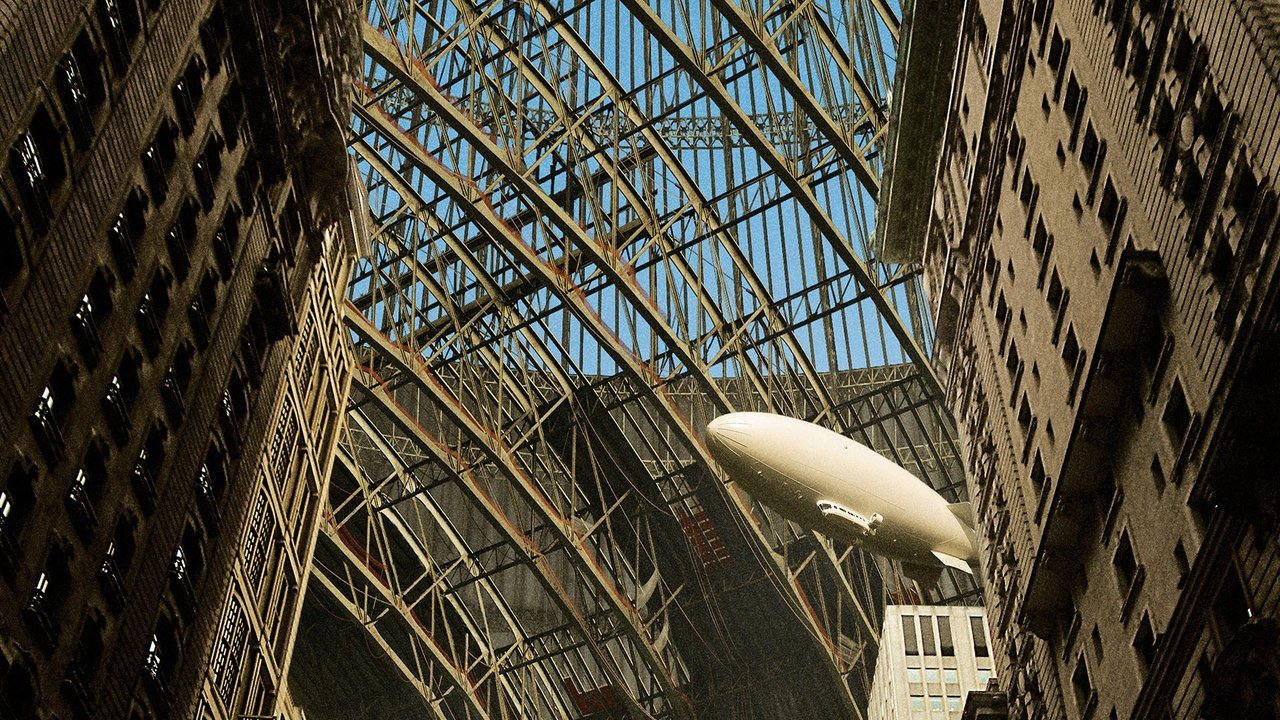
Caden Cotard, a theatre director in Schenectady, receives a MacArthur Fellowship and uses it to mount an impossibly ambitious production inside a Manhattan warehouse: a full-scale replica of New York City, with actors cast to play every person in his life. As the years pass, the production expands to include actors playing the actors, and then actors playing Caden himself, and the boundary between the model and the life it models dissolves entirely. The play never opens. The warehouse becomes larger than the world outside it.
Caden Cotard receives a MacArthur grant and uses it to build the most ambitious theatrical production anyone has ever attempted: a life-size reproduction of New York City inside a warehouse in Manhattan, populated by actors playing every person in his life, including eventually an actor playing himself, and then an actor playing the actor playing himself. The project begins as an attempt to make something honest — I will be dying and so will you, and so will everyone here; that's what I want to explore — and it is honest, more honest than anything the theatre has produced, and it never opens. It does not fail because Caden lacks ambition or skill or funding. It fails because the model is faithful enough to resist completion. Every time the warehouse is nearly ready, reality has changed: someone has aged, a relationship has ended, the actor playing Hazel no longer resembles the Hazel she is playing. The work of correcting the model generates new material that the model must incorporate, which generates new corrections, which generate new material. The production does not collapse. It grows. It grows until it replaces the life it was trying to represent, and Caden, who wanted to make art about life, discovers that he has been living inside his art for decades and has no life left outside it. The warehouse has swallowed the city. The map has consumed the territory.
This is the modelling problem stated in its purest and most alarming form. Any representation of a system that is itself part of the system it represents changes the system by the act of representing it, which means the representation is immediately out of date, which means it must be revised, which changes the system again. Caden's warehouse is a physical instantiation of the observer effect: the instrument of measurement distorts the field it measures. And the film is rigorous about the consequence, which is that the model, if it is honest enough, does not converge. It diverges. It consumes more and more of the system's resources — time, attention, love, money — until the cost of maintaining the model exceeds the cost of doing the thing the model was supposed to help with. There are a million little strings attached to every choice you make; you can destroy your life every time you choose. The strings are not metaphorical. They are the dependencies between the representation and the thing represented, and they multiply faster than anyone can cut them. Anyone who has worked on a specification document that grew until it was longer than the product it described, or maintained a process map that consumed more time than the process it mapped, will recognise the warehouse. The difference between Caden's production and an enterprise architecture diagram is one of scale, not of kind.
What Kaufman does that no one else has managed is to make the recursion literal. When Sammy Barnathan appears — an actor who has been following Caden for years and who wants to play him in the production — the model acquires a self-referential layer, and the project begins to model itself modelling itself. Caden directs Sammy playing Caden directing Sammy. Then Millicent appears to play Ellen Bascomb the cleaning lady, and then offers to direct the production, and Caden lets her, because by now he cannot tell the difference between directing and being directed. Each layer is more accurate than the last and further from anything an audience could watch.
The film does not call this emergence, but that is what it is: the property that arises when a model's complexity exceeds the threshold at which it begins to behave in ways its designer did not specify and could not have predicted. Caden's play was supposed to represent his life. It became his life. And the thing that was once Caden's actual existence — his daughters growing up in Berlin, his marriages failing in sequence, his body deteriorating in ways he catalogues but cannot stop — slipped away while he was busy getting the staging right. Everything is more complicated than you think. You only see a tenth of what is true. The minister says this at a funeral early in the film, and it sounds like a platitude. It is not. It is a theorem, and the rest of the film is the proof.
And then there is the ending, which earns the word devastating by being quiet about it. Caden, old and alone, wanders through the warehouse that is now indistinguishable from the city, receiving direction through an earpiece from a voice that has taken over his production and now tells him when to walk, where to sit, what to feel. He follows the instructions. He has been pursuing total fidelity for so long that he has no volition left, and the model has grown to the point where it can generate its own instructions without him. What was once before you — an exciting, mysterious future — is now behind you. Lived; understood; disappointing. The voice narrates him through his last morning, and the final direction it gives is a single word. I know how to do the play now, Caden says at one point near the end, and you can hear the relief in it — not the relief of a man who has solved a problem, but the relief of a man who has finally understood that the problem was never solvable, that the only way to complete a model of everything is to stop, and that stopping is itself the only honest representation of how things end. The model was complete. It had captured the one thing a model of life can never capture until the very end, which is that life ends. The only truthful conclusion the model can reach is its own termination.