Silkwood
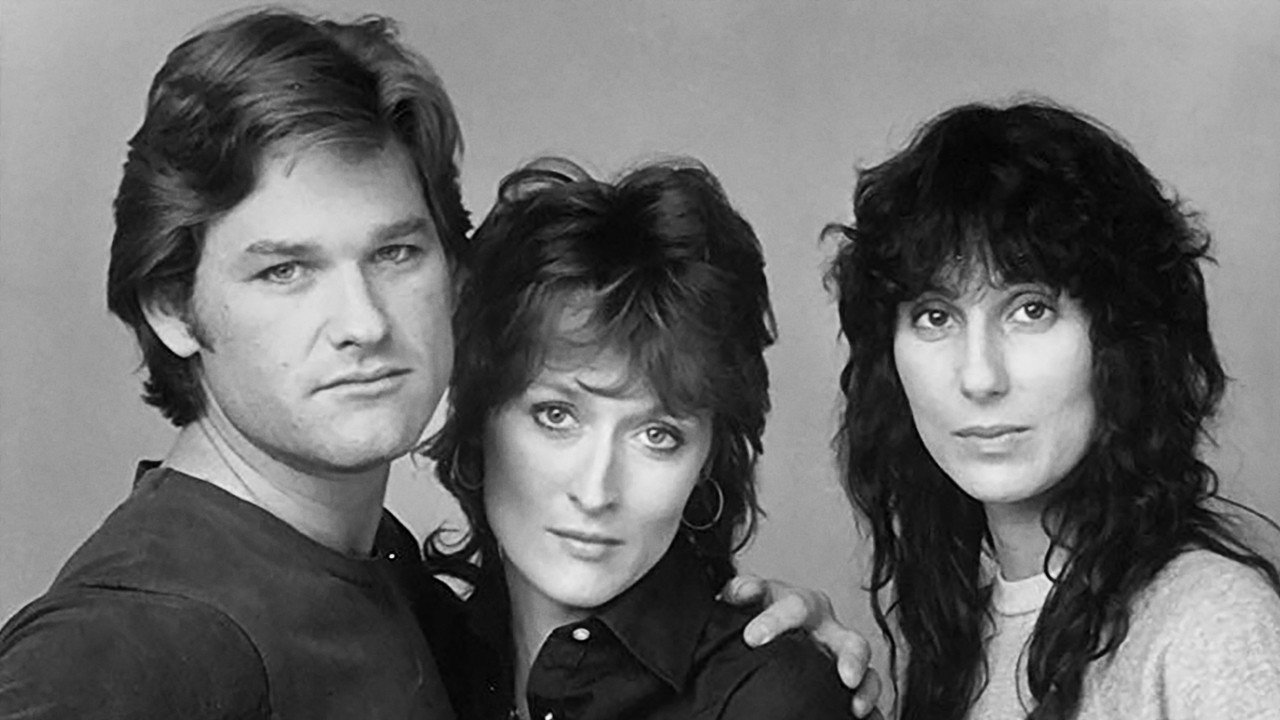
Writers: Nora Ephron (screenplay), Alice Arlen (screenplay)
Cast: Meryl Streep, Kurt Russell, Cher, Craig T. Nelson, Diana Scarwid, Fred Ward
Karen Silkwood works at a Kerr-McGee plutonium processing plant in Oklahoma, making fuel rods for nuclear reactors. She begins noticing safety violations — faulty welds, falsified quality-control photographs, workers exposed to contamination without adequate protection — and starts collecting evidence for the Atomic Energy Commission and the union. As her documentation grows, so does the pressure: she is contaminated multiple times under circumstances that remain disputed, her co-workers are turned against her, and her personal life is examined and weaponised. On the night she is driving to meet a New York Times reporter with a folder of documents, her car goes off the road. She is found dead. The folder is never found. The film, based on the real Karen Silkwood, never resolves whether the death was murder or accident.
Nichols and his screenwriters (Nora Ephron and Alice Arlen) make a choice in the first act that governs everything that follows: they show you the work. Not the scandal, not the conspiracy, not the investigation. The work. Karen Silkwood making fuel rods, handling plutonium pellets, monitoring contamination levels, standing in line for the body counter at the end of a shift. The plant is loud, fluorescent, procedural, and the procedures are the point. Workers follow protocols for handling radioactive material, and the protocols are sometimes followed and sometimes not, and the gap between the written procedure and the performed one is not dramatic — it is ordinary, the kind of drift that happens in any operation where the people doing the work are tired, underpaid, and have been doing the same task long enough that the reasons behind the rules have faded.
Karen notices the gap before she decides to do anything about it. She sees faulty welds on fuel rods that will go into reactors. She sees quality-control X-rays that have been retouched to hide the defects. She sees co-workers contaminated and sent back to the line. None of this is presented as a revelation. It is presented as something everyone in the plant already knows, in the way that everyone in any organisation knows about the gap between what the process specifies and what actually happens, and the knowledge does not produce action because the knowledge is not connected to any mechanism that would convert it into action.
What converts Karen's knowledge into action is the union, and what the union provides is not ideology but infrastructure — a channel through which a worker's observation can reach someone with the authority to act on it. Karen begins documenting: dates, times, rod numbers, contamination readings. She becomes the union's eyes inside the quality process, and Nichols films this documentation work with the same flatness he brings to the fuel-rod fabrication, because they are the same kind of labour. She is not crusading. She is collecting data. The data is the evidence, and the evidence is dangerous not because it reveals something the company does not know but because it threatens to make visible, to a regulator, something the company has chosen not to see. This is the precise function of the whistleblower in any organisation: not to discover what is hidden but to carry what is known internally across the boundary that separates internal knowledge from external accountability. The boundary is where the danger lives. Inside the plant, everyone knows the welds are bad. Inside the plant, this knowledge has no consequences. The moment the same information crosses the wall — reaches the Atomic Energy Commission, reaches a reporter, reaches a courtroom — it becomes a liability, and the person who carried it across becomes the threat.
The contamination episodes are where the film does its most careful work, and where Nichols refuses the clarity that a lesser director would have supplied. Karen is contaminated multiple times, in escalating severity, under circumstances that could be explained by carelessness, by accident, or by deliberate exposure intended to discredit her. The film does not choose. It presents each incident with the same documentary flatness, lets the audience register the pattern, and declines to confirm whether the pattern is intentional. This refusal is not evasion; it is the film's argument about how organisational pressure actually operates. The company does not need to poison Karen Silkwood to neutralise her. It only needs to ensure that she is unreliable — that her contamination record can be cited, that her personal life can be examined, that her credibility with co-workers can be eroded. Her co-workers tell her she is scaring people who need their jobs, and the accusation is accurate: the documentation she is building threatens the plant's operating licence, and if the plant closes, the town has nothing. The whistleblower's burden is that the quality signal she carries is also a threat to the people she is trying to protect, and the organisation exploits this by making the threat visible and the protection abstract. The choice between a known job with known risks and an uncertain future with uncertain safety is not a choice most people can afford to make, and the organisation knows this, and its knowledge is its defence.
The drive to Oklahoma City is the film's final sequence, and it is shot in the dark, headlights on a two-lane road, the folder of documents on the seat beside her. Karen's car leaves the road. She is found dead. The folder is not found. The Kerr-McGee company maintained that she fell asleep at the wheel; the union and her family maintained that she was forced off the road. The investigation found dents on the rear bumper consistent with another vehicle. No one was charged. Nichols ends the film here, without resolution, without justice, without the catharsis that an audience watching a story about a brave woman standing up to a dangerous corporation has been taught to expect. The absence of resolution is the film's most important structural choice, because it replicates the condition of every unresolved accountability question in any organisation: the evidence exists but is incomplete, the pattern is suggestive but not conclusive, the interested parties have irreconcilable accounts, and the passage of time has made certainty impossible. What remains is the cost — Karen Silkwood, dead at twenty-eight, and a folder of documents that might have changed the safety practices at a nuclear facility, missing. The system did not need to win the argument. It only needed to outlast the person making it, and the gap between the two is, in the end, the width of a road.