From Coase to AI: Technology, Organizations, and the Frontier Between Compacting and Decentralizing
Annotated bibliography
Each entry argues why a product person should read the work — not as a list of recommendations, but as an itinerary through the question that has quietly driven the design of every organisation since 1937: where is the frontier between doing things inside the firm and going to the market?
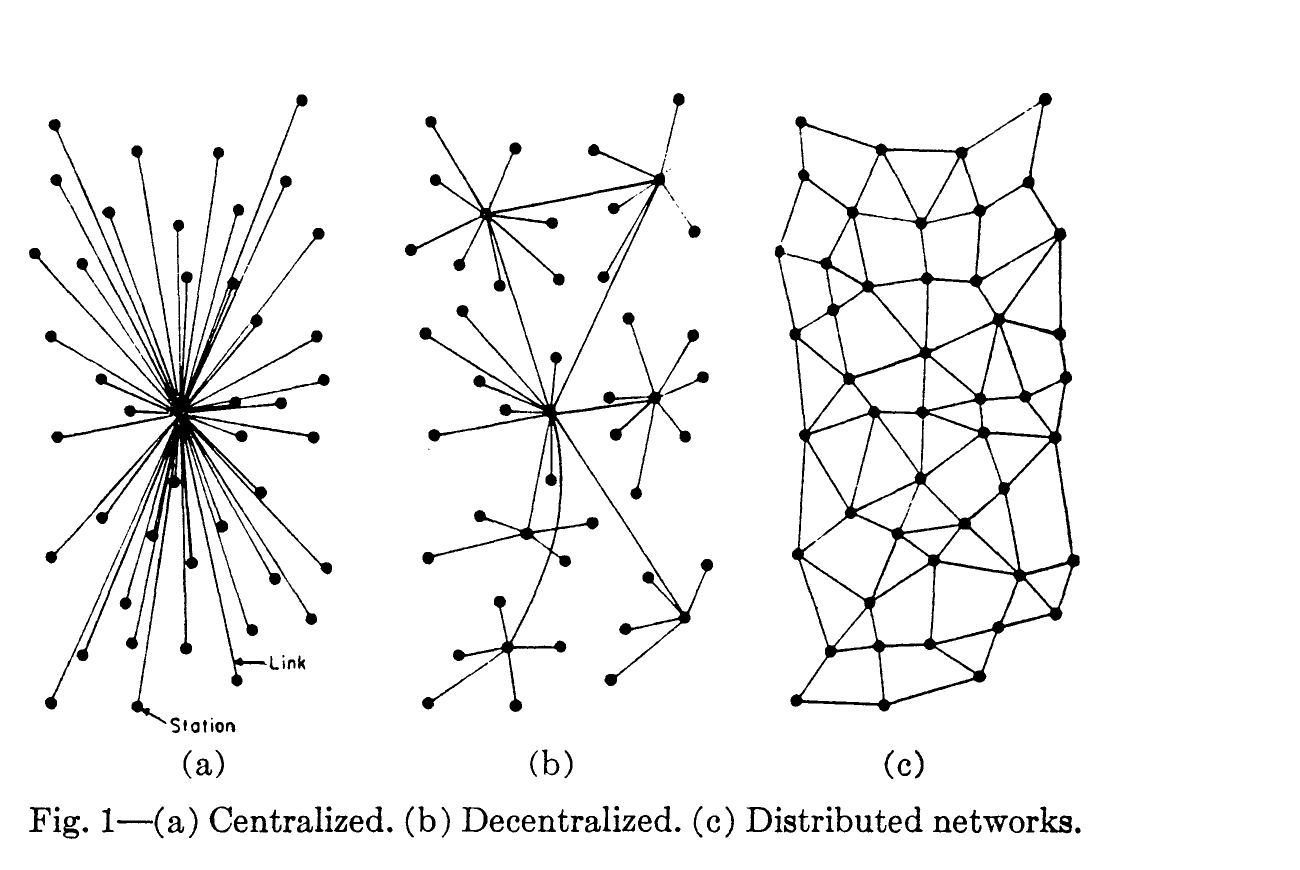
Every major technology — the printing press, the telegraph, the railway, the internet, AI — has redrawn that frontier. This collection traces the conversation from its origin (Coase asking why firms exist at all) to its current expression (AI reshaping the cost of coordination itself).
This is a living document. New readings, connections and reflections will be added as they emerge.
The origin: why do firms exist?
The Nature of the Firm
The founding question: if the market is so efficient, why do firms exist? Coase answers that organising activities in the open market has costs — searching for suppliers, negotiating contracts, monitoring quality.
Firms exist because internalising those activities is cheaper than contracting them out.
The optimal size of a firm is set by a frontier: you grow until the cost of coordinating internally exceeds the cost of going to the market.
Every technology that lowers coordination costs moves that frontier.
The economics of dispersed knowledge
The Use of Knowledge in Society
The knowledge relevant for economic decisions is dispersed across society — never concentrated in a single mind.
No central planner can aggregate it well.
Markets work because they are a decentralised mechanism for processing information: prices transmit signals that no committee could ever replicate.
Read next to Coase, the question becomes: when is it worth centralising a decision (the firm) and when should dispersed information rule (the market)? AI reopens this question because it lets every node process more information than ever before.
The visible hand of management
The Visible Hand: The Managerial Revolution in American Business
The large American corporations of the twentieth century grew because professional management — the "visible hand" of the manager — was more efficient than the market at coordinating complex activities at scale.
Layers of management, functional divisions, bureaucracy: all of it existed because coordination was expensive and difficult.
The book documents how the modern firm was built on the premise that internal hierarchy beats the market as complexity grows.
It is the building that the internet and AI are beginning to dismantle.
Transaction costs as a complete theory
The Economic Institutions of Capitalism
Williamson takes Coase's intuition and turns it into a complete theory.
Contracts are incomplete, people act with opportunism, and some assets are specific enough that you cannot acquire them on the open market without risk.
That is why firms tend to vertically integrate — not just for efficiency, but for protection.
Williamson explains why organisations end up looking the way they do: heavy, hierarchical, full of internal controls.
All of that is a rational response to an environment where coordinating outside is dangerous. Awarded the Nobel Prize in Economics in 2009.
The medium is the message
Understanding Media: The Extensions of Man
Every new medium transforms society not through its content but through how it reorganises relationships, time and perception.
The telegraph matters not for what it carries but because it compresses distance.
Television matters not for what it broadcasts but because it rearranges attention.
Applied to AI: what matters is not what task it solves, but how it transforms the organisational environment that adopts it.
See also The Gutenberg Galaxy (1962), where McLuhan traces how the printing press remade society — decentralising access to knowledge and compressing the distance between author and reader.
Information technology and the frontier of the firm
Electronic Markets and Electronic Hierarchies
The paper that connects Coase to the digital era.
Information technology reduces transaction costs, and that pushes activity toward markets and away from hierarchies.
When coordinating outside is cheap, firms shrink.
It is one of the first works to predict what later became mass outsourcing, supplier networks and the freelance economy.
Essential reading to understand that AI is not the first technology to move the Coasean frontier — it is the latest in a long series.
From atoms to bits
Being Digital
The shift from atoms to bits as the fundamental decentralising force.
When information becomes digital, the costs of copying, distributing and transforming it fall to zero.
Industries built on the scarcity of physical carriers face a pressure they cannot resist.
Prophetic on many counts — media convergence, personalisation, the collapse of intermediaries. Accessible and visionary in tone.
Anticipates the logic that every digital wave compresses distance and decentralises capability.
The network society
The Rise of the Network Society
The network as an organisational form that replaces industrial hierarchy.
Castells argues that the informational technology revolution is building a new social structure where power and productivity depend on the ability to connect to information networks.
Hierarchical organisations lose their edge against networked ones. Dense and academic, but canonical.
Offers the sociological frame that complements the economic frame of Coase and Williamson.
The cathedral and the bazaar
The Cathedral and the Bazaar
The founding essay of the open-source movement.
The thesis: the decentralised, seemingly chaotic model (the bazaar) produces better software than the planned, controlled one (the cathedral).
Raymond codifies what Linux proved empirically — that coordination without formal hierarchy can work when there are clear protocols, intrinsic motivation and fast feedback cycles.
It anticipates the logic of autonomous teams working with AI: less central planning, more distributed iteration.
The innovator's dilemma
The Innovator's Dilemma
Disruption from below: initially inferior technologies that serve ignored markets and end up displacing incumbents.
Established firms fail not from incompetence but because their processes, values and metrics are optimised for the current market, not the emerging one.
Relevant to AI because agentic tools let small teams inside the organisation disrupt internal processes without asking for permission — disruption is no longer only external.
The bar moves: you are not only competing with a startup, you are competing with a team of five inside your own company wielding Claude.
From counterculture to cyberculture
From Counterculture to Cyberculture: Stewart Brand, the Whole Earth Network, and the Rise of Digital Utopianism
How the "do-it-yourself" culture of the 1960s — the counterculture, the Whole Earth Catalogs, the communes — transformed into the culture of Silicon Valley.
The connection between a playful, experimental spirit and real technological transformation.
The book dismantles the idea that technological innovation arises from corporate plans; it arises from communities of practice with a shared ethos.
Very connected to the "just for fun" axis — important things often start without pretending to be important.
And they cannot be manufactured top-down, which is precisely what makes them powerful.
Weaving the web
Weaving the Web
The story of the World Wide Web told by its creator.
The most relevant thing is not the technology but Berners-Lee's insistence that there was no grand plan — only a problem to solve (sharing information between CERN researchers) and a spirit of openness.
The web was not designed top-down; it was woven. Berners-Lee actively resisted centralising and privatising the protocol.
Essential reading for the narrative thread that the deepest transformations often arise without a plan, driven by necessity and curiosity — and that keeping them open is itself a design choice.
Just for fun
Just for Fun: The Story of an Accidental Revolutionary
The story of Linux told by its creator.
Torvalds started building an operating system as a personal project — no business plan, no ambition to change the world.
What began "just for fun" ended up as critical infrastructure worldwide.
The book captures the dynamics of emergent innovation perfectly: you start for fun, others join because they see value, and the effect compounds.
It is also a practical demonstration of Raymond's thesis: the bazaar works. A direct antidote to the idea that innovation needs a five-year plan.
The wealth of networks
The Wealth of Networks: How Social Production Transforms Markets and Freedom
The internet lowers transaction costs to the point that a third mode of production appears — neither firm nor market — commons-based peer production.
Wikipedia, Linux, free software. You do not need Chandler's hierarchy or Coase's market; you need a protocol and motivated people.
Benkler extends Coase: when transaction costs fall far enough, the frontier of the firm does not just move — entirely new organisational forms emerge.
If you want to think seriously about how Wikipedia can exist at all, this is the book.
Here comes everybody
Here Comes Everybody: The Power of Organizing Without Organizations
The cost of organising people falls to zero on the internet, and that wipes out intermediaries and layers of management that used to be necessary.
Shirky documents how informal groups achieve results that once demanded formal institutions.
A direct hit on the idea of compacting: when coordinating is free, the middle layers are redundant.
It also anticipates what happens inside firms with AI — if anyone can execute, why all those layers of approval?
The craftsman
The Craftsman
Not a technology book, but its central thesis resonates deeply: good work is born from making, not from planning.
The craftsman learns by doing, develops judgement through practice, and their knowledge is inseparable from their experience.
Sennett connects with Hayek (the tacit knowledge that cannot be centralised) and with the "just for fun" ethos (experimentation as method, not slogan).
When AI compresses the distance between idea and execution, the craftsman's ethos becomes more relevant, not less.
The master switch
The Master Switch: The Rise and Fall of Information Empires
Every communications medium follows a cycle: it is born open and decentralised, matures, and ends up concentrating into monopolies or oligopolies.
The telephone, radio, television, cinema — all followed the same pattern. Wu calls this "the Cycle" and argues that the internet is not immune.
A perfect fit for gatopardismo: every technology promises decentralisation and then re-concentrates.
The question with AI is whether the cycle will repeat or whether there is something structurally different this time.
Wu gives you the vocabulary to stay honest about both possibilities.
The nature of technology
The Nature of Technology: What It Is and How It Evolves
Technologies are not invented from scratch; they evolve by combining with one another.
Every technology is an assemblage of earlier technologies, and innovations arise from recombinations, not isolated inspirations.
Arthur offers a framework for understanding why AI is not a one-off invention but a layer that combines with everything else — and why its effects are unpredictable and emergent, not plannable.
Read after Coase and before trying to forecast anything about AI's impact on your organisation.
What technology wants
What Technology Wants
Technology as a force with tendencies of its own: toward decentralisation, accessibility, complexity, diversity.
Kelly argues that the technium — the total system of technologies — has a direction, and that organisations and societies adapt to it more than they control it.
It connects with the idea that AI is not something you decide to adopt; it is a force that subjects the organisation to pressures in multiple directions at once.
You do not opt out of a tendency — you negotiate with it.
Technological revolutions and financial capital
Technological Revolutions and Financial Capital: The Dynamics of Bubbles and Golden Ages
Technological revolutions follow a four-phase pattern: irruption, frenzy, turning point, deployment.
Each phase comes with its specific financial dynamic — bubbles in the frenzy, institutional consolidation in the deployment.
Pérez offers the best framework to argue that AI is not exceptional in its dynamic, only in its object. Gatopardismo with economic rigour: we have seen this before with the railway, electricity, the automobile, semiconductors.
If you are feeling too strongly that "this time is different", Pérez is the correction.
Exploration and exploitation
Exploration and Exploitation in Organizational Learning
The classic paper on the tension between exploring (trying new things, experimenting, searching for alternatives) and exploiting (optimising what already works, refining, executing).
Organisations need to do both but tend to fall out of balance.
Push agentic AI into the centre of the organisation and it is forced to explore on every front at once — each team can try more, faster, which strains the mechanisms of exploitation and coherence.
March gives the language to talk about that tension without collapsing it into a binary.
The age of machines and productivity
The Second Machine Age: Work, Progress, and Prosperity in a Time of Brilliant Technologies
The first machine age augmented physical force; the second augments cognitive capacity.
Brynjolfsson and McAfee argue that we are at an inflection point where digital technologies begin doing for mental work what the steam engine did for physical work.
They introduce the productivity paradox — the statistics do not yet reflect the transformation — and the J-curve: at first productivity falls because you are investing in reorganisation, and then it rises.
A solid base to read the current AI moment without falling into "nothing changes" or "everything changes" caricatures.
Machine, platform, crowd
Machine, Platform, Crowd: Harnessing Our Digital Future
Three simultaneous rebalancings: from the human mind to the machine, from the product to the platform, and from the core (the organisation) to the crowd (external networks).
Brynjolfsson and McAfee argue that firms have historically overestimated human judgement against algorithmic judgement, the product against the platform, and internal control against distributed intelligence.
The book connects directly with Coase: each of these rebalancings moves the frontier of what is worth doing inside the firm versus outside.
A practical read for anyone making organisational decisions in the middle of the transition.
The Turing trap
The Turing Trap: The Promise & Peril of Human-Like Artificial Intelligence
Brynjolfsson draws a clean distinction between AI that substitutes (automation) and AI that augments (augmentation).
When AI imitates the human and replaces them, workers lose bargaining power and value concentrates.
When AI augments human capabilities, people keep the ability to capture value and new products and services appear.
The problem is that incentives push excessively toward automation — from technologists, executives and regulators alike.
The paper proposes rebalancing those incentives to avoid a concentration of economic and political power.
Generative AI at work
Generative AI at Work
Empirical study with more than 5,000 customer-support agents.
AI increases productivity 15% on average, but the effect is uneven: less experienced workers improve 30% in speed and also in quality, while the most experienced barely improve and can even degrade slightly in quality.
AI compresses the learning curve — agents with two months of experience perform like agents with six months without AI.
Essentially, AI captures the tacit knowledge of the best performers and distributes it.
It is empirical evidence of cognitive decentralisation: something that used to live in a few heads now flows through the entire team.
Co-intelligence
Co-Intelligence: Living and Working with AI
AI not as a tool but as a cognitive companion that transforms how you work, decide and organise.
Mollick, from Wharton, argues that AI changes the nature of work not because it performs tasks for you, but because it alters your relationship with knowledge, creativity and decision-making.
It is the most accessible and up-to-date account of the lived experience of working with AI — less economic theory, more practical observation of how habits, roles and expectations shift.
AI's use of knowledge in society
AI's Use of Knowledge in Society
The title is a direct nod to Hayek (1945).
Brynjolfsson and Hitzig argue that AI can shift the optimal locus of control in organisations through two channels: by codifying local knowledge that used to be tacit, and by expanding the processing capacity needed to aggregate and interpret dispersed information.
This erodes the advantage of having people deciding on the spot, making centralised coordination more viable.
But they recognise the limits: AI fails on rare scenarios (the "long tail"), on embodied knowledge, and at the same time it empowers the periphery by giving it access to knowledge that used to live only at the centre.
The tension between centralising and decentralising is not resolved — it intensifies.
The J-curve of industrial AI
The Rise of Industrial AI in America: Microfoundations of the Productivity J-curve(s)
Firm-level empirical evidence for the productivity J-curve associated with AI adoption.
Companies that adopt AI initially see no productivity gains — they can even get worse — because they need complementary investments in reorganisation, training and process redesign.
The benefits come later, and they are substantial.
It empirically confirms Brynjolfsson's thesis of the productivity paradox applied specifically to AI.
A useful reality check for any executive who expects a clean quarter-over-quarter line from an AI rollout.
Context as engineering
Context Engineering
Anthropic's framing of context engineering as the discipline of designing, preparing and maintaining the information a model sees, beyond the narrow craft of prompt writing.
The piece reframes the relationship between organisations and AI: the model does not magically "know your business" — someone has to structure the context so that it can be used.
This shifts the conversation about AI adoption away from "which model?" and toward "what context infrastructure have you built?" — and that infrastructure is mostly organisational work, not a model choice.
Context Engineering: Why Hayek's Knowledge Problem Survives AI
Walker responds directly to Brynjolfsson and Hitzig: AI does not automatically codify knowledge — someone has to prepare, structure and maintain the context that makes knowledge usable by the model.
What is missing from the theoretical frame is the human cost of making knowledge machine-usable.
This connects with the practical experience that adopting AI requires transforming the organisation — documenting, structuring information, changing flows — which is exactly the kind of intangible investment that explains the J-curve.
A necessary corrective to any story where AI just "reads the firm" and extracts value.
Complementary readings
Hackers: Heroes of the Computer Revolution
The original hacker ethic: do it, try it, share it.
Levy documents how a culture that started in an MIT model-railroad club at night turned into the way the software industry actually works — by building in the open, by tinkering, by treating computers as instruments of freedom rather than institutions of control.
The book is essential to understand where Silicon Valley's ethos came from, and how many of the practices we now take for granted (open source, version control, the joy of making things work) are inherited cultural norms — not obvious engineering outcomes.
A direct precedent to Raymond's bazaar.
Il Gattopardo
Not a technology book, but the opening conceptual frame for how technology waves actually play out. "Se vogliamo che tutto rimanga come è, bisogna che tutto cambi." — if we want everything to stay as it is, everything must change.
Tancredi's line is the key to the gatopardismo dynamic: every technological revolution promises to change everything, and in a deeper sense the same forces of concentration return.
Essential reading to stay sober about AI without becoming cynical: the question is not whether it transforms, but what exactly stays the same underneath.
The Future of Work: How the New Order of Business Will Shape Your Organization, Your Management Style, and Your Life
Malone extends his 1987 paper with Yates and Benjamin to argue that technology is pushing organisations toward radical decentralisation — not as an ideology but as the inevitable economic consequence of falling communication costs.
The interesting move is that decentralisation is not presented as a value judgement: it is what happens when the cost structure of coordination changes.
Read alongside Electronic Markets and Electronic Hierarchies to see how the same author develops the thesis across two decades and follows where the data leads.
The Race Between Machine and Man: Implications of Technology for Growth, Factor Shares, and Employment
A rigorous theoretical framework on the competition between automation (which displaces labour) and the creation of new tasks (which generates employment).
Acemoglu and Restrepo offer the analytical counterweight to Brynjolfsson's more optimistic view: not every productivity improvement ends up benefiting labour, and it depends heavily on whether the technology is augmenting or substituting.
Essential reading to avoid both naive optimism and fatalism when discussing AI's effects on employment — the outcome is a function of specific design choices, not a force of nature.