Dark City
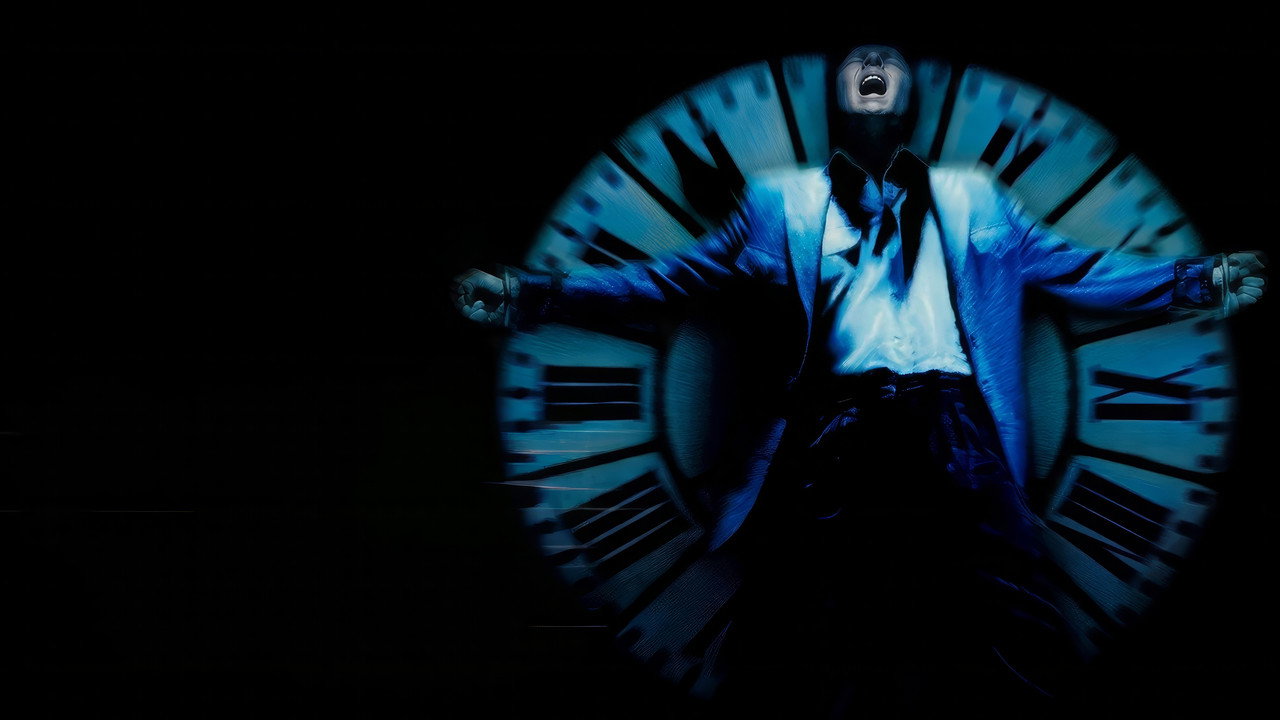
Writers: Alex Proyas (screenplay & story), Lem Dobbs (screenplay), David S. Goyer (screenplay)
Cast: Rufus Sewell, William Hurt, Kiefer Sutherland, Jennifer Connelly, Richard O'Brien, Ian Richardson
A man wakes up in a bathtub with no memory and a dead woman in the next room. He discovers that the city he lives in is rebuilt every night by alien entities called the Strangers, who swap the inhabitants' memories like database records, rearranging lives to study the one human quality they cannot replicate — individual consciousness. They have been running the experiment for as long as anyone can remember, and they are no closer to an answer.
Every night at midnight the city stops. The people fall asleep where they stand — in the street, on a staircase, in the middle of a sentence — and a group of pale figures in long coats emerge to rebuild. They rearrange the buildings. They extend walls, close streets, raise a tenement where a park used to be. Then they inject new memories into the sleeping inhabitants. The man who was a doctor wakes up believing he is a murderer. The woman who was a wife wakes up believing she is a prostitute. The city restarts. Nobody remembers the change. The Strangers — that is what the film calls them — stand back and observe the results, looking for something they cannot name, in a species they cannot understand, using a method that guarantees they will never find it.
The method is the problem, and Alex Proyas structures the entire film around why. The Strangers are a collective intelligence. They share one mind, think in concert, and can reshape physical reality through an act of will they call tuning. They are, by any material standard, vastly more powerful than the humans they study. What they cannot do is the one thing they are trying to understand: they cannot experience individual consciousness. They have no interior life. They do not dream. They do not remember being children. They do not know what it is like to be one person, with one set of memories, in one body, at one moment, knowing that the moment will not come again. This is the thing they are trying to locate in the human subjects they rearrange every night, and their experimental method — swap the memories, change the environment, observe the behaviour — is a perfect enactment of the assumption that consciousness is a function of inputs. Change the inputs, measure the outputs, and sooner or later the variable that produces individuality will isolate itself.
But it does not isolate itself, because it is not a variable. It is the thing that is doing the experiencing, and the Strangers, who have never experienced anything, have no way to recognise it even if they are looking directly at it. They are measuring what they cannot feel, with instruments built by beings who do not feel, and the measurement tells them nothing because the thing being measured is not in the data. It is in the relationship between the data and the subject, and the subject is the one thing they cannot be.
The film ends with Murdoch acquiring the Strangers' own power — tuning, the ability to reshape reality by will — and using it to rebuild the city with an ocean and a sunrise, neither of which have existed before. The Strangers are defeated, but the defeat is almost beside the point. What matters is the diagnosis. The Strangers failed not because they lacked power but because they lacked the very thing they were trying to study, and the lack made their study impossible from the start. They could manipulate every variable in the experiment except the one that mattered, because the one that mattered was not a variable — it was the capacity to have an experience, and you cannot study experience from outside experience any more than you can study swimming from a library. Every research programme that has tried to understand user behaviour by manipulating interfaces and measuring clicks has performed a lesser version of the same operation. The Strangers changed the city every night, swapped memories like database records, and watched the outputs with infinite patience and zero comprehension. They had all the data. They understood none of it. What they were looking for was never in the city. It was in the people, and the people were the one thing they could not become.