π
Writers: Darren Aronofsky (written by)
Cast: Sean Gullette, Mark Margolis, Ben Shenkman, Pamela Hart, Stephen Pearlman
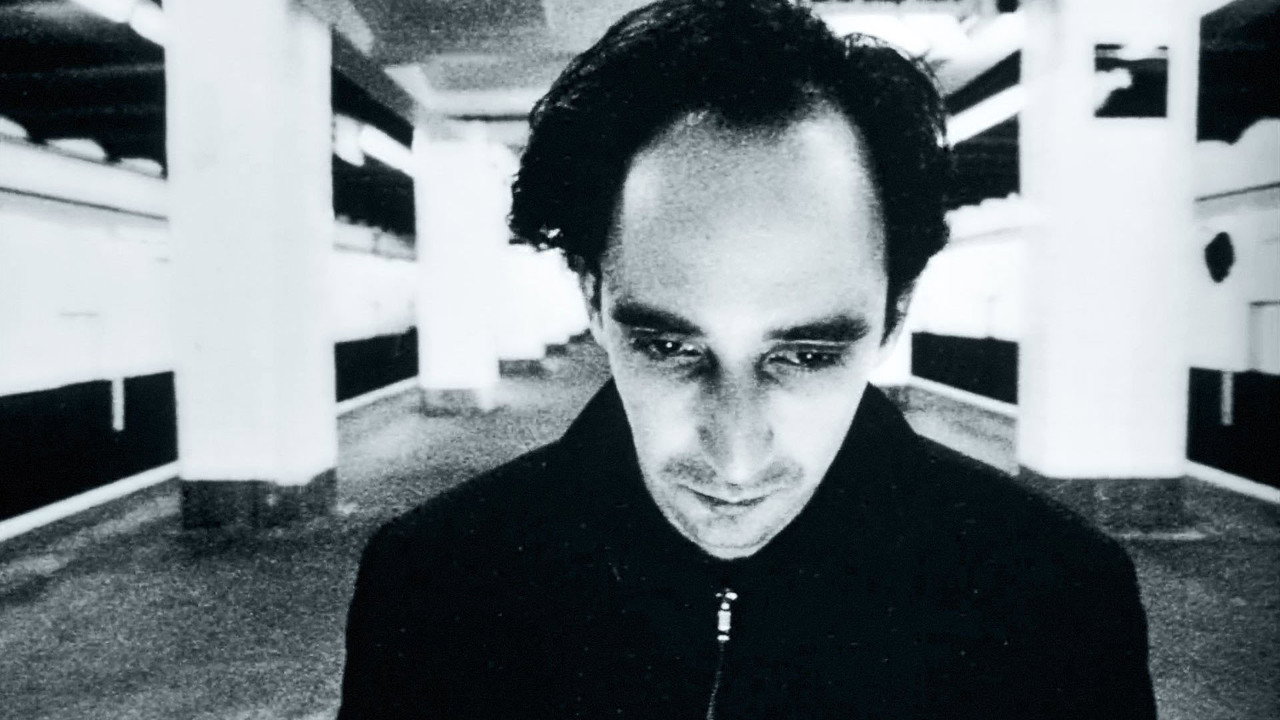
Maximillian Cohen is a reclusive mathematician convinced that mathematics holds the key to understanding the universe. When his homemade supercomputer produces a 216-digit number before crashing, Max is pursued by a Wall Street firm seeking market predictions and a Hasidic sect seeking the true name of God, while his health deteriorates and the boundary between pattern and paranoia dissolves.
Max Cohen restates his assumptions at the beginning of the film: mathematics is the language of nature; everything around us can be represented and understood through numbers; if you graph the numbers of any system, patterns emerge; therefore, there are patterns everywhere in nature. He repeats this catechism throughout, a voiceover timestamped to his deteriorating days, and the formulation rewards careful attention because it is a syllogism with a hole in it. The first three premises are defensible observations about the utility of mathematical description. The conclusion performs a quiet substitution: the word "therefore" bridges from "we can use numbers to describe patterns" to "patterns are the substrate of reality, and I can read them." That bridge is where Max lives for the entire film. He is a mathematician who has crossed into numerology without noticing, and the tragedy is that no single step along the way was irrational. Each refinement of his model brought him closer to the 216-digit number that his homemade supercomputer Euclid keeps producing before crashing, and each crash felt like proximity rather than failure — the machine, he reasoned, could not handle the output, which meant the output was real, which meant the pattern was there and his instruments were simply not strong enough to hold it. This is the most seductive form of confirmation bias available to intelligence: interpreting system failure as evidence of system insight.
Two groups want the number. A Wall Street firm led by Marcy Dawson pursues Max for stock market prediction — they want to collapse the behaviour of every trader into a single computable function and front-run the output. A Hasidic sect led by Lenny Meyer pursues him because they believe the Torah is a numerical code and the 216-digit number is the true name of God. Same number, same formal object, applied to two incompatible ontologies: one assumes the number describes a market, the other assumes it describes divinity. The film never resolves which of them is right because it understands that this is not the relevant question. The relevant question is what it means that the same sequence of digits can serve as plausible evidence for both claims simultaneously. A model that can explain everything explains nothing, because the pattern is being imposed by the need of the interpreter rather than extracted from the structure of the thing interpreted. Max cannot see this because he sits between the two groups and neither of them is obviously wrong, which means his discovery feels validated from two independent directions at once — the strongest possible epistemic position, except that the two directions are mutually exclusive, which should be a disqualification rather than a reinforcement. It is not, because Max is past the point where disconfirmation registers.
The only person in the film who has been where Max is and returned is Sol Robeson, his former mentor, who plays Go with him in the afternoons and speaks in plain warning. Sol found a pattern once. He was doing pure mathematics, number theory, and something in the data pulled him toward the same territory Max now occupies — and he suffered a stroke, and he stopped. The film lets his decision stand without dramatising it as heroism or cowardice; Sol simply recognised the point at which continuing would cost him his capacity to recognise anything at all, and he valued the capacity more than the answer.
His Go games with Max function as a competing model of the right relationship between mind and pattern: Go is a system of formally infinite complexity played on a finite board, and the correct posture toward it is engagement, attention, response — not decryption. Sol does not try to solve Go. He plays it. The distinction maps exactly onto the difference between science and obsession: science engages with a phenomenon knowing that the model is a tool and the phenomenon will exceed it; obsession treats the model as the thing itself and cannot stop refining it because each iteration brings the illusion of convergence. Sol understood that the spiral is real — the Fibonacci sequence does appear in sunflowers, in nautilus shells, in the structure of galaxies — and that the inference from "spirals appear in nature" to "I can decode nature through spirals" is the precise step where mathematics becomes religion. Max takes the step. Sol did not.
Max drills into his own skull with a power tool. The film earns this ending by building, with enormous formal precision, the case that his options had narrowed to two: live as the person who knows the number, which means living as a resource to be extracted by everyone who wants it, or destroy the part of himself that can hold it. He chooses the latter, and the final scene shows him sitting on a park bench while a neighbour's daughter asks him simple arithmetic questions he can no longer answer. He looks at the trees and smiles. It is not a happy ending and it is not a tragic one; it is the ending of a man who bought his way out of a model by paying with the capacity to model anything. The film's formal claim, stated through its structure rather than its dialogue, is that the cost of a theory of everything is the theorist. Anyone who has worked on a problem long enough to lose the ability to see it from outside — who has felt the model become the lens through which every new piece of information is pre-sorted into confirmation or noise — has stood at the edge of Max's apartment and looked down. The film takes no position on whether what he found was real, because the question is structurally unanswerable from inside the system that produced it.