Herbert Simon: a wealth of information, a poverty of attention
Herbert Simon on bounded rationality: in a world rich in information the scarce resource is attention, and deciding gets harder rather than easier.
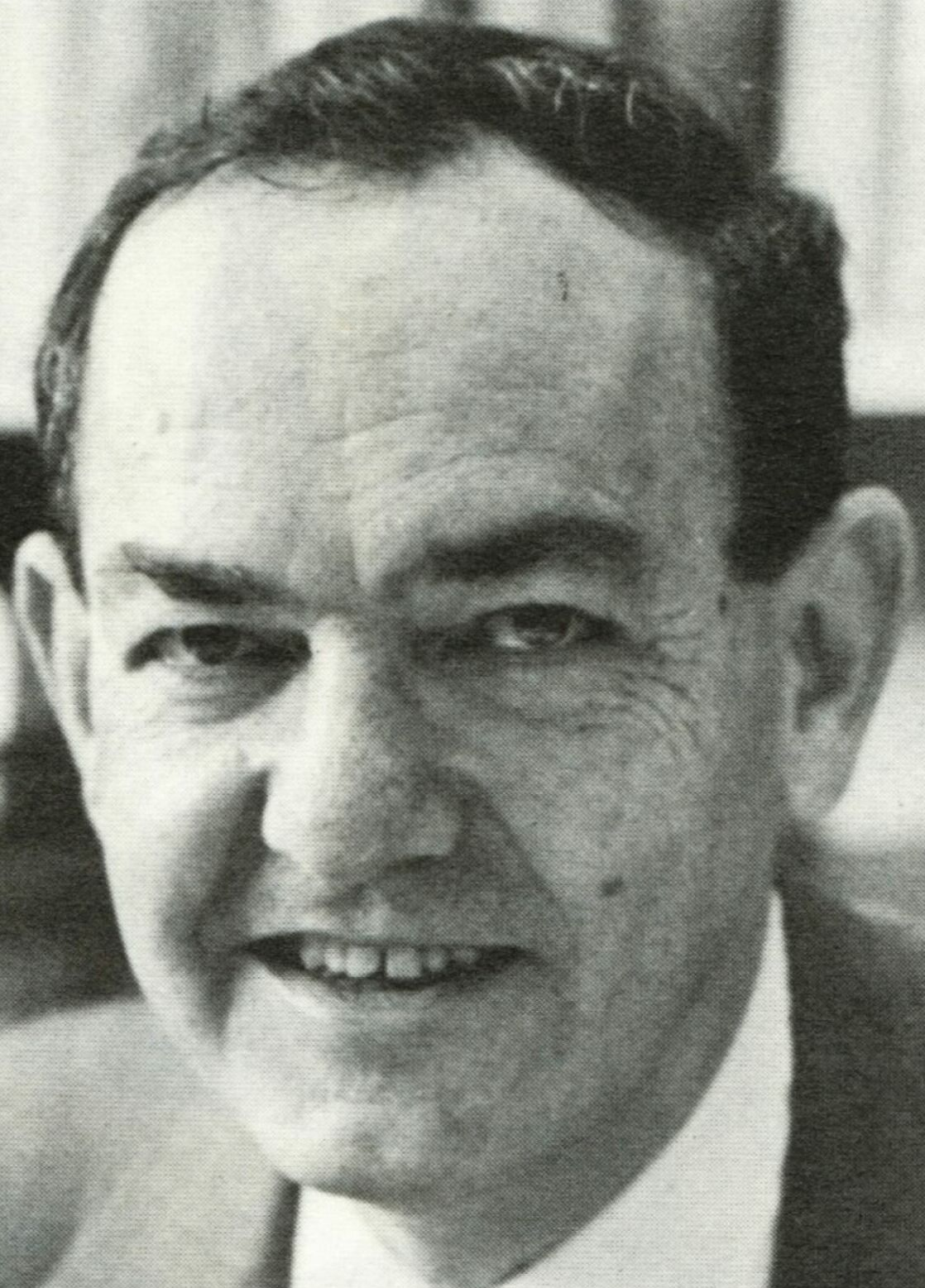
Herbert A. Simon (1916–2001). Nobel laureate in Economics, Turing Award winner, and one of the fathers of artificial intelligence. He spent his life on one idea: that the human mind decides with limited resources, and that the scarce resource is therefore not information but attention.
A product review begins. On the screens there are more dashboards than anyone is watching: cohorts, funnels, heatmaps, one line going up and another going down, and no one sure which of them matters. An assistant has summarised four hundred pages of user interviews in seconds. The backlog holds more "validated" opportunities than the team could build in a decade. There is plenty of everything.
The meeting ends without a decision. Or with a worse one than it would have reached on half the data and twice the silence.
We were promised the opposite. For years we treated the lack of information as the problem, and assumed that more metrics, more signals and more content would let us decide better. Now that we can generate information without end, we have everything we asked for and we decide worse. In 1971, with a handful of computers in the world, Herbert Simon had already explained why:
"What information consumes is rather obvious: it consumes the attention of its recipients. Hence a wealth of information creates a poverty of attention and a need to allocate that attention efficiently among the overabundance of information sources that might consume it."
— Herbert A. Simon, Designing Organizations for an Information-Rich World (1971)
Information has a cost, and the reader pays it
The essay has a dry title and almost no one in product has read it. The move it makes is pure economics. In a world poor in information, more information is wealth. When information becomes abundant, it uncovers a scarcity that was hidden until then: whatever information consumes. And what it consumes is obvious once someone says it. The cost of information is not in producing it or sending it, which tends to zero, but in receiving it. The reader pays, in time and in the capacity to think.
That changes what it means to design. In an information-rich world the problem is no longer producing more but filtering better. In the same essay Simon offered a test for any new information system: it only lightens the load on an organisation if it absorbs more information than it produces. A report that summarises ten others and replaces them passes. A dashboard that adds its numbers to all the existing ones fails, however good its charts. Most of what we build to "inform decisions" would not survive the test.
Every feed and every recommender works under that constraint, whether it names it or not. I have written about the attention crisis that now defines almost any digital product, and Simon's sentence sits at its centre. Generative models push it to the limit: when plausible text costs nothing, the only thing still scarce is the human attention that text demands.
Simon did not arrive at attention from media or from technology. He arrived from a much older question: how does anyone decide anything?
Economic man does not exist
Simon (Milwaukee, 1916 – Pittsburgh, 2001) spent his career at Carnegie Mellon and refused to stay inside one discipline. He won the Turing Award in 1975, with Allen Newell, for their work on artificial intelligence, and the Nobel Prize in Economics in 1978. In 1956 the two of them had built the Logic Theorist, a program that proved theorems from Principia Mathematica. He wrote about organisations, the psychology of problem-solving, the philosophy of science and design. He was not scattered. He chased one subject wherever it led: decision-making.
His target was a character the economics and management theory of his time took for granted: economic man, the perfectly rational decider who knows every alternative, computes every consequence and picks the best. Simon said that creature does not exist. People are not irrational. Their rationality has a size: that of a finite mind, with incomplete information, little time and a modest capacity for calculation. He called it bounded rationality.
He described what people inside an organisation actually do. Nobody surveys every option. They consider a few, the ones close to hand or suggested by experience, compare them against a threshold of "this will do", and take the first one that clears it.
Anyone who has run product recognises the mechanism, even if our methods pretend otherwise. No team lists every possible feature and computes which one maximises value. Three or four plausible paths get weighed against what the team knows and what there is time to build, and someone places a bet. Most prioritisation frameworks are poor copies of Simon: ways of making a judgement under constraints look like a calculation.
From there comes his view of organisations, which is more useful than it sounds. Since Administrative Behavior (1947), he treated an organisation as a structure for making decisions. Hierarchy, communication channels and standard procedures are not dead bureaucracy. They are ways of cutting a problem too big for one head into pieces that several heads can handle. When someone decides which team owns which decision, they are drawing the boundaries inside which a bounded rationality will work. It helps to see it that way. It stops you from treating a structural problem as a problem with people, one of the most expensive mistakes an organisation makes as it grows.
Good enough is a rational answer
Simon gave that way of deciding a name that stuck: satisficing, a blend of satisfy and suffice. Looking for the good enough rather than the best. It sounds like giving up. It is the rational way to decide when optimising is impossible, because the cost of searching for the perfect option is higher than anything the perfection would add.
This cuts against a good part of today's metrics culture, which treats every extra point of conversion and every extra decimal of retention as progress by definition. Simon suggests a different question: has this metric already crossed the line where it stops being the bottleneck? If it has, polishing it further spends the scarcest thing the team has, its attention, on something that is already good enough. A team chasing the last decimal of an indicator that has done its job is not being rigorous. It is soothing its own need for control.
Everyone who wants to change a situation designs
The last piece is the one with the most consequences for our trade. In The Sciences of the Artificial (1969) Simon argued that artefacts (products, organisations, software) do not obey natural laws. They depend on the fit between what they are inside and the environment they serve. They describe not what is, but what could be. Studying them needs a science of its own, and at its centre is design.
"Everyone designs who devises courses of action aimed at changing existing situations into preferred ones."
— Herbert A. Simon, The Sciences of the Artificial (1969)
The definition is deliberately wide. The engineer drawing a bridge designs, and so do the doctor prescribing a treatment and the person redrawing an organisation. Design stops being a decorative trade subordinate to "real" engineering. Running a product is not administering a feature factory. It is designing the fit between what the product is and what its environment asks of it, with a mind that never sees the whole of it.
The same book holds a parable, first published in The Architecture of Complexity (1962), worth stealing. Two watchmakers, Hora and Tempus, build watches of a thousand parts. Tempus assembles each watch in one go, and every time the phone rings the unfinished watch falls apart. Hora builds stable subassemblies of ten parts, and an interruption only costs him the piece in his hands. Hora prospers; Tempus goes broke. Complex systems that survive are almost always made of nearly independent modules. It is the deep reason why the organisations that make software, when they work, arrange themselves around bounded domains. A system whose parts cannot change separately is a Tempus waiting for the next phone call.
Where satisficing stops being enough
A theory also satisfices. It is good enough for the cases it was built for, and no further. Simon's has two edges that matter to anyone who makes product.
The first is in how he treats attention: as a scarce but uniform resource, almost a currency spent in interchangeable units. It is not. The distracted attention of someone thumbing through a feed and the deep attention of someone solving a hard problem are not the same substance in different amounts. They are different things. And his model has little to say about power: who gets to claim whose attention, and how hierarchy and money decide that allocation long before any calculation of efficiency. In an economy that earns its living by capturing attention, that silence is not a detail.
The second is that he tends to take limits and environment as given. Bounded rationality describes very well how to manage inside a box; it says less about when to break the box by reframing the problem until the constraint disappears. And his science of the artificial assumes an environment stable enough for the artefact to fit it. Digital products rarely get one. In software the problem never holds still: the product changes the environment it then has to adapt to, and "designing the fit" means chasing a target that moves because we move it. That is the ground of feedback loops that Donella Meadows studied.
Machines with bounded rationality
It is tempting to think artificial intelligence finally abolishes bounded rationality: here at last is a decider that can process everything. It doesn't. Today's models do not escape Simon, they industrialise him. They have a finite context window, they decide on incomplete information, they settle for the good-enough answer rather than the best one. We have not built economic man in silicon. We have built another bounded rationality, at another scale, and at the same time multiplied the flood of information that saturates ours.
Even the vocabulary carries a joke. The architecture behind these models was introduced in 2017 in a paper titled, without ceremony, Attention Is All You Need. The machine born from the flood of information has at its technical heart the word Simon placed at the centre of the problem. They do not mean the same thing. For Simon, attention is the scarce resource that abundance uses up; for the transformer, it is the mechanism that decides which parts of the input to look at. Both are about spreading a focus that never covers everything.
The next review
Back to the product review. The abundance that overwhelms it is not a failure of the tools. It is the information-rich world Simon described, delivered more faithfully than he lived to see. What we missed was the second half of his sentence: that world brings a new poverty with it, and no amount of data or of models will make more attention.
The next review will probably have more dashboards than this one. Before adding another, it is worth answering a simpler question: how many of the panels on the screen could be switched off without anyone deciding worse?